Government's AI Investment
US Government and OpenAI Discuss 5% Stake to Align AI Growth with National Interests
Anonymous
Key Points
1
The U.S. government has a precedent for state equity in private tech firms, with a 10% stake in Intel acquired after an $8.9 billion investment, which critics argue could shape AI governance and policy if replicated with OpenAI.
2
A more aggressive alternative to a 5% stake has been floated by Bernie Sanders: a one-time 50% stock tax on companies like OpenAI, highlighting broader Democratic proposals on wealth distribution from AI gains.
3
OpenAI has formally filed with the U.S. Securities and Exchange Commission in June 2026 as part of advancing its planned IPO, underscoring the regulatory steps accompanying the proposal.
4
The proposal appears to be tied to OpenAI’s governance restructuring efforts, with discussions about how the company’s changing corporate structure intersect with a Public Wealth Fund concept.
OpenAI has proposed giving the U.S. government a 5% equity stake in the company, a slice worth roughly $42.6 billion based on its $852 billion valuation, Financial Times first reported. The deal would create a "Public Wealth Fund" to share AI-generated wealth with ordinary Americans — and comes as OpenAI prepares for a 2026 IPO.
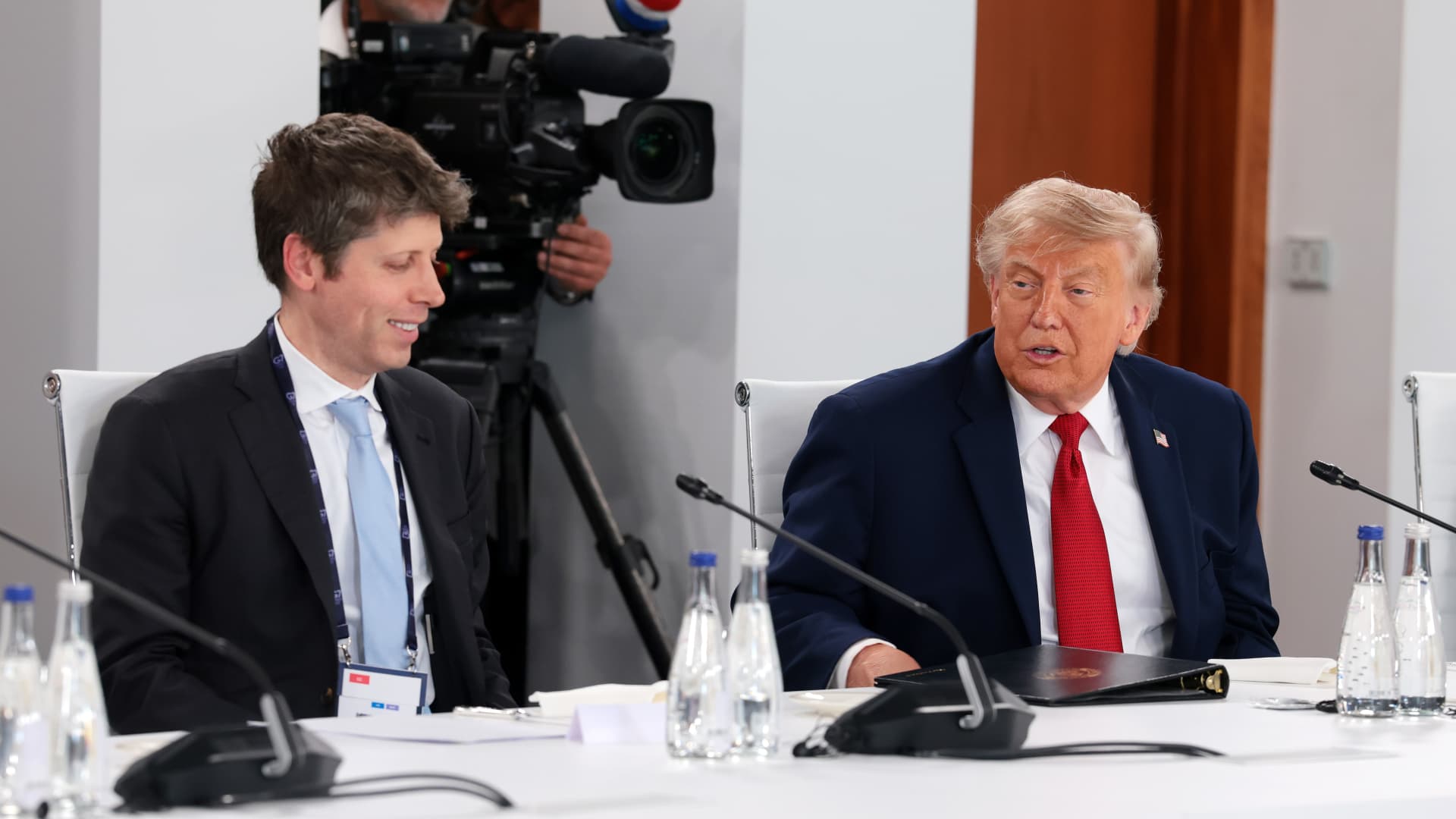
President Trump confirmed active negotiations on June 5, saying Americans could "essentially become a partner" in OpenAI's future. The company quietly filed its S-1 prospectus with the SEC on June 8, working with Goldman Sachs and Morgan Stanley, according to The Guardian.
How a $42.6 Billion Government Stake Would Work
The proposal would hand the federal government a 5% slice of OpenAI equity — no purchase required. According to Crypto Briefing, the concept began taking shape in early 2025, when CEO Sam Altman started pitching a "voluntary equity donation" to the incoming Trump administration. The plan also envisions other major U.S. AI labs offering similar stakes, though their participation is not confirmed.
The equity would flow into a Public Wealth Fund — think of it as a government investment account that pays dividends to citizens. Altman argues that giving the public a "direct financial interest" is the best way to share the "upside of AGI," according to CNBC. Commerce Secretary Howard Lutnick, who championed the earlier Intel deal, has backed the idea of the U.S. becoming a "shareholder" in strategic tech.
The Intel Deal Set a Precedent for Government Tech Ownership
This is not the first time Washington has taken an equity stake in a private tech firm. In August 2025, the U.S. converted CHIPS Act grants into common stock, acquiring a 9.9% stake in Intel for $8.9 billion. That bet has already paid off — the stake is now worth roughly $36 billion, a 300% return in under a year, according to CNBC.
OpenAI is also mid-restructuring. In late 2025, it shifted from a nonprofit-controlled entity to a Public Benefit Corporation called "OpenAI Group PBC." The old rule capping investor returns at 100x is gone. Critics say the government stake is a "political shield" — a way to soften backlash over that massive wealth transfer to private investors, according to Crypto Briefing.
Sanders Wants 50% — and Warns of Regulatory Capture
Not everyone thinks 5% is nearly enough. On June 1, Senator Bernie Sanders previewed the "American AI Sovereign Wealth Fund Act," which would impose a 50% stock tax on AI companies earning over $200 million in AI-related revenue. Sanders argues that "since AI is built on the collective knowledge of humanity, the wealth it generates must benefit humanity."
Regulatory critics raise a sharper concern: if the government owns $42 billion of OpenAI stock, the SEC and Justice Department may be reluctant to enforce rules that could hurt the stock's value. That is the definition of regulatory capture — the watchdog becomes the cheerleader. Polymarket currently puts the odds of an OpenAI IPO before December 31, 2026 at just 23.5%, meaning the fund's payouts to Americans remain theoretical for now, according to Crypto Briefing.
A Deal Still Without a Finish Line
No final terms have been confirmed. Negotiations are active, but no officials have publicly locked in the structure, size, or timeline of the stake. OpenAI CFO Sarah Friar has reportedly urged caution on the IPO itself, citing the $600 billion in infrastructure spending the company estimates it needs by 2030, according to CNBC.
The outcome will set a major precedent. If the deal closes, the U.S. government becomes both a regulator and a financial beneficiary of the world's most valuable AI company. That tension — between oversight and ownership — is the central question that negotiators have not yet answered.
Sentiment
Mostly PositiveNEGATIVENEUTRALPOSITIVE
Publishers
132
Articles
308
Reach
440
A
AnonymousAuthor


