Retail Sales: Modest Gain, Underlying Weakness
June Retail Sales Rise 0.2%, But Core Spending Drops As Market Valuation Concerns Grow
Anonymous
Key Points
1
Core retail sales, excluding autos, fell 0.2% in June, signaling weaker underlying consumer spending even as the overall 0.2% headline gain persisted.
2
Gas-station sales declined in June, acting as a drag on total retail performance despite strength in other categories.
3
GuruFocus notes SPY appears overvalued relative to its GF Value—GF Value around $668.10 vs a price near $754.81, roughly 13% above fair value, with a trailing P/E of about 23.6x.
4
May housing starts collapsed 15% in May to 1.177 million, led by a 40% plunge in multi-unit starts, while single-family starts fell only about 2%; permits were steadier at 1.413 million, with broad regional weakness and a tentative near-term low for starts.
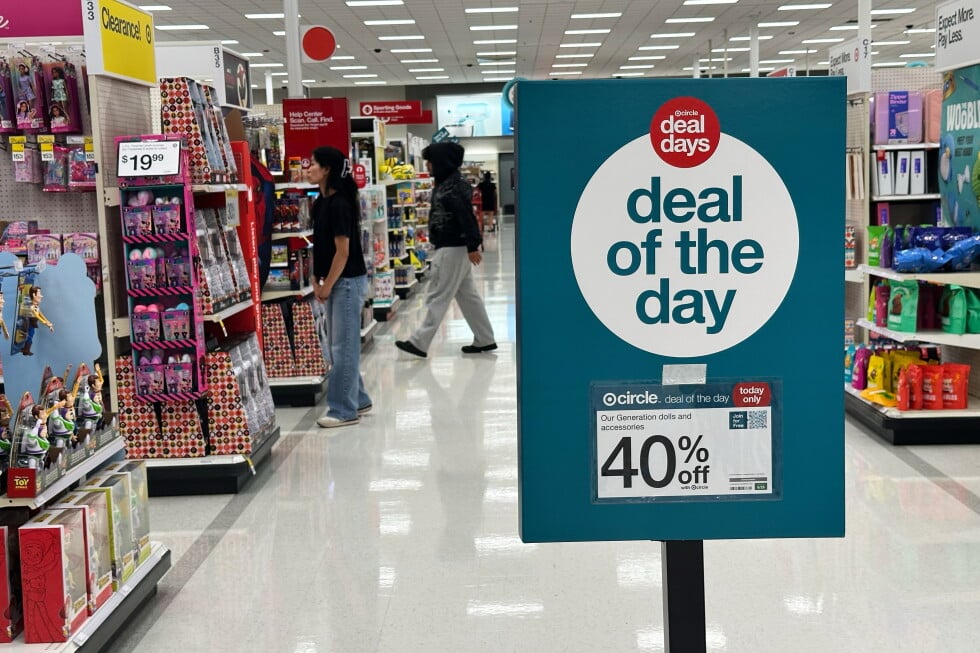
U.S. retail sales rose 0.2% in June, the Commerce Department reported, falling short of the 0.3% gain economists had expected. Motor vehicle and parts dealers led the way, but the modest headline number masked softer spending elsewhere, according to AJC and Tribune-Democrat.
May's retail sales were revised higher to a solid 1.0% gain, offering some comfort. But June's mixed results paint a cautious picture of the American consumer — resilient in some spots, pulling back in others.
Gas Station Slump Drags Down the June Headline
Gas station sales fell 5.3% in June, acting as a major drag on the overall retail number, SSB Crack News reported. Falling gas prices were the main cause. When gas stations are stripped out, the retail picture looks noticeably better — shoppers held up despite ongoing economic uncertainty, according to AJC.
Excluding gas, retail sales rose roughly 0.7% in June. Online sales also climbed 1.9%, boosted by promotions tied to Amazon's Prime Day event. That suggests consumers are still willing to spend — they just need a reason.
Autos Lead, But Core Spending Falls Short
Strip out auto sales, and the picture weakens fast. Core retail sales — which exclude motor vehicles — fell 0.2% in June. That drop signals that auto dealers carried much of the weight last month. Without them, underlying consumer spending lost ground.
Motor vehicle and parts dealers were the clear bright spot. Their gains pushed the headline number into positive territory. But one strong category can only cover so much. Economists watching broader spending trends had reason to stay cautious after the June report.
Housing Starts Collapse Adds to Consumer Pressure
Beyond retail, the housing sector delivered a sharp warning sign in May. Housing starts fell 15% to 1.177 million units. Multi-unit construction — apartments and condos — plunged 40%. Single-family starts held steadier, dropping only about 2%.
Building permits offered a slightly softer landing, coming in at 1.413 million. But weakness spread across all regions. Analysts see a tentative near-term floor for starts, though a quick rebound looks unlikely. Softer housing activity tends to ripple through retail — fewer homes built means fewer appliances, furniture, and supplies sold.
Stock Market Valuations Raise Eyebrows Amid Mixed Data
The mixed retail data lands as some market watchers raise flags about stock valuations. GuruFocus notes the SPY ETF — which tracks the S&P 500 — trades near $754.81, roughly 13% above its estimated fair value of $668.10. The trailing price-to-earnings ratio sits at about 23.6x.
A P/E ratio measures how much investors pay for each dollar of company earnings. At 23.6x, stocks are priced for strong growth. But soft core retail sales and a struggling housing market could test that optimism. Resilient consumers are key to justifying those valuations — and June's data offered only partial reassurance, according to Rocky Mount Telegram.
Sentiment
Mostly NegativeNEGATIVENEUTRALPOSITIVE
Publishers
22
Articles
68
Reach
90
A
AnonymousAuthor


