Lechner Racing Tops Porsche One-Make Racing
Lechner Racing Tops Porsche One-Make Racing
Anonymous
Key Points
1
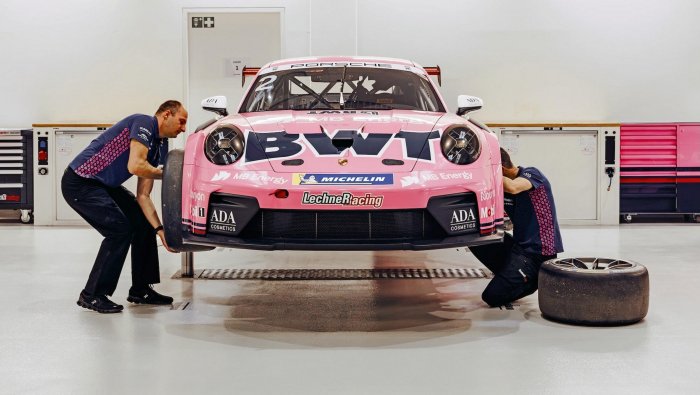
Lechner Racing’s headquarters are in Thalgau, near Salzburg, and the team’s daily meetings traditionally begin at 09:11 as a nod to Porsche’s 911. CEO and team principal Walter Lechner said, “The moment you no longer feel excited to see the cars in the workshop in the morning, that’s when it’s time to do something different.”
2
Ferrari’s two-car comparison was enabled in part because Charles Leclerc’s Monza power unit had remained at Maranello for further analysis after his crash, while Ferrari had no equivalent reason to withhold the newer ADUO-2 specification from Lewis Hamilton in Madrid.
3
The Spanish Grand Prix engine-specification information initially faced conflicting reports: Sky Sports F1’s Ted Kravitz had suggested Hamilton was using ADUO-1, but Italian outlets AutoRacer.it and FormulaPassion.it subsequently reported that Hamilton had ADUO-2 and Leclerc ADUO-1.
4
F1 shakedowns must use demonstration tyres rather than current racing compounds, reinforcing that they are intended as installation and systems checks rather than performance testing. Teams use them to identify issues such as hydraulic leaks or telemetry problems before official testing.
Lechner Racing has cemented its place as Porsche's premier one-make racing factory, accumulating a record 10 drivers' titles and 13 team titles in the Porsche Mobil 1 Supercup. The Austrian squad, based near Salzburg, operates as a talent pipeline where drivers compete in technically identical 911 Cup cars, with CEO Walter Lechner calling the daily workshop routine his source of motivation: Porsche Newsroom reported, "The moment you no longer feel excited to see the cars in the workshop in the morning, that's when it's time to do something different."
Lechner Racing's headquarters in Thalgau maintains a tradition where team meetings begin at 09:11 each day — a deliberate nod to Porsche's iconic 911 model. This ritualistic precision reflects the team's meticulous approach to driver development and competitive racing in Porsche's controlled, single-model series.
How One-Make Racing Builds Champions
One-make racing removes variables that muddy driver comparisons. Every car in the Porsche Supercup uses the same 911 Cup chassis, engine, and suspension. This identical hardware forces skill differences into sharp focus. Porsche Newsroom noted that "drivers from all over the world compete in technically identical cars" where even Porsche Juniors train. The result: 20 drivers on track, one winner — and the fastest driver emerges clearly.
Lechner Racing's track record proves the model works. Ten drivers' titles and 13 team titles represent decades of consistent excellence in a single series. Most racing teams chase sponsorship and rebuild yearly. Lechner Racing builds institutions.
Ferrari's Engine Comparison Revealed Hamilton's Power Advantage
Ferrari conducted a rare side-by-side power unit test at the Spanish Grand Prix, comparing Lewis Hamilton's newer ADUO-2 engine against Charles Leclerc's ADUO-1. Hamilton's newer spec delivered measurably greater straight-line speed. On high-speed straights, the gap favored the ADUO-2. Yet Leclerc's superior cornering kept the teammates separated by just 0.006 seconds overall — nearly identical lap times masked the engine difference.
The comparison became possible because Leclerc's Monza power unit remained at Maranello after his crash for deeper analysis. Ferrari had no reason to withhold the newer ADUO-2 from Hamilton in Madrid. AutoRacer.it and FormulaPassion.it initially clarified the specifications after Sky Sports F1's Ted Kravitz suggested Hamilton ran the older ADUO-1. The Italian outlets corrected the record.
What Formula 1 Shakedowns Actually Measure
A Formula 1 shakedown is not a test. It is a walk. New cars run at low speeds in tightly limited sessions designed to verify hydraulic systems, telemetry sensors, and electronic controls function without error. Teams deploy demonstration tyres — softer compounds than race rubber — to avoid generating real performance data.
Shakedowns serve as installation checks. Engineers look for leaks. They confirm the car starts. They verify telemetry flows to garage computers. A working shakedown means no surprises when official testing begins. A failed shakedown means the team found a problem early — exactly the point.
Sentiment
Mostly NegativeNEGATIVENEUTRALPOSITIVE
Publishers
12
Articles
1
Reach
13
A
AnonymousAuthor


