Caucus pipeline split
Former MLA states Smith's caucus divided over Ottawa pipeline deal, carbon tax increase
Anonymous
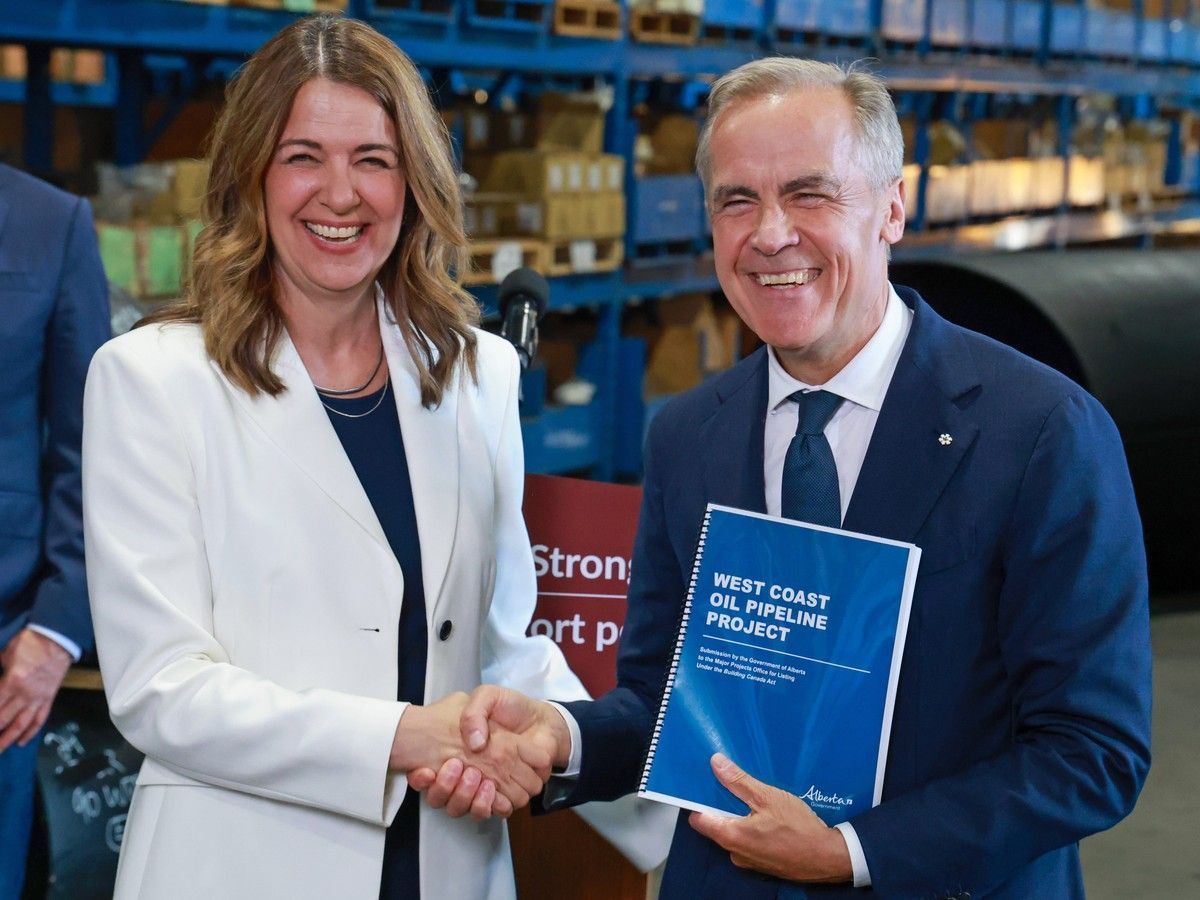
Up to a third of Alberta Premier Danielle Smith's own caucus privately opposes her pipeline deal with Prime Minister Mark Carney, according to former Alberta MLA Rick Barnes. Cold Lake Sun reported Barnes believes as many as a dozen or more United Conservative Party members secretly disagree with the memorandum of understanding, or MOU — a framework agreement to build a new pipeline and expand energy infrastructure.
The MOU, struck between Smith and Carney, also includes a higher industrial carbon tax in Alberta and billions in subsidies for a large carbon capture and storage hub in the province's northeast. Barnes says the deal has caused real tension inside Smith's party — even if most members have stayed quiet.
Barnes Puts Dissenter Count at Over a Dozen MLAs
Barnes told reporters that somewhere between a quarter and a third of Smith's caucus is against the deal. Smith's UCP holds 49 seats in the Alberta legislature. That math puts the number of potential dissenters at roughly 12 to 16 MLAs. Barnes says most of them have not spoken up publicly. "There could be over a dozen people in Smith's party who secretly agree with" opposing the deal, Barnes said, according to Pincher Creek Echo.
Barnes says the silence does not mean support. He argues many caucus members feel pressure to stay loyal to Smith in public. But behind closed doors, he says, the opposition is real and growing. The lack of open dissent, he suggests, does not reflect how the caucus truly feels about the agreement.
Smith Dropped Northern Route in Favour of Longer Southwest Path
One of Barnes's biggest criticisms is about the pipeline route itself. Smith had previously pushed for a northern corridor to move Alberta oil to tidewater. Under the new deal, that plan was dropped. Instead, the agreement backs a longer southwestern route. Barnes says this was a major concession — and one that many in the party did not expect Smith to make, according to Sault Star.
The southwestern route is longer and likely more expensive to build. Critics say it gives Alberta less leverage and fewer options. For many in the UCP base, the northern route was seen as a better path for the province's long-term energy goals. Barnes says giving it up without a fight is exactly the kind of move that has quietly angered caucus members.
Carbon Tax Hike and Subsidies Add Fuel to Internal Fire
The pipeline route is not the only sticking point. The MOU also includes a higher industrial carbon tax for Alberta — a direct contradiction of what many UCP members have long campaigned against. On top of that, the deal includes billions in federal subsidies for a carbon capture and storage hub in northeastern Alberta. Recorder reported that these provisions have added to the caucus unease.
Carbon capture technology traps emissions before they enter the atmosphere. The federal government sees it as a climate tool. But many Alberta conservatives view the carbon tax increase as a line they should not cross. Barnes argues the combination of concessions — the route change, the carbon tax, and the subsidy package — is too much for a significant chunk of the caucus to stomach quietly.
Smith Pushes Forward Despite Growing Caucus Pressure
Despite the internal pushback, Smith has pressed ahead with the agreement. She has framed the MOU as a win for Alberta — a path to getting landlocked oil to global markets. Her government argues the deal secures jobs and investment for the province. But Barnes says the premier may be underestimating the depth of opposition within her own ranks, according to Woodstock Sentinel Review.
For now, the dissenting MLAs have not broken ranks publicly. Whether that holds depends on what comes next. The MOU is a framework — not a final deal. Negotiations on the details are still ahead. If those talks produce more concessions, Barnes warns, the quiet opposition inside Smith's caucus could get much louder.
Sentiment
NeutralNEGATIVENEUTRALPOSITIVE
Publishers
9
Articles
8
Reach
9
A
AnonymousAuthor


