Hormuz Tensions Rise
IRGC Claims Tankers Exploded Near Hormuz Strait, US Denies Amid Escalating Strikes
Anonymous
Key Points
1
CENTCOM publicly rejected IRGC's claim, stating the report of two tankers exploding is false.
2
IRGC claimed: 'An hour ago, two oil tankers ... exploded and caught fire' after passing through the minefield south of the Strait of Hormuz, allegedly 'by deceptive American intelligence agencies,' and it also said it had 'stopped' four ships.
3
The United States said it conducted strikes for a seventh consecutive night aimed at 'continue degrading Iranian military capabilities,' while Iran accused the US of targeting civilian infrastructure such as an airport, a railway station and two bridges.
4
IRGC spokesman and other Iranian officials said the waterway is 'extremely insecure' and that Iran has expanded retaliatory operations across the region, including actions in Qatar, Kuwait, Jordan, Oman and Syria.
5
A senior Iranian military adviser, Major General Mohsen Rezaei, warned Tehran will resume 'full-scale offensive operations' if US strikes continue for another two or three days, saying 'no political border will be safe.'
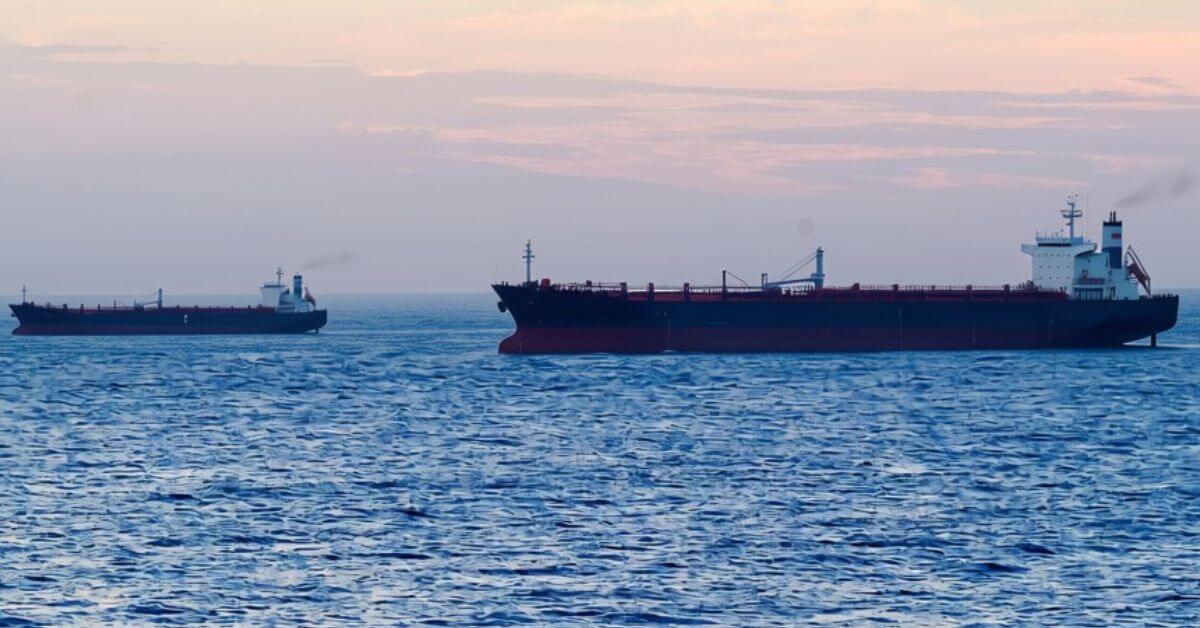
Iran's Islamic Revolutionary Guard Corps claimed two oil tankers exploded and caught fire after hitting sea mines south of the Strait of Hormuz late Friday, blaming "deceptive American intelligence agencies" for directing the vessels into the minefield. U.S. Central Command rejected the claim outright, posting on X: "Like most IRGC claims, this is false." Neither account could be independently verified. Marine Insight reported the vessels allegedly entered the mined area unaware.
The disputed tanker incident came on the seventh consecutive night of U.S. airstrikes inside Iran. Vijesti reported that CENTCOM said the strikes aimed to "continue degrading Iranian military capabilities." Brent crude prices climbed 3 percent on Friday heading into a third straight week of gains, as shipping traffic through the Strait of Hormuz fell to a three-week low.
IRGC Mine Claim Meets Swift US Denial
The IRGC said its forces had watched two commercial oil tankers enter a mined zone and explode. The Guard claimed U.S. intelligence had fed false navigation data to the ships' crews. It also said Iranian forces had "stopped" four additional commercial vessels transiting the Strait. Aaj TV reported the IRGC's statement was broadcast on Iranian state media shortly after midnight.
CENTCOM gave no ground. It dismissed the tanker story as part of a pattern of false IRGC claims. No satellite imagery, distress calls, or independent ship-tracking data confirmed any explosions. Maritime analytics firms MarineTraffic and Kpler had already flagged a sharp drop in vessel traffic through the Strait before the disputed incident, as shipping companies pulled routes from the combat zone.
Seven Nights of Strikes and Iran's Widening Retaliation
The U.S. launched its seventh straight night of airstrikes on Friday, targeting sites in Hormozgan province, Qeshm Island, and the cities of Yazd, Jask, and Ahvaz. Iran said the strikes hit civilian targets including an airport, a railway station, and two bridges. U.N. Secretary-General António Guterres condemned strikes on civilian infrastructure on both sides as "unacceptable."
Iran fired back with waves of drones and missiles aimed at U.S. allies in the region. Kuwait's oil and water desalination plants were struck. Bahraini and Jordanian air defenses shot down incoming projectiles. Kuwait relies on desalination for 90 percent of its drinking water, making the strikes a direct threat to civilian life. The Gulf Cooperation Council's secretary-general said the attacks on civilian infrastructure "amount to war crimes."
Iran Warns of Full-Scale War Within Days
Major General Mohsen Rezaei, a senior Iranian military adviser and former IRGC commander, issued one of Tehran's sharpest warnings yet. Speaking on state television, he said: "Iran will no longer limit itself to retaliatory, like-for-like responses... and no political border will be safe." He warned that if U.S. strikes continue for "another two or three days," Iran will launch "full-scale offensive operations."
Iranian officials also declared the Strait of Hormuz "extremely insecure" and said it is effectively closed. The IRGC said it had expanded operations across the region, naming Qatar, Kuwait, Jordan, Oman, and Syria. Marine Insight noted Iran has used the Strait as its primary economic lever throughout the conflict, with roughly 20 percent of global oil and gas shipments passing through the narrow waterway.
Oil Markets Feel the Heat as Hormuz Risk Mounts
Even unverified disruptions move markets fast. Brent crude rose 3 percent Friday alone. Economists warn that a prolonged Strait closure, combined with damage to Kuwaiti refining capacity at the Al Ahmadi facility, could fuel a broader energy crisis and spike inflation. About 20 percent of the world's oil and liquefied natural gas moves through the Strait each day.
Shipping companies were already pulling vessels from the region before Friday's tanker claims. MarineTraffic data showed Hormuz traffic at a three-week low on July 16. Whether the mine story is true or a psychological operation, the effect on markets and maritime routing is the same: less traffic, higher risk premiums, and more pressure on an already strained global energy supply.
Sentiment
Mostly NegativeNEGATIVENEUTRALPOSITIVE
Publishers
51
Articles
51
Reach
102
Topics
A
AnonymousAuthor


