UN Regional Security Summit
Regional Leaders at UN Summit Urge Gaza Ceasefire and Security Cooperation
Anonymous
Key Points
1
Kuwait and Pakistan agreed that their new strategic dialogue would be co-chaired by their foreign ministers and serve as an institutional framework for regular consultation, including on bilateral relations, strategic-sector cooperation and international developments.
2
Pakistan, Türkiye, Saudi Arabia and Egypt reaffirmed support for Palestinian self-determination and called for an independent, sovereign, viable and contiguous Palestinian state. Pakistan’s foreign minister also urged stronger coordination among Organisation of Islamic Cooperation members at the United Nations and other international forums.
3
The ministers’ proposed second phase for Gaza includes decommissioning, full Israeli withdrawal, deployment of an International Stabilization Force, transfer of administrative responsibilities across Gaza to the National Committee for the Administration of Gaza, and the start of early recovery and reconstruction.
4
The Arab and Muslim ministers specifically condemned settlement expansion, land confiscation, demolition of Palestinian homes, settler violence and what they described as attempts to consolidate Israeli control and annexation of occupied Palestinian territory.
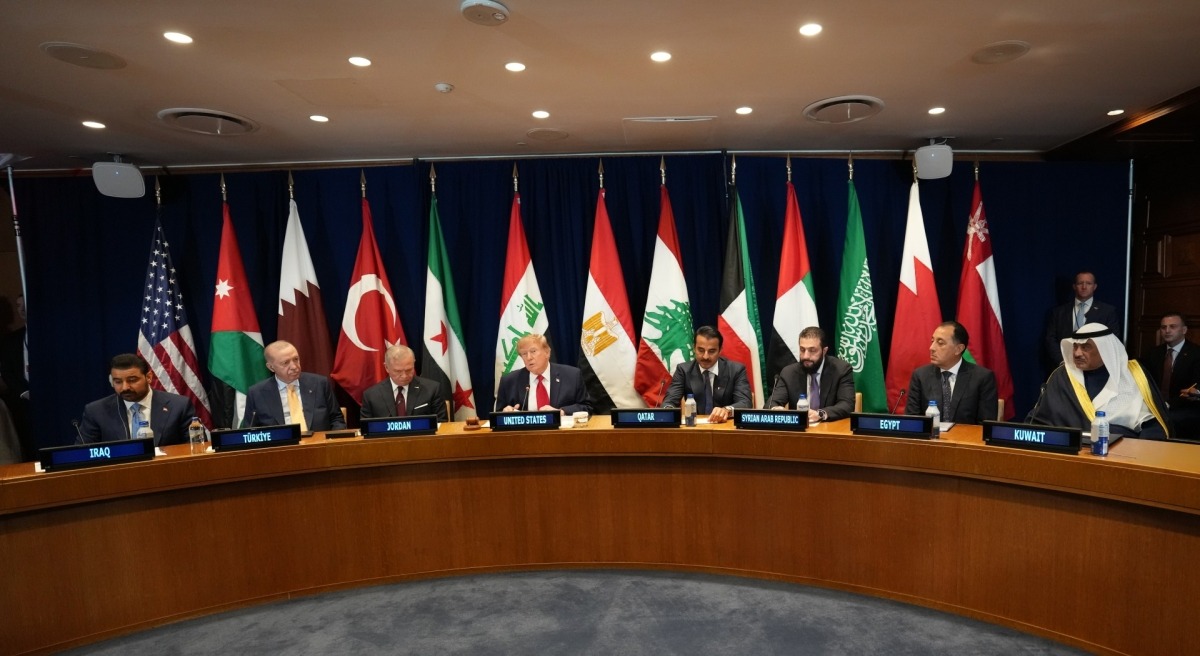
At the 81st UN General Assembly in New York, regional leaders from the Arab world and beyond coordinated their approach to ending the Gaza conflict and securing broader Mideast stability. Times Kuwait reported that Kuwait's Crown Prince Sheikh Sabah Khaled Al-Hamad Al-Sabah joined a U.S.-hosted summit with Gulf, Arab and Islamic nations to discuss Iranian threats, energy security, and a phased Gaza transition. Foreign ministers from Pakistan, Türkiye, Saudi Arabia and Egypt moved forward on multiple fronts: establishing institutional frameworks for cooperation and pushing for an immediate ceasefire, full Israeli withdrawal, and Palestinian reconstruction.
The ministers issued a joint call for preserving Gaza's ceasefire, unhindered humanitarian access, and an end to Israeli settlement expansion in the West Bank. News on Air noted that Prime Minister Modi and other leaders stressed the urgent need for regional de-escalation. Pakistan and Saudi Arabia sealed their commitment with a new diplomatic visa waiver agreement, removing barriers for top officials to travel between the two nations.
Kuwait and Pakistan Build Formal Strategic Alliance
Kuwait and Pakistan announced a new institutional framework to deepen cooperation on security, trade, and global affairs. Kashmir News Line reported that the two nations agreed to establish a formal strategic dialogue co-chaired by their foreign ministers. This ongoing mechanism will allow regular consultation on bilateral ties, strategic-sector cooperation, and international developments. The initiative strengthens ties between Islamabad and Kuwait at a critical moment for regional stability.
Arab and Islamic Ministers Demand Palestinian Statehood and Ceasefire
A coalition of eight Arab and Islamic foreign ministers — from Qatar, Egypt, Jordan, the UAE, Indonesia, Pakistan, Türkiye, and Saudi Arabia — issued a joint statement calling for fundamental changes in Gaza. Siasat reported that the ministers condemned Israeli settlement expansion, land seizures, and the demolition of Palestinian homes. They demanded full Israeli military withdrawal from Gaza, deployment of an international stabilization force, and the start of reconstruction under Palestinian administrative control through a newly proposed National Committee for the Administration of Gaza.
The ministers reaffirmed support for an independent, sovereign, viable Palestinian state. Telangana Today noted that Pakistan's foreign minister urged stronger coordination among Organisation of Islamic Cooperation members at the United Nations. The group also called for unhindered humanitarian aid delivery into Gaza and strict adherence to ceasefire terms, criticizing ongoing violations by Israeli forces.
Pakistan and Saudi Arabia Deepen Diplomatic Ties
Pakistan's Deputy Prime Minister and Foreign Minister Ishaq Dar signed a landmark diplomatic visa waiver agreement with Saudi Arabia's Foreign Minister Prince Faisal bin Farhan. The pact eliminates visa requirements for diplomatic and special passport holders, streamlining high-level engagement between the two nations. Dar stated the step would "facilitate high-level engagement and institutional exchanges" and "contribute to advancing our enduring and brotherly strategic partnership." The agreement signals a major shift in making travel easier for officials and strengthening bilateral coordination on regional issues.
Gaza Recovery Plan and Phase Two Implementation Challenge
The Board of Peace unveiled a $2.45 billion Gaza recovery and reconstruction plan spanning six months and 66 projects. The second phase of the Gaza transition requires Hamas disarmament, complete Israeli Defense Force withdrawal to Gaza's perimeter, and deployment of an international stabilization force. However, negotiations have stalled over the sequencing of these steps: Israel demands complete Hamas disarmament before withdrawal, while Palestinian factions refuse to disarm until Israeli forces leave. Currently, only 69 aid trucks enter Gaza daily — far below the 600-truck target set by the ceasefire agreement.
Sentiment
Mostly PositiveNEGATIVENEUTRALPOSITIVE
Publishers
59
Articles
23
Reach
82
A
AnonymousAuthor


