Hormuz Bypass Activated.
US-Backed Deal Revives Iraq-Syria Pipeline for 2 Million BPD, Bypassing Hormuz Strait.
Anonymous
Key Points
1
Historically, the Kirkuk-to-Syria oil pipeline has been offline since the 2003 U.S.-led invasion; before the shutdown it could carry about 700,000 barrels per day, making the planned initial 2 million bpd revival a substantial revival of an existing export route.
2
Chevron is identified as the implementer of the rehabilitation project, highlighting a private-sector leadership role in the pipeline revival rather than a government-to-government arrangement.
3
The initiative comes in the context of large-scale Hormuz traffic, with as much as 20 million barrels per day passing through the Strait of Hormuz (about 20% of global oil trade), underscoring why alternative export routes are strategically important amid regional tensions.
4
The signing took place at a Washington event during the US-Iraq Business Council meeting, and the State Department called the project a 'priority infrastructure project of bilateral and regional strategic significance,' noting the role of a US-led international consortium to oversee technical and financial aspects.
5
Officials have floated potential capacity expansion beyond the initial 2 mbpd, with discussions suggesting additional lines could raise throughput to around 2.5 mbpd via the Mediterranean or Turkey, highlighting a broader ambition to widen regional export capacity.
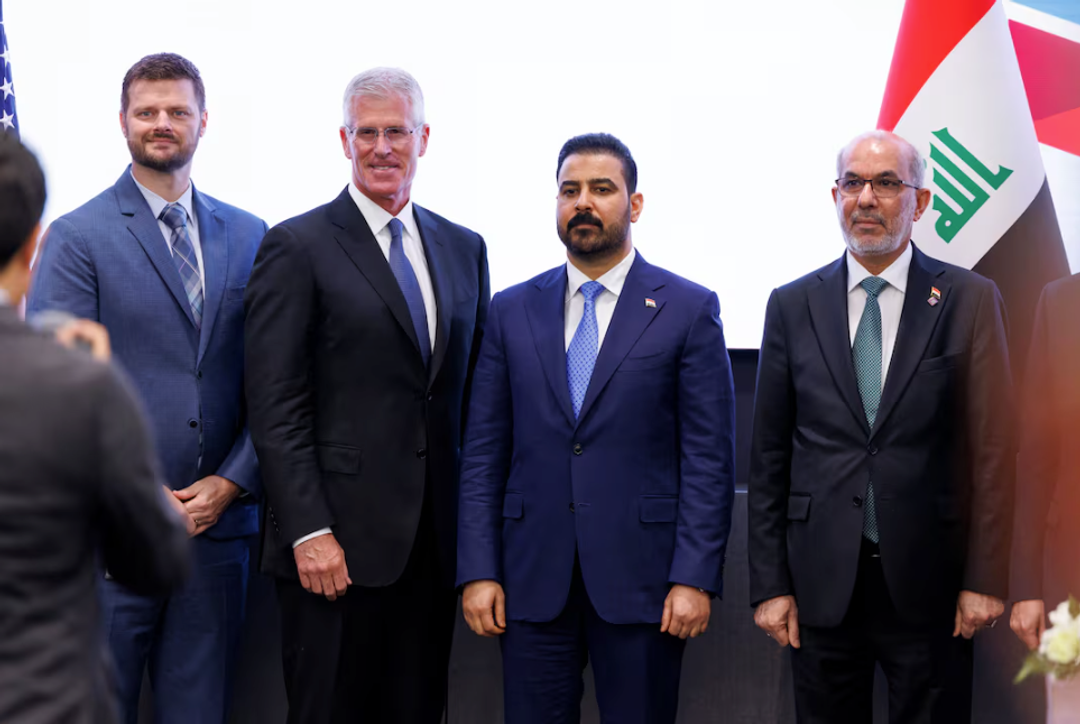
Iraq and Syria signed a deal in Washington to revive a major crude oil pipeline, giving Iraqi oil a new path to the Mediterranean Sea and away from the crowded Strait of Hormuz. The agreement, backed by the United States, was signed at a US-Iraq Business Council meeting, with US Energy Secretary Chris Wright present at the ceremony, according to TRT World.
The Kirkuk-to-Baniyas pipeline has been offline since the 2003 US-led invasion of Iraq. The new deal sets an initial capacity of 2 million barrels per day — nearly three times the pipeline's old capacity of 700,000 barrels per day, Kurdistan 24 reported.
Chevron Leads Rehabilitation of Decades-Old Pipeline
The State Department called the project a 'priority infrastructure project of bilateral and regional strategic significance.' A US-led international consortium will handle the technical and financial work. Chevron has been identified as the lead implementer, marking a private-sector-driven effort rather than a straight government-to-government deal, according to Washington Examiner.
Signatories included the Basra Oil Company and the Syrian Petroleum Company. Officials framed the deal around private US investment and knowledge transfer. The pipeline runs from Kirkuk in northern Iraq to the Syrian port of Baniyas on the Mediterranean coast, according to Discovery Alert.
Why Bypassing the Strait of Hormuz Matters So Much
About 20 million barrels of oil pass through the Strait of Hormuz every day. That is roughly 20% of all global oil trade. The strait sits between Iran and the Arabian Peninsula, making it a pressure point during regional tensions. A pipeline route to the Mediterranean removes that single point of failure for Iraqi exports, TRT World noted.
Iraq currently exports most of its oil through the Persian Gulf. If the Strait of Hormuz were blocked or disrupted, Iraq would have almost no other way to move its oil to buyers in Europe. The revived pipeline changes that calculus, Washington Examiner reported.
Expansion Plans Could Push Capacity to 2.5 Million Barrels
Officials have discussed going beyond the initial 2 million barrels per day target. Additional pipeline lines could raise total throughput to around 2.5 million barrels per day, with routes potentially running through Turkey as well as to the Mediterranean, according to Crypto Briefing.
The expansion talk reflects a broader US goal to deepen energy ties across the region. Getting more Iraqi oil to European markets faster also reduces Europe's dependence on other suppliers. Officials see the project as a long-term strategic infrastructure investment, not just a short-term fix, Kurdistan 24 reported.
Iraq and Syria Find Common Ground on Energy After Years Apart
The deal is notable because Iraq and Syria have had limited cooperation for years amid the Syrian civil war. Signing the memorandum of understanding in Washington signals that both governments see energy infrastructure as a way to reset ties. The ceremony gave the project a high-profile stage and strong US endorsement, TRT World noted.
The pipeline is one of the Middle East's oldest energy assets. Restoring it would reconnect Iraqi production to Mediterranean markets that it served decades ago. Rehabilitation work now shifts to the US-led consortium, which must assess the condition of aging infrastructure that has sat idle for more than 20 years, Discovery Alert reported.
Sentiment
Mostly PositiveNEGATIVENEUTRALPOSITIVE
Publishers
10
Articles
7
Reach
17
A
AnonymousAuthor


