Spanish Broadcasts Soar
English-Speaking Audiences Increasingly Choose Spanish World Cup Broadcasts for Unique Experience.
Anonymous
Key Points
1
Telemundo’s World Cup branding and graphics system for 2026 extends far beyond traditional broadcast opens and score graphics. It’s designed to work across sponsorships, social video, marketing, and real-time production, creating a single cohesive identity across multiple outputs.
2
Telemundo’s design team treats the World Cup as a cross-platform package, not just a TV package—incorporating cinematic 3D elements, an insert system for information delivery, and distinct marketing/sponsorship visuals, all tied together with a broader design language that also accommodates AR, virtual sets, and Unreal real-time components.
3
The production approach emphasizes making the World Cup feel distinctly Telemundo, with host-city specificity and a strong Spanish-language connection designed to resonate with a broad audience, as described by Telemundo’s Jaime Peñalosa.
4
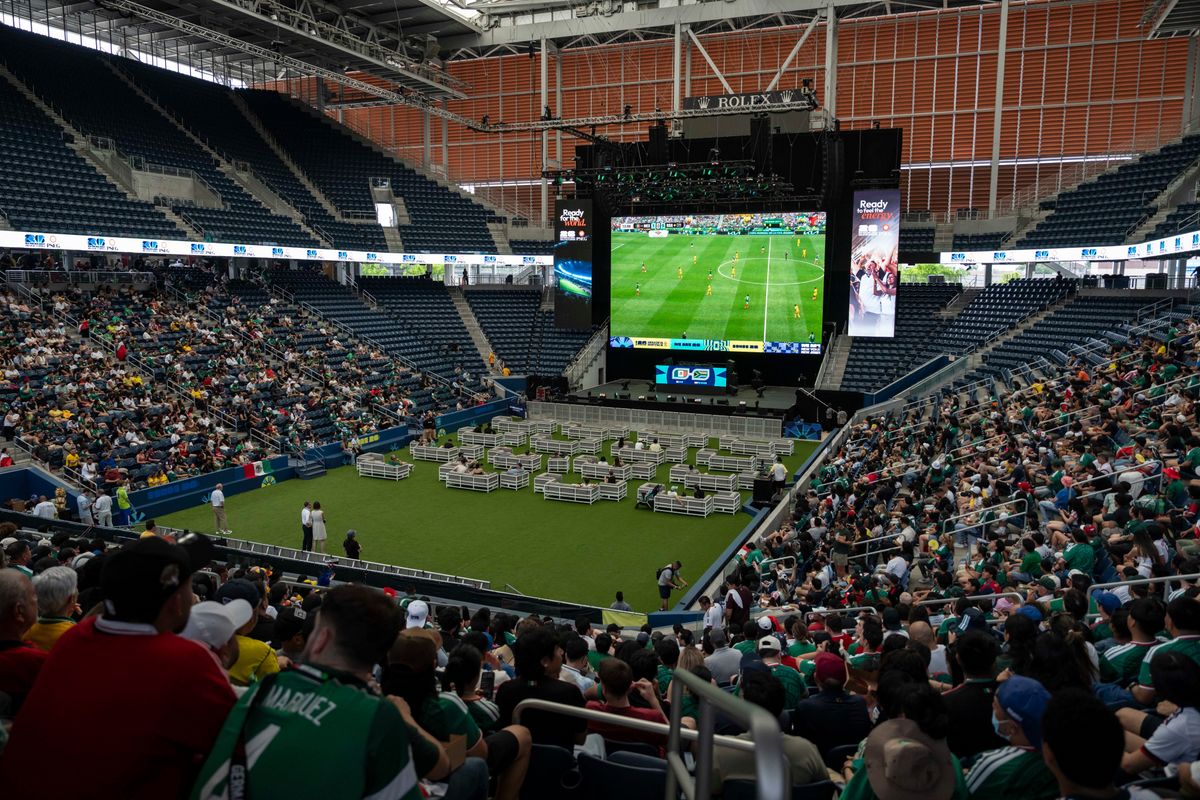
English-speaking viewers who don’t speak Spanish are still following Telemundo broadcasts; for example, Jackson Braunius, a Michigan native, watched a U.S. game in a Miami Lakes steakhouse and explained he could understand enough by listening to cues, noting “When they’re not talking too loud, nothing is happening. When they get loud, there’s a chance.”
Millions of English-speaking Americans are watching the World Cup in Spanish — even if they don't understand a word. Telemundo and its cable partner Universo are pulling in non-Spanish viewers drawn by raw emotion, Andrés Cantor's legendary goal calls, and a broadcast style that rarely cuts away for commercials, according to CKOM.
The numbers back it up. About 20% of Americans are Hispanic, yet Telemundo says roughly half of all U.S. World Cup viewers have watched at least part of a match in Spanish, according to Shoreline Media. That gap between the Hispanic population and the Spanish-broadcast audience tells a clear story: soccer is crossing language lines.
"When They Get Loud, There's a Chance"
Jackson Braunius, a Michigan native, watched a U.S. match at a Miami Lakes steakhouse with the Telemundo feed on. He doesn't speak Spanish. It didn't matter. "When they're not talking too loud, nothing is happening," he told Yahoo News. "When they get loud, there's a chance." For many English-speaking fans, the announcer's volume is all the translation they need.
ESL teacher Ashleigh Hallam took it a step further. She started watching Spanish broadcasts to practice the language and learn football vocabulary at the same time, according to SE Missourian. Her story is not unusual. Fans across the country say the broadcasts feel more alive — and some are picking up Spanish along the way.
No Ad Breaks and Lower Streaming Costs Seal the Deal
Part of the appeal is practical. Telemundo does not cut to commercials during hydration breaks — the short stoppages that English-language networks often fill with ads. Viewers stay in the moment. The action never feels interrupted. For fans who hate missing a second of play, that alone is a reason to switch, according to CJME.
Cost matters too. Telemundo's streaming home is Peacock, which carries a lower subscription price than some rivals. English-language sports packages can be expensive. For budget-conscious viewers who just want to watch the game, a cheaper Spanish-language stream is an easy choice — even if they only catch one word in ten.
Telemundo Builds a Cross-Platform World Cup Identity
Telemundo is not just showing games — it is building a full media package around them. The network's design team created a single visual identity for the 2026 World Cup that covers broadcast graphics, social video, sponsorships, and real-time marketing. Cinematic 3D elements, augmented reality, and virtual sets all share the same look, according to Shoreline Media.
Telemundo's Jaime Peñalosa said the goal is to make the tournament feel distinctly Telemundo — tied to specific host cities and rooted in a Spanish-language culture that reaches beyond Hispanic households. The approach treats the World Cup as a streaming, broadcast, and social product all at once, not just a TV show with a score bug in the corner.
A Cultural Shift That Goes Beyond One Tournament
The trend points to something bigger than one World Cup cycle. Spanish-language media is reaching audiences that networks never expected to attract. Younger English-speaking fans grew up in more diverse neighborhoods and schools. Spanish sounds familiar to them, even if they never formally learned it, according to CKOM.
For Telemundo, every non-Hispanic viewer who tunes in is a bonus. The network built its coverage for Spanish speakers. But the emotion of the game — and Cantor's screaming "GOOOOOL" — translates into any language. As the 2026 World Cup approaches, broadcasters on both sides of the language divide are paying close attention to where fans are actually watching.
Sentiment
Mostly NegativeNEGATIVENEUTRALPOSITIVE
Publishers
14
Articles
119
Reach
133
A
AnonymousAuthor


