India Protests Deadly Iran Strike
India Protests Iran Missile Strike Killing Seafarer in Strait of Hormuz
Anonymous
Key Points
1
Two UAE-flagged tankers, the Mombasa and Al Bahiya, were targeted in the southern lane of the Strait of Hormuz inside Omani territorial waters by two Iranian cruise missiles, with fires reported on both vessels.
2
Iran’s Islamic Revolutionary Guard Corps Navy claimed the tankers were at fault, saying they had switched off navigation systems, ignored warnings from Iranian authorities, and drifted into a minefield, which led to the ships being struck and disabled.
3
India has a pattern of diplomatic actions regarding Hormuz incidents, with April reports noting that New Delhi summoned Iran’s ambassador Mohammad Fathali after an India-flagged vessel came under fire in the Strait of Hormuz.
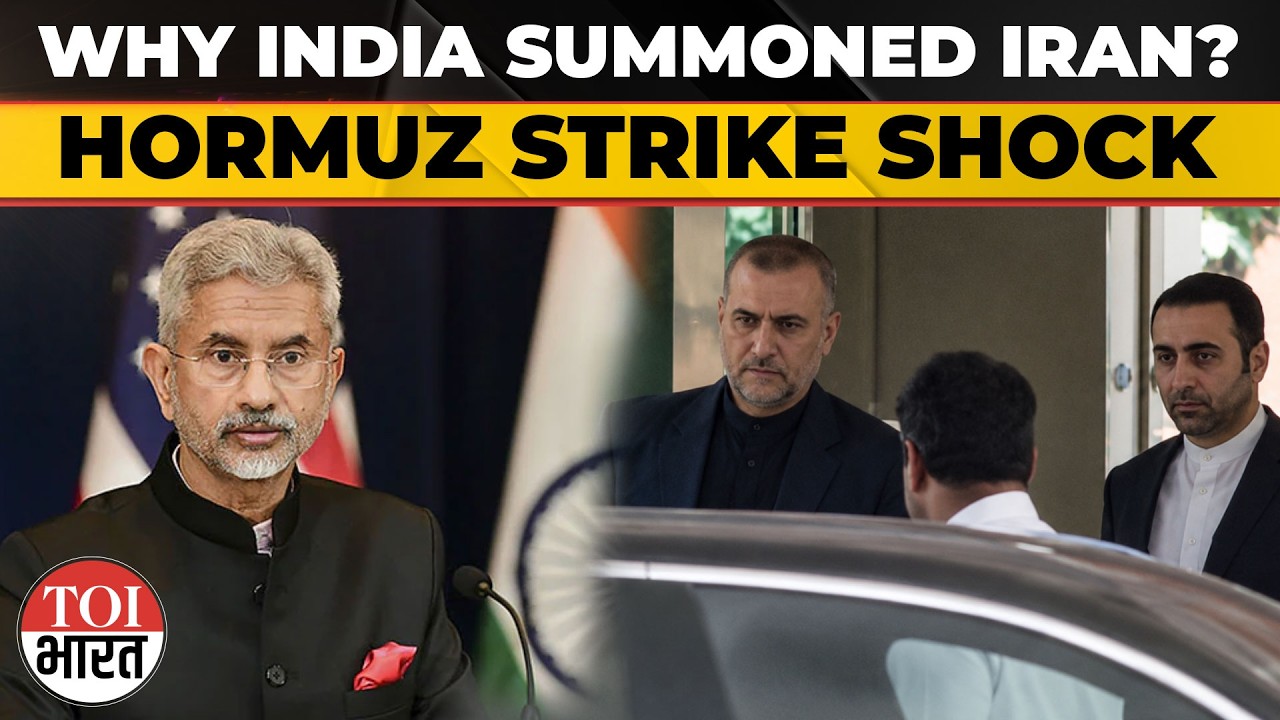
India summoned Iran's deputy ambassador on Thursday to protest the killing of an Indian seafarer in the Strait of Hormuz. The Indian Foreign Ministry lodged a formal complaint with Deputy Chief of Mission Mohammad Javad Hosseini, according to Market Screener. The victim was one of 46 crew members aboard two UAE-flagged tankers struck by Iranian missiles.
The two tankers, MT Mombasa and MT Al Bahiya, were hit in the southern lane of the Strait of Hormuz inside Omani territorial waters. Thirty of the 46 crew members were Indian. One Indian sailor was killed and eight others — from India and Ukraine — were injured, Tri-City Herald reported.
Iranian Missiles Hit Two Tankers Near Omani Waters
Iran's Islamic Revolutionary Guard Corps Navy fired two cruise missiles at the tankers. Both ships caught fire. The attack took place in a narrow and critical shipping corridor — the Strait of Hormuz — through which roughly 20% of the world's oil supply passes each day.
Iran's IRGC Navy defended the strike. It claimed the tankers had switched off their navigation systems and ignored repeated warnings from Iranian authorities. The IRGC also said the ships had drifted into a minefield, which led to them being struck and disabled, according to Q106FM.
India Demands Answers, Presses for Consular Access
India's Foreign Ministry called the attack a direct threat to its nationals and to safe passage through the Strait. New Delhi pressed Tehran for consular access to the affected crew members. India said it expects Iran to protect Indian seafarers and ships passing through the vital route.
This is not India's first diplomatic move over Hormuz. In April, New Delhi summoned Iran's ambassador Mohammad Fathali after an India-flagged vessel came under fire in the same strait. India has now escalated twice in quick succession, showing growing concern over its maritime interests in the region, according to Kansas.
UAE Calls Strike a Violation of International Law
The UAE, whose flag both tankers flew, condemned the attack in strong terms. Emirati officials described it as a serious violation of international law. The UAE called for accountability and said no justification exists for striking civilian commercial vessels in international shipping lanes.
The incident has further strained US-Iran tensions in the Gulf. The United States has a significant military presence in the region and closely monitors the Strait of Hormuz. Any disruption to shipping there sends immediate shockwaves through global oil and energy markets.
India's Growing Effort to Protect Seafarers Abroad
India is home to one of the world's largest pools of merchant seafarers. Tens of thousands of Indians work on commercial ships worldwide. When incidents occur — especially in high-risk zones like the Strait of Hormuz — the Indian government faces intense pressure to act fast and protect its citizens.
India's back-to-back summoning of Iranian diplomats signals a tougher stance. New Delhi is making clear it will not stay silent when Indian lives are lost at sea. The Foreign Ministry said it will continue to press Tehran for full transparency on what happened aboard the MT Mombasa and MT Al Bahiya.
Sentiment
Mostly NegativeNEGATIVENEUTRALPOSITIVE
Publishers
32
Articles
110
Reach
142
A
AnonymousAuthor


