Record-Breaking Efficiency Concept
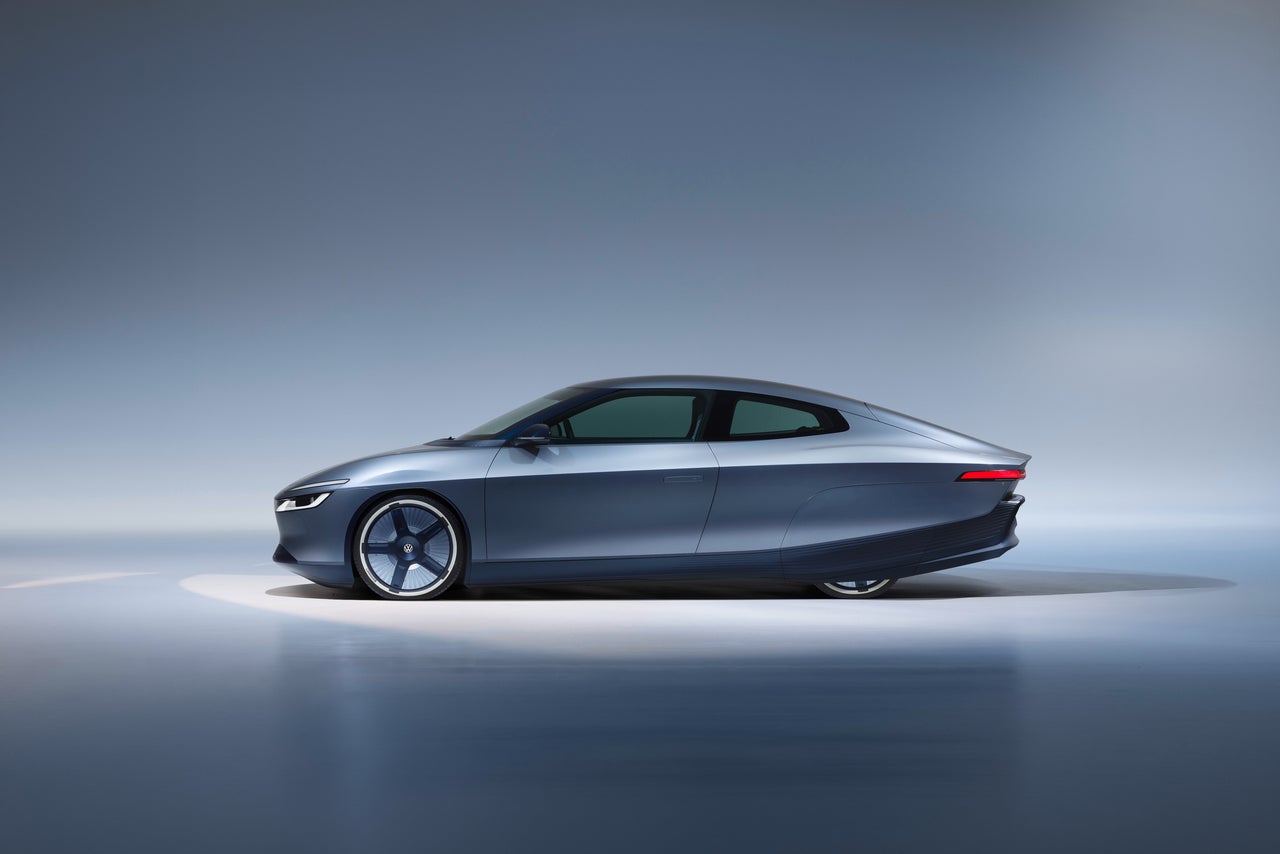
Volkswagen Unveils Mission Efficiency Concept With Record-Breaking Aerodynamics and Range
Anonymous
Key Points
1
Volkswagen says Mission Efficiency achieved a drag coefficient of 0.158, which it describes as more aerodynamic than any other vehicle approved for road use; the Record Institute Germany recognized the three records in the category of near-production, four-seat electric vehicles suitable for everyday use.
2
One of the three records was achieved under highly controlled conditions: a constant 42 mph, no uphill sections and the air conditioning and other peripheral systems switched off. Under those conditions, the car achieved 9.6 miles per kWh.
3
The Wolfsburg-to-Vienna test route passed through Poznań, Poland, and Olomouc—referred to in the source as Olmütz—in the Czech Republic, and the trip was chosen partly because Volkswagen launched the ID. Polo in Vienna.
4
Although Mission Efficiency uses the ID. Polo’s entry-level 114-hp motor, it pairs that motor with the larger battery; in the production ID. Polo, the motor is offered only with the smaller 37-kWh battery and front-wheel drive.
5
Auto Express reported that the aerodynamic four-seat concept could potentially reach showrooms at a price of about £42,000, although Volkswagen has not confirmed it as a production model.
Volkswagen unveiled Mission Efficiency, a sleek electric concept car designed to prove that mainstream EVs can go far without massive batteries. The 2+2 coupé achieved three records using the same motor and battery from the regular ID. Polo, hitting an average of 7.51 kilowatt-hours per 100 kilometers—equivalent to 8.3 miles per kWh—on a 794-mile drive from Wolfsburg to Vienna Yahoo News. The car required just one charging stop and arrived with 164 kilometers of range left.
The car's secret: obsessive attention to efficiency without exotic tech. A drag coefficient of 0.158 makes it more aerodynamic than any other road-legal vehicle. The Independent reports the Record Institute Germany certified three records in the near-production, four-seat category. Under controlled lab conditions at a steady 42 mph, it achieved 9.6 miles per kWh—suggesting 500-mile range is possible under ideal circumstances.
How a Smaller Battery Beats Bigger Rivals
Mission Efficiency pairs a modest 54.9-kWh battery with a 135-horsepower front-wheel-drive motor pulled from Volkswagen's MEB+ platform. That same battery and motor power the regular ID. Polo, but the efficiency car weighs less and cuts wind resistance. Yahoo News notes the concept uses covered rear wheels, low-rolling-resistance tires, and active cooling shutters to minimize energy waste. Even a smartphone-based infotainment system replaces heavier traditional units.
The Real-World Gap Between Lab and Everyday Driving
The headlines depend on cherry-picked conditions: flat terrain, steady 42 mph speeds, air conditioning off, and no traffic. On the Vienna run, the car averaged just 7.51 kWh per 100 kilometers because it drove at mixed speeds averaging well below the 86 mph maximum. Real drivers will see consumption rise with highway speeds, cold weather, heating demands, hilly terrain, and heavier loads. Charging losses also eat into the official figures.
A Blueprint for Affordable EV Improvements, Not a Future Showroom Car
Volkswagen has not confirmed Mission Efficiency as a production model. Instead, the company frames it as a technology demonstrator—proof that efficiency gains don't require bigger batteries or exotic materials. Auto Express reported the concept could potentially reach showrooms around £42,000, but The Independent notes this is speculation only. The real value lies in transferring its aerodynamic design and lightweight construction to future mass-market models.
If Volkswagen applies these techniques to the regular ID. Polo or other entry-level EVs, buyers could get longer range without larger, costlier batteries. Smaller packs mean lower prices, lighter weight, and shorter charging times—all advantages that trickle down to affordability and practicality.
Sentiment
Mostly PositiveNEGATIVENEUTRALPOSITIVE
Publishers
53
Articles
48
Reach
101
A
AnonymousAuthor


