Plant Defense Shift
Volkswagen plans to convert its Osnabrück plant for Israeli defense manufacturing, saving local jobs.
Anonymous
Key Points
1
The Iron Dome is designed to intercept short-range rockets, artillery shells, mortars and drones at ranges of up to 43 miles, targeting projectiles calculated to be heading toward populated areas.
2
Germany’s prospective localization deal follows major purchases of Israeli missile-defense technology: Berlin signed a $3.5 billion contract for Arrow 3 missiles in 2023 and later agreed to a $3.1 billion follow-up purchase.
3
The structure excluding Rafael from direct ownership may help limit opposition from Qatar’s sovereign wealth fund, which holds about 17% of Volkswagen’s voting rights and two seats on its supervisory board; Qatar’s relations with Israel have deteriorated since the Gaza war began in 2023.
4
The proposed Osnabrück conversion comes as Volkswagen faces wider restructuring: management and labor representatives recently agreed to eliminate another 50,000 positions across the group, taking the projected total of job losses in coming years to roughly 100,000, while the future of four other German factories remains uncertain.
5
Volkswagen CEO Oliver Blume described the arrangement as “an important step towards opening up a new industrial future for the site” and said the company “stands by its responsibility for Osnabrück.”
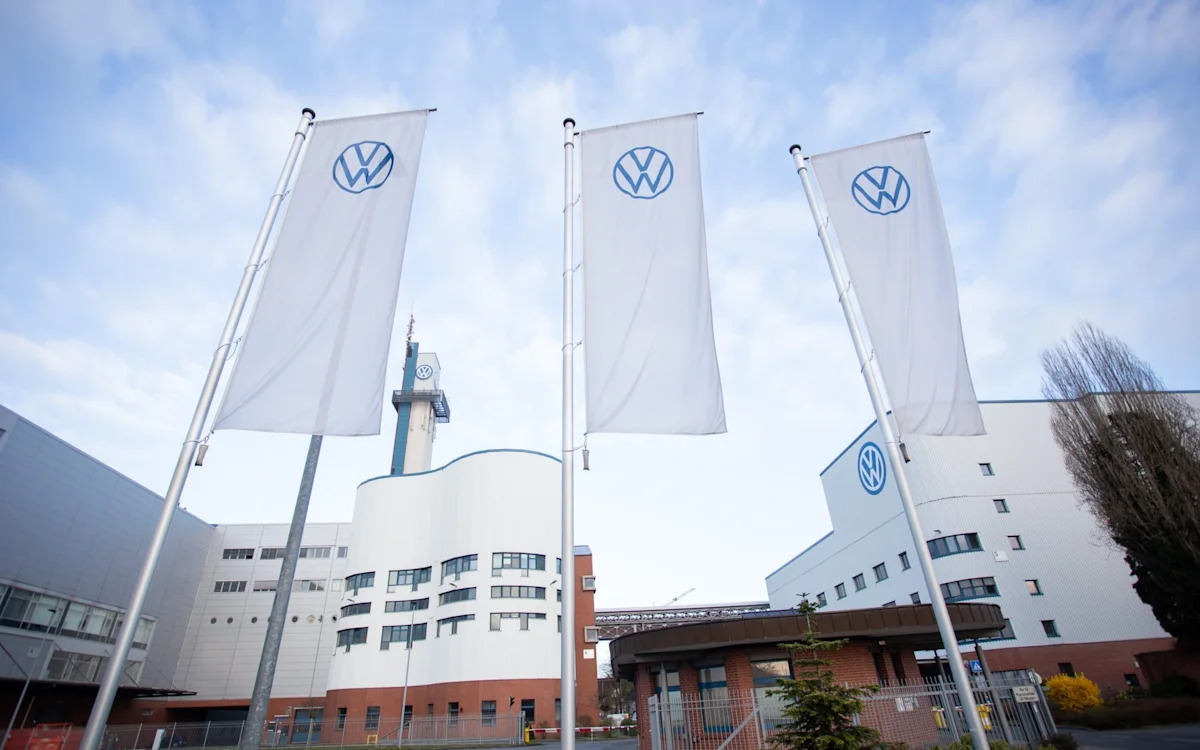
Volkswagen plans to sell its Osnabrück plant to private-equity firm Aurelius Capital and Germany's Lower Saxony state, ending car production there by summer 2027 and converting the site to defense manufacturing Yahoo Finance. The facility will produce air-defense components for Rafael Advanced Defense Systems, the Israeli firm behind the Iron Dome missile system, with production focused on auxiliary equipment rather than the interceptor missiles themselves Alethonews. The deal could preserve 1,200 to 1,400 jobs at the plant, which currently employs roughly 1,800 people.
The arrangement sidesteps direct Israeli ownership by using Aurelius as a middleman buyer—a structure designed to manage opposition from Qatar's sovereign wealth fund, which holds 17% of VW's voting rights Yahoo Finance. The move reflects Europe's growing defense spending and comes as Volkswagen faces intense pressure from Chinese electric-vehicle competition, weak demand, and high German production costs.
Why Volkswagen Is Abandoning Passenger Cars
Volkswagen's broader restructuring reveals the company's struggle to compete in Europe. The automaker recently approved eliminating 50,000 jobs across the group, with total projected cuts reaching 100,000 in coming years Yahoo Finance. High German labor costs, weak EV demand, and aggressive competition from Chinese manufacturers like BYD have forced management to shutter less profitable lines.
The Osnabrück plant, which has produced cars for 125 years, became a natural candidate for closure. Rather than simply shut down the factory, VW sought a buyer willing to preserve local employment and inject fresh industrial investment into the region.
How Qatar's Stakes Forced a Complex Deal Structure
Volkswagen initially explored a direct partnership between its Osnabrück facility and Rafael Advanced Defense Systems. That plan collapsed when Qatar Investment Authority—which owns 17% of VW's voting rights and holds two supervisory board seats—objected due to geopolitical tensions Yahoo Finance. Qatar's relations with Israel have deteriorated sharply since the Gaza war began in 2023.
To bypass Qatar's veto, VW structured the deal differently. Aurelius Capital will acquire majority ownership of the Osnabrück plant, with Lower Saxony taking a minority stake. Rafael will then operate as a long-term production partner, avoiding direct Israeli ownership that Qatar could block.
What the Plant Will Actually Manufacture
The facility will produce air-defense components, military vehicles, mobile launchers, and power generators—but not the Tamir interceptor missiles themselves Alethonews. The goal is to localize production of defensive technologies in Germany, strengthening Europe's security independence from external suppliers.
Iron Dome systems defend against short-range rockets, artillery shells, mortars, and drones at ranges up to 43 miles. Germany has already committed heavily to Israeli defense systems, signing a $3.5 billion contract for Arrow 3 missiles in 2023 and a $3.1 billion follow-up purchase, making the Osnabrück deal part of a broader German rearmament strategy.
Opposition From Workers and Activists
The proposal has faced sharp criticism from peace activists, the Osnabrück Peace Initiative, and opposition politicians who argue the plant should remain dedicated to civilian manufacturing. Labor unions, however, have accepted the defense pivot as necessary to avoid outright closure and mass job losses Yahoo Finance.
VW CEO Oliver Blume framed the arrangement as preserving an important industrial future for the region. The company said it "stands by its responsibility for Osnabrück" while securing employment for roughly two-thirds of the current workforce. The deal still requires corporate approval, regulatory clearance, and antitrust review before execution.
Sentiment
Mostly NegativeNEGATIVENEUTRALPOSITIVE
Publishers
28
Articles
89
Reach
117
A
AnonymousAuthor


