King Harald's State Funeral
Norway Bids Farewell to King Harald as Global Leaders Gather in Oslo
Anonymous
Key Points
1
King Harald’s 35-year reign was associated with Norway’s economic boom, increasing cultural diversity and the national response to the 2011 far-right terrorist attack that killed 77 people. He was widely known as the “Grandfather of all Norway,” even as support for the monarchy declined amid scandals involving younger royals.
2
Harald and Sonja’s marriage was viewed as a landmark for European royalty because their decision to marry for love, rather than through a dynastic alliance, helped modernize Norway’s monarchy. Harald died just one day before their wedding anniversary after nearly 58 years of marriage.
3
Queen Sonja, who had recently faced heart complications, followed Harald’s coffin by car during the procession and was comforted by Norway’s new queen, Mette-Marit, who was herself recovering from a lung transplant.
4
Denmark’s King Frederik and Queen Mary postponed a planned state visit to Belgium to attend the funeral and joined the cortège from the Royal Palace to Oslo Cathedral. The close relationship between the Danish and Norwegian royal families dates back to Harald’s grandfather, Haakon VII, who was born Prince Carl of Denmark before becoming Norway’s first independent monarch in 1905.
5
Harald belonged to the Lutheran Church of Norway, rather than the Roman Catholic Church. Pope Leo XIV said popes do not generally attend funerals of world leaders and sent Cardinal Christophe Pierre and Vatican Ambassador Archbishop Julio Murat instead, along with a message praising Harald’s years of “devoted service to the realm.”
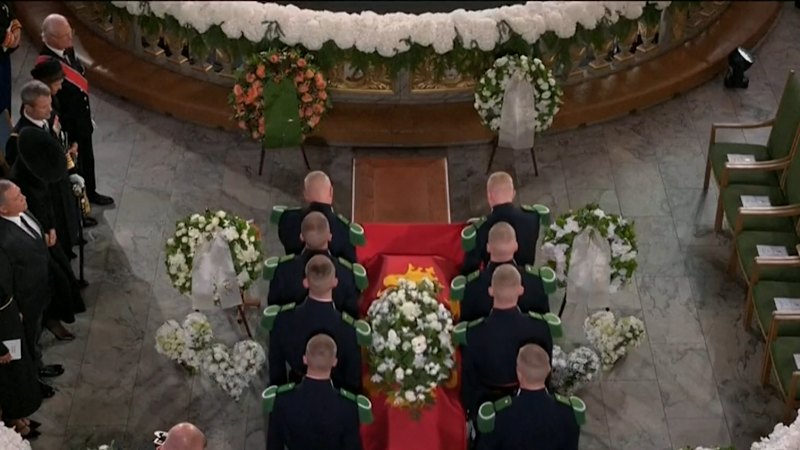
Norway held a state funeral for King Harald V on September 25 in Oslo, drawing European royals and world leaders to honor the beloved monarch who died August 28 at age 89. Albeu reported that thousands of Norwegians paid tribute at Oslo Cathedral and Akershus Fortress, while Queen Sonja, his wife of nearly 58 years, and other royal family members participated in the ceremony. Notably absent: U.S. President Donald Trump and Pope Leo XIV, whose lack of attendance sparked discussion about U.S.-Norway relations and diplomatic protocol.
Britain's Prince William, Denmark's King Frederik and Queen Mary, and delegations from Spain, Sweden and other European nations attended the funeral. Sydney Morning Herald noted that the ceremony celebrated Harald's 35-year reign, marked by Norway's economic growth, increasing cultural diversity, and national unity during crises like the 2011 far-right terrorist attack that killed 77 people.
A Modernizing Monarchy That Defined Norway
King Harald earned the title "Grandfather of all Norway" for his role in representing national continuity and stability across five decades. His 35-year reign coincided with the country's oil-driven economic boom, growing immigration, and the 2011 terrorist attack that killed 77 people. Harald's presence during these shifts symbolized civic unity rather than political power, since Norway's monarch holds ceremonial authority.
Support for the monarchy itself had declined amid scandals involving younger royals, yet Harald personally remained widely beloved. Globe and Mail reported that his funeral drew thousands of mourning Norwegians, suggesting his personal standing transcended institutional attitudes toward hereditary monarchy.
A Marriage Born From Love, Not Dynasty
Harald and Sonja's decision to marry for love, not dynastic alliance, modernized European royalty in 1960. Their nearly 58-year union redefined what it meant to be a Scandinavian monarch—personal connection mattered as much as formal duty. Harald died on August 27, just one day before their wedding anniversary.
Queen Sonja, who recently battled heart complications, followed Harald's coffin by car during the procession through Oslo. Sydney Morning Herald reported that Norway's new queen, Mette-Marit, comforted Sonja; Mette-Marit herself was recovering from a lung transplant, symbolizing how grief and resilience marked the royal family's transition.
European Royals Honor Nordic Ties Rooted in History
Denmark's King Frederik and Queen Mary postponed a state visit to Belgium to attend Harald's funeral, joining the cortège from the Royal Palace to Oslo Cathedral. This close relationship echoes deeper Nordic history: Harald's grandfather, Haakon VII, was born Prince Carl of Denmark before becoming Norway's first independent monarch in 1905 after Norway peacefully separated from Sweden.
The attendance of Nordic and other European royals demonstrated how diplomatic and dynastic networks still shape royal ceremonies. Albeu noted that delegations from Spain, Sweden, and other nations underscored the international recognition that Harald earned during his long reign.
Trump and the Pope Signal Different Diplomatic Absences
President Trump traveled to Texas instead of attending the funeral, represented by a senior State Department official. His absence drew comment partly because then-Vice President Dan Quayle attended King Olav V's funeral in 1991, suggesting a shift in U.S. diplomatic priority toward Scandinavian royal ceremonies.
Pope Leo XIV also did not attend, but his absence reflected established protocol: popes generally do not travel to funerals of world leaders. Instead, he sent Cardinal Christophe Pierre and Vatican Ambassador Archbishop Julio Murat, along with a message praising Harald's "devoted service to the realm." Since Harald belonged to the Lutheran Church of Norway, not the Roman Catholic Church, the Vatican's gesture preserved diplomatic respect without implying religious equivalence.
Sentiment
Mostly NegativeNEGATIVENEUTRALPOSITIVE
Publishers
14
Articles
93
Reach
107
Topics
A
AnonymousAuthor


