New Horizons: Data Collection Continues
NASA's New Horizons Spacecraft Awakes from Long Sleep, Resumes Crucial Kuiper Belt Exploration
Anonymous
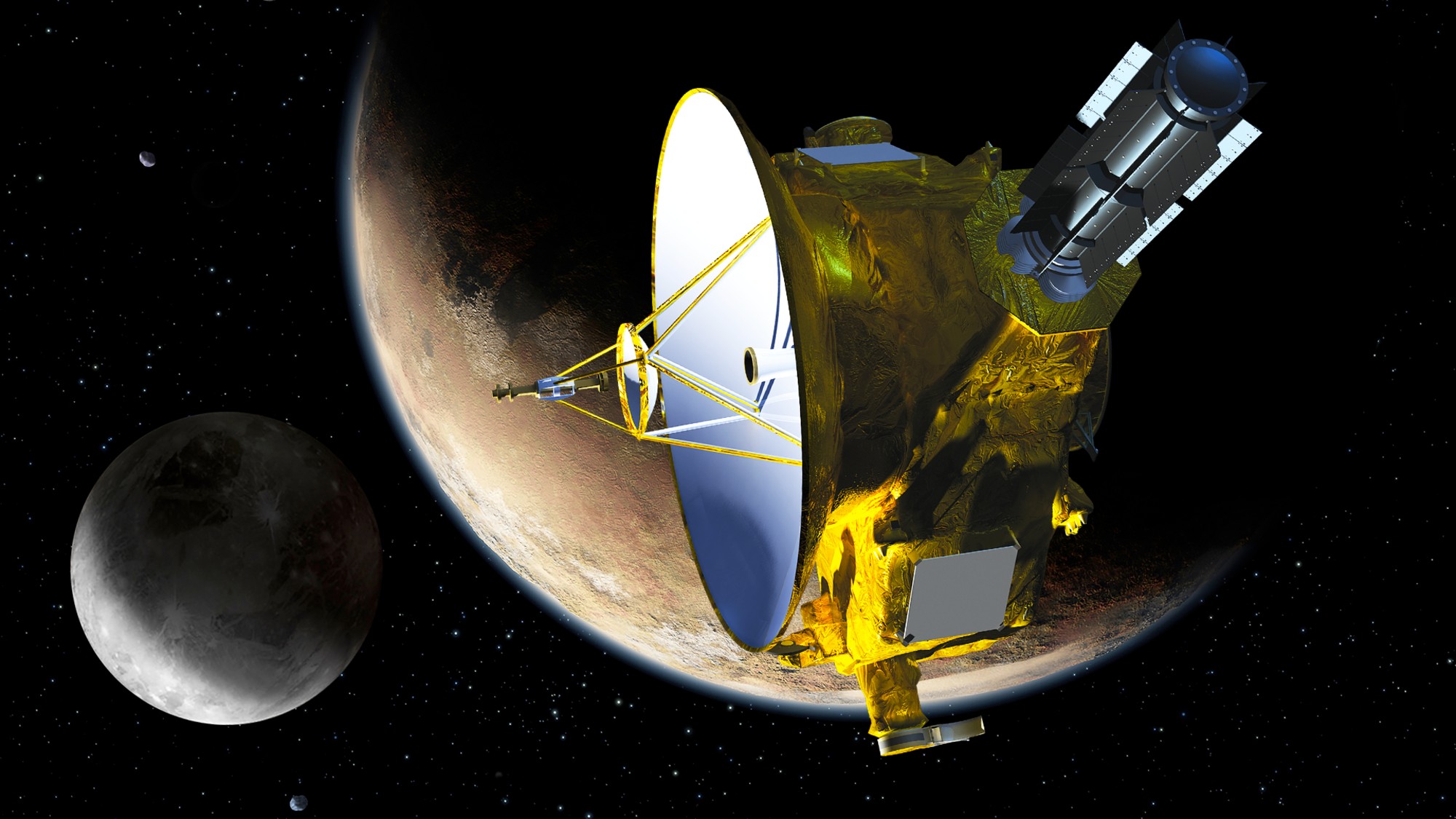
NASA's New Horizons spacecraft has woken up from its longest hibernation ever, nearly 5.9 billion miles from Earth. WESH reported that the probe entered its deep sleep on August 7, 2024, and was successfully revived on June 23, 2025, using commands stored on its main computer.
Flight controllers confirmed the spacecraft is in good health and ready to send back a stream of science data collected while it slept. New Horizons is now deeper in space than any probe has explored in such detail, pushing the boundaries of what scientists know about the outer solar system.
A Record-Breaking Sleep at the Edge of Space
New Horizons went into hibernation mode to conserve power and reduce wear on its systems. The sleep lasted roughly 10 months — the longest the spacecraft has ever been in that state. According to WMUR, the probe uses stored commands to wake itself up without needing real-time contact from Earth. That is critical, because a radio signal takes hours to travel 5.9 billion miles.
The spacecraft is still moving outward through the Kuiper Belt, a vast ring of frozen objects beyond Neptune. It has been traveling since its 2006 launch and made history in 2015 with the first-ever close flyby of Pluto. Now it is well past Pluto, exploring territory no mission has studied this closely before.
Kuiper Belt Science Collected During the Long Nap
Even while sleeping, New Horizons kept gathering data. WYFF4 reported that the spacecraft measured the rotation rates, orientations, and shapes of frozen Kuiper Belt objects. These chunks of ice and rock are leftovers from the early solar system. Studying them helps scientists understand how the planets formed billions of years ago.
The probe also continued mapping what scientists call the heliosphere — the giant bubble of solar wind that surrounds our solar system. Understanding its edges helps researchers learn how well it shields planets from harmful radiation coming from deep space.
Cosmic Ray Data Could Protect Future Space Travelers
One of New Horizons' key instruments is called the Pluto Energetic Particle Spectrometer Science Investigation, or PEPSSI. It measures galactic cosmic rays — high-energy particles fired from distant exploding stars. According to KCRA, these rays are one of the most serious threats to astronauts on long-duration missions, such as a future trip to Mars.
By measuring cosmic ray levels this far from Earth, scientists can better understand the risk to any humans who travel beyond the protection of Earth's magnetic field. The data New Horizons collects is unique — no other operating spacecraft is this far out in space collecting this kind of information.
Mission Could Survive Until 2029 and Beyond
New Horizons runs on a nuclear power source called an RTG, which slowly loses power over time. WGAL reported that the mission is currently funded through 2029. If the spacecraft remains healthy, scientists hope to extend that funding and keep exploring. Each year it travels deeper into interstellar space — the region between stars.
The probe joins a short list of spacecraft venturing into the outermost reaches of the solar system, alongside the older Voyager 1 and Voyager 2 probes. But New Horizons carries more modern instruments, giving scientists a sharper picture of what lies at the very edge of our cosmic neighborhood.
Sentiment
NeutralNEGATIVENEUTRALPOSITIVE
Publishers
6
Articles
6
Reach
6
A
AnonymousAuthor


