Pioneering Breast Cancer Treatment
FDA Approves Celcuity's Gedatolisib as First Pan-PI3K/mTORC1/2 Inhibitor for Breast Cancer
Anonymous
Key Points
1
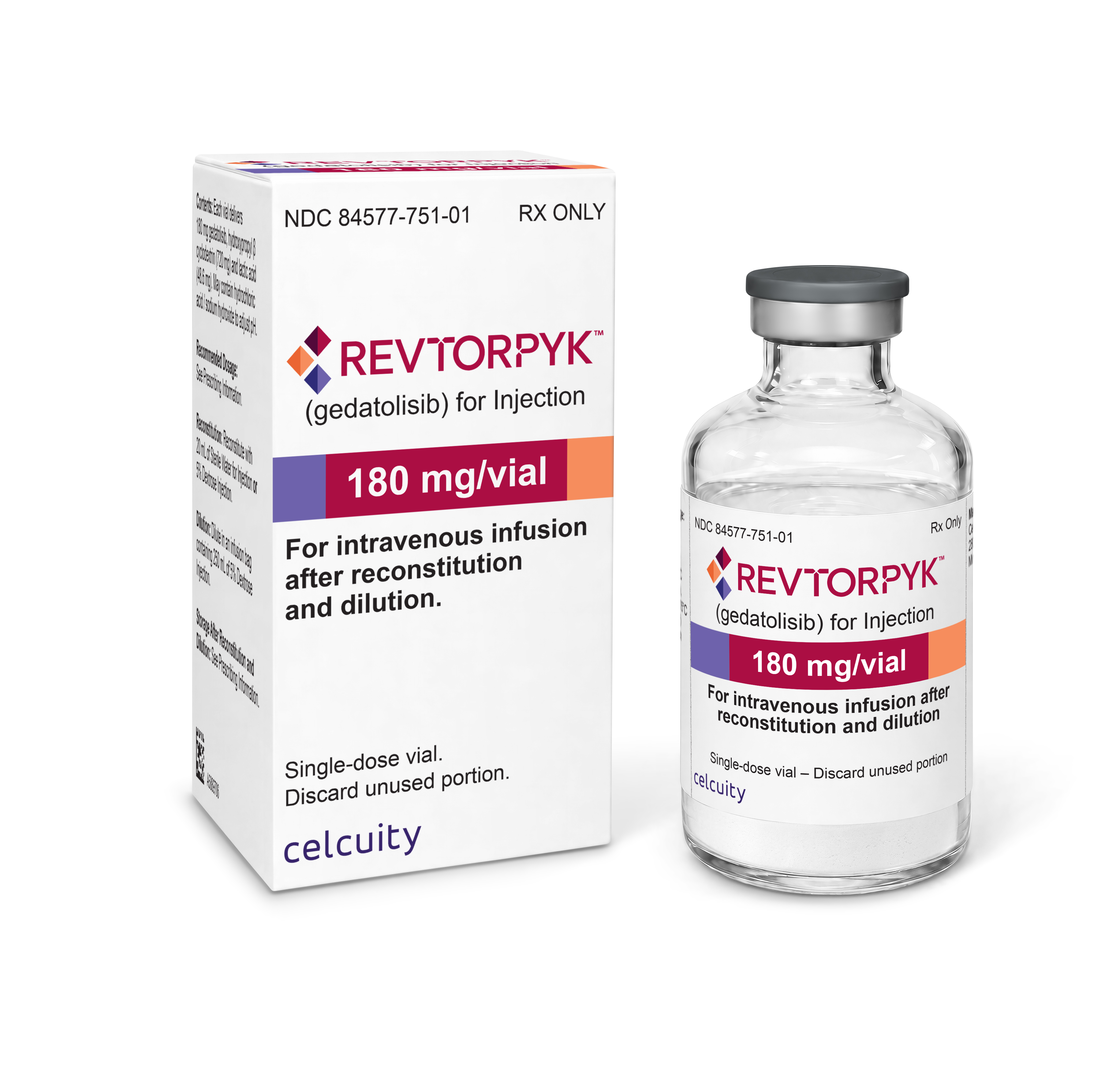
GEDATOLISIB (Revtorpyk) is the first FDA-approved therapy that inhibits all class I PI3K isoforms (α, β, δ, γ) and both mTORC1 and mTORC2 (pan-PI3K/mTORC1/2 inhibitor).
2
In VIKTORIA-1, gedatolisib combined with fulvestrant and palbociclib (or with fulvestrant alone) significantly extended progression-free survival versus fulvestrant alone, with the triplet achieving a median PFS of 9.3 months (HR 0.24) and the doublet 7.4 months (HR 0.33).
3
HR+/HER2- breast cancer accounts for about 70% of all breast cancers, and within this subtype roughly 60% have PIK3CA wild-type disease, highlighting the relevant patient population for this approval.
4
The drug regimen for gedatolisib approval is 180 mg IV once weekly for 30 minutes on days 1, 8, and 15 of each 28-day cycle (used in combination with fulvestrant, with or without palbociclib).
5
Despite the approval, Celcuity faces investor scrutiny, including a GF Score of 26/100 and insider activity showing about $4.8 million in share sales over the past three months.
The FDA has approved gedatolisib, now branded Revtorpyk, for adults with HR-positive, HER2-negative advanced breast cancer who lack a PIK3CA mutation — making it the first drug of its kind to block all class I PI3K isoforms and both mTORC1 and mTORC2, according to Celcuity. The approval targets a long-underserved group: patients whose tumors did not respond to prior endocrine therapy and have no detectable PIK3CA mutation.
HR+/HER2- breast cancer makes up roughly 70% of all breast cancers, per Fierce Pharma. About 60% of those patients have PIK3CA wild-type disease — the exact population this drug is approved for. That is a large group with few good options after standard treatments stop working.
Trial Data Shows Dramatic PFS Gains in Wild-Type Patients
The approval rests on results from the VIKTORIA-1 trial. Patients who got gedatolisib plus fulvestrant and palbociclib — a triplet regimen — had a median progression-free survival of 9.3 months, according to GuruFocus. That translates to a hazard ratio of 0.24, meaning their risk of disease progression was 76% lower than the fulvestrant-alone group.
The doublet — gedatolisib plus fulvestrant only — also beat the control arm, reaching a median PFS of 7.4 months with a hazard ratio of 0.33, GuruFocus reported. Both results were statistically significant. The data covers patients with PIK3CA wild-type disease, the group for which the drug is now approved.
What Makes Gedatolisib Different From Existing PI3K Drugs
Most existing drugs block only one part of the PI3K-AKT-mTOR pathway — often called the PAM pathway. Gedatolisib hits all four class I PI3K isoforms (alpha, beta, delta, and gamma) plus both mTOR complexes at once. No approved drug had done that before, according to Daily Guardian.
That broad blockade matters because tumors can escape single-target drugs by using alternative pathway branches. By shutting down the whole network, gedatolisib leaves fewer escape routes. It is given as a 180 mg intravenous infusion over 30 minutes on days 1, 8, and 15 of each 28-day cycle, in combination with fulvestrant — with or without palbociclib.
Celcuity Eyes Blockbuster Status, But Faces Investor Scrutiny
Fierce Pharma called gedatolisib a "breast cancer blockbuster hopeful" and suggested Celcuity "could belong in the hands" of a Big Pharma company. The drug targets one of oncology's largest patient populations, which could make it a major commercial asset.
Still, investors are watching Celcuity closely. The company carries a GF Score of just 26 out of 100, per GuruFocus. Insiders have sold roughly $4.8 million worth of shares over the past three months. Celcuity is a clinical-stage biotech with no product revenue yet, meaning commercial execution will be the next big test.
What Comes Next for Patients and the Drug's Broader Use
The current approval covers only PIK3CA wild-type patients who progressed on endocrine therapy. But the VIKTORIA-1 trial also enrolled patients with PIK3CA mutations, and those results could support a future label expansion, according to Morningstar.
Fierce Pharma noted that Celcuity is a small biotech now stepping into full commercialization for the first time. The company will need to build out a sales force, navigate payer coverage decisions, and compete in a market that already includes alpelisib and other targeted agents. The FDA approval is a milestone — but the harder work may be just beginning.
Sentiment
Mostly PositiveNEGATIVENEUTRALPOSITIVE
Publishers
14
Articles
61
Reach
75
Topics
A
AnonymousAuthor


