Record Defense Buildup
Japan Seeks Record Defense Budget With AI, Drones, and Hypersonic Missiles
Anonymous
Key Points
1
The budget explicitly contemplates interceptors as part of its long-range missile architecture, with attack drones planned to operate in coordination with long-range missiles and interceptors.
2
Nikkei reported that the defense request may jump to more than 10 trillion yen, signaling the potential scale of the planned buildup.
3
The package includes a focus on improving working conditions for service members as part of the broader modernization and deterrence effort.
4
Several cost items—such as missiles, drones and digital systems—are still not priced in the current request and will be finalized during revisions.
Japan's Defense Ministry requested a record 8.9 trillion yen ($55.6 billion) budget for the fiscal year starting in April, with the final total potentially exceeding 10 trillion yen. Nikkei reported the massive increase signals Japan's shift from a strictly defensive posture to a more capable deterrent force, centered on AI-powered decision-making, low-cost drones, and standoff missiles to counter China, North Korea, and Russia.
The budget reflects Japan's effort to replace aging military personnel through unmanned systems while boosting air and sea warfare capabilities. Daily Sabah noted the ministry plans to counter "new ways of warfare" including cognitive warfare and disinformation campaigns, with several costly items like missiles and digital systems still being priced during final revisions.
AI and Drones Shape Japan's Military Modernization
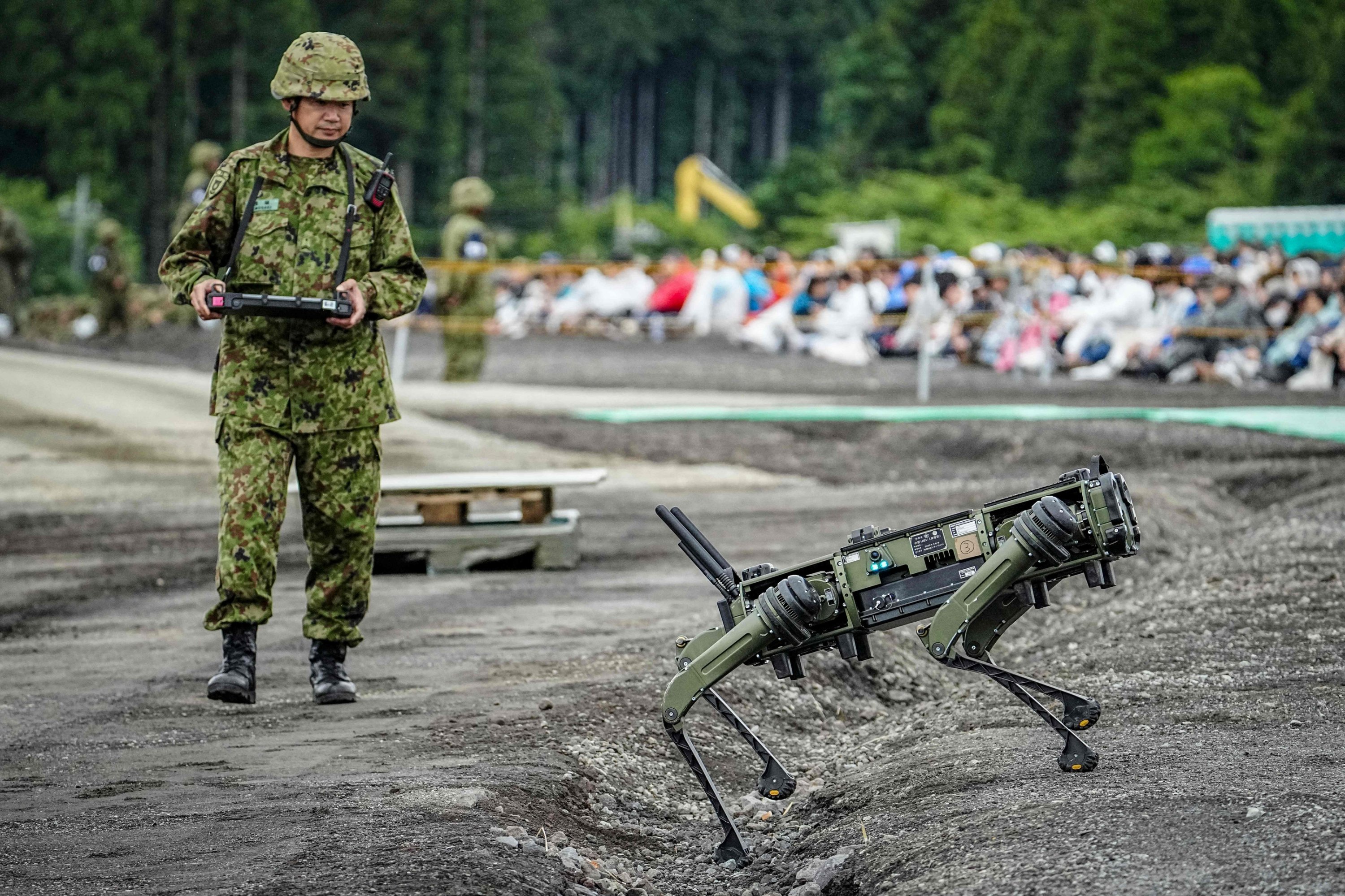
Japan plans to deploy AI-powered decision-support systems to speed up military choices and enable data-driven operations across the armed forces. Head Topics reported that low-cost drones will work in tandem with long-range missiles, allowing coordinated attacks across greater distances. This shift uses unmanned platforms to offset Japan's shrinking and aging military workforce.
The defense ministry is accelerating domestic development and mass production of unmanned air and sea systems. These robots reduce the need for more troops while extending Japan's combat reach. Combined with AI analysis, drones can operate with minimal human oversight, making operations faster and more efficient.
New Missiles and Hypersonic Weapons in the Arsenal
Japan's budget explicitly includes interceptors as part of a long-range missile architecture. The ministry plans attack drones to operate alongside these missiles and interceptors for layered defense. Additionally, the budget contemplates underwater-launched hypersonic missiles to strike distant targets faster than any existing defense system can respond.
Many missile and drone costs remain unfinalzed and will be set during budget revisions. Free Malaysia Today noted these systems are designed to deter regional rivals and extend Japan's defensive perimeter beyond its islands. The combination of speed, range, and AI coordination makes these weapons central to Japan's new deterrent strategy.
Regional Threats and Personnel Challenges Drive the Buildup
China's military growth, North Korea's weapons tests, and Russia's actions all push Japan to strengthen defenses. Daily Sabah reported that Ukraine's war intensifies East Asian security concerns, showing how regional conflicts can spread. Japan views this moment as critical to building deterrent capability before threats grow larger.
Japan also focuses on improving working conditions for service members as part of the modernization effort. With fewer young people entering the military, better pay and equipment become essential to recruitment and retention. The budget balances new weapons with soldier welfare to maintain a capable force amid demographic decline.
Sentiment
Mostly PositiveNEGATIVENEUTRALPOSITIVE
Publishers
28
Articles
109
Reach
137
A
AnonymousAuthor