Birthplace Repurposed
Austria Converts Hitler's Birthplace into Police Station to Deter Extremist Visits
Anonymous
Key Points
1
The property was privately owned by the Pommer family and housed a charitable organization for people with disabilities until 2011; Austria expropriated it in 2016 and the Supreme Court approved the state's purchase for about €810,000.
2
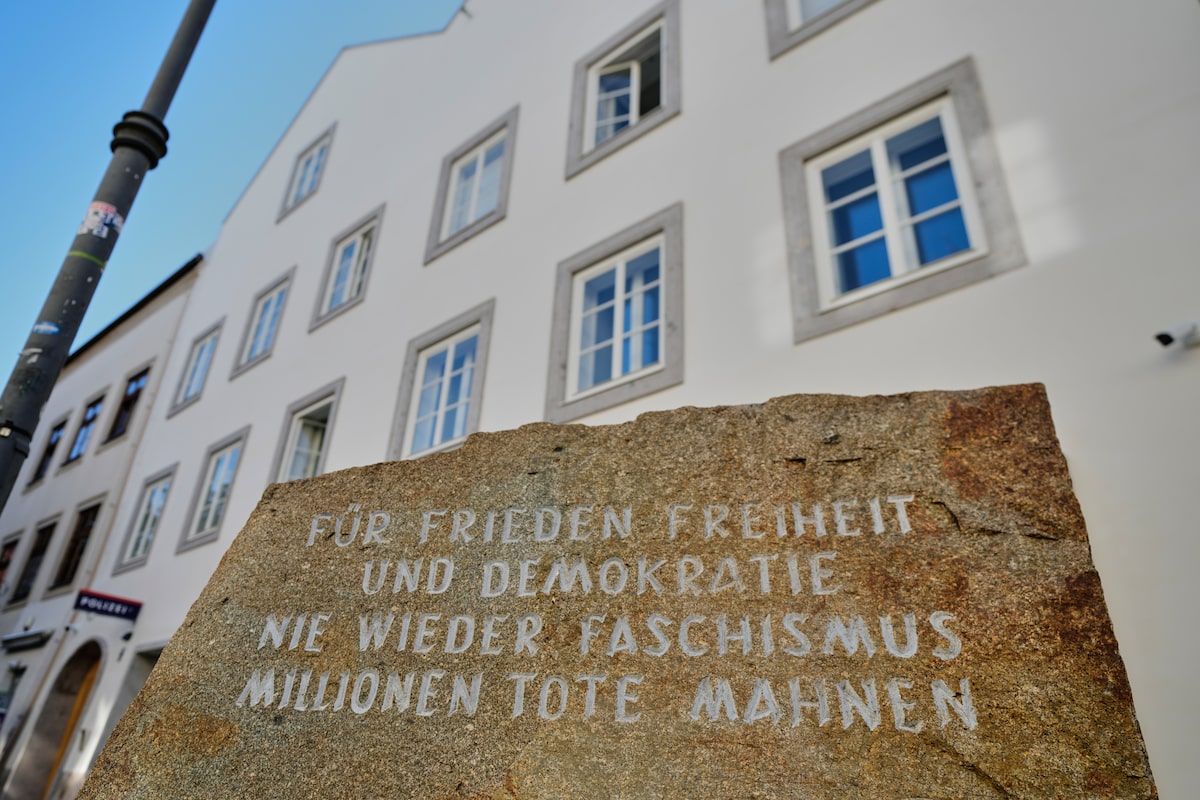
A memorial stone from the former Mauthausen concentration camp remains on the sidewalk outside the building, bearing the inscription: 'For Peace, Freedom and Democracy. Never Again Fascism. Millions of Dead Warn.'
3
An official history commission advised against converting the site into a museum and instead suggested options like a social‑services organization or a government office; demolition was ruled out due to monument protection status.
4
Architecturally, the site was transformed from its yellow plaster facade into a whitewashed exterior by architecture firm Marte, with new police signage and the building repurposed as an active district police station.
Adolf Hitler's birthplace in Braunau am Inn, Austria, has officially reopened as a fully operational district police station, in a deliberate move to strip the site of its appeal to neo-Nazi pilgrims. The €20 million renovation transformed the building's iconic yellow plaster facade into a stark white exterior, with police signage replacing any trace of its former identity. The Globe and Mail reported the inauguration marks the end of decades of debate over what to do with one of Europe's most politically charged addresses.
Austrian authorities argue that a permanent police presence is the most effective way to neutralize the site's extremist magnetism. The interior ministry says the transformation will permanently deter far-right activity at the location, which had long attracted those who glorify the Nazi dictator. KCRA reported the building was inaugurated specifically to prevent it from becoming a shrine.
A €20 Million Renovation Rewrites a Dark Landmark
Architecture firm Marte led the redesign, replacing the building's yellow plaster exterior with a whitewashed facade. New police signage was installed throughout. The interior was fully rebuilt to support active law enforcement operations. The result is a working police station that looks nothing like the building Hitler was born in on April 20, 1889.
One element was preserved deliberately. A memorial stone from the former Mauthausen concentration camp remains on the sidewalk outside. It reads: 'For Peace, Freedom and Democracy. Never Again Fascism. Millions of Dead Warn.' Head Topics noted the stone serves as a quiet but firm reminder of the atrocities connected to the man born there.
From Private Hands to State Control: A Long Legal Battle
The building was privately owned by the Pommer family for decades. Until 2011, it housed a charitable organization that supported people with disabilities. Austria moved to expropriate the property in 2016, after years of failed negotiations with the owners. Austria's Supreme Court ultimately approved the state's purchase for about €810,000.
Following expropriation, Austria held an EU-wide architectural design competition in 2019 to determine the building's future. The competition drew international attention. It reflected how seriously the government took the symbolic weight of the decision. Getting the redesign wrong, officials feared, could make the problem worse rather than better.
Experts Ruled Out a Museum — and Even Demolition
An official history commission studied the site and advised strongly against turning it into a museum. Experts worried a museum could attract the very visitors Austria wanted to keep away. Demolition was also ruled out. The building holds monument protection status under Austrian law, meaning it legally cannot be torn down.
The commission instead suggested options like a social-services office or a government building. A police station fit both goals: it serves the public and signals state authority. The Globe and Mail noted that officials believe the daily presence of law enforcement will make the site deeply unappealing to extremists looking for a place of worship.
Critics Watch Closely as Austria Bets on Deterrence
Not everyone is convinced the approach is enough. Some critics question whether a police station truly memorializes the suffering caused by Hitler's regime, or simply papers over it. Others worry that determined extremists will still seek out the address regardless of what stands there now. Observers say the long-term test will come over the next several years.
Austria's government is confident the strategy will hold. The interior ministry argues the building now serves democratic values and public safety. The case is already being cited globally as a model for managing historically painful sites. Whether it works will depend on something no renovation can fully control: how the world chooses to remember.
Sentiment
Mostly NegativeNEGATIVENEUTRALPOSITIVE
Publishers
34
Articles
267
Reach
301
A
AnonymousAuthor


