Advancing Real-World Humanoid Robotics
Beijing Hosts Record 2,056 Robots in Humanoid Competition Pushing Practical Autonomous Innovation
Key Points
Chinese entrants account for about 96% of registered robots at the Beijing event, with roughly 1,975 robots drawn from 157 companies and 200 schools/research institutes.
The competition’s program distinguishes which events are fully autonomous versus teleoperation-enabled: basic flat-ground running, soccer, gymnastics, dancing, boxing, Tai Chi, and table tennis require full autonomy, while hurdles, jumps, maximal-load weightlifting, kickboxing and the comprehensive pentathlon allow human control.
Work-scenario tasks grant full points for autonomous completion but apply a 50% penalty for teleoperation, emphasizing the push to practical, deployable autonomy in commercial settings such as retail, food service, and warehousing.
Unitree’s high-profile ‘Superman’ robot, a top performer last year, is highlighted at the event for its ability to jump about two meters and exhibit rapid, athletic dynamics.
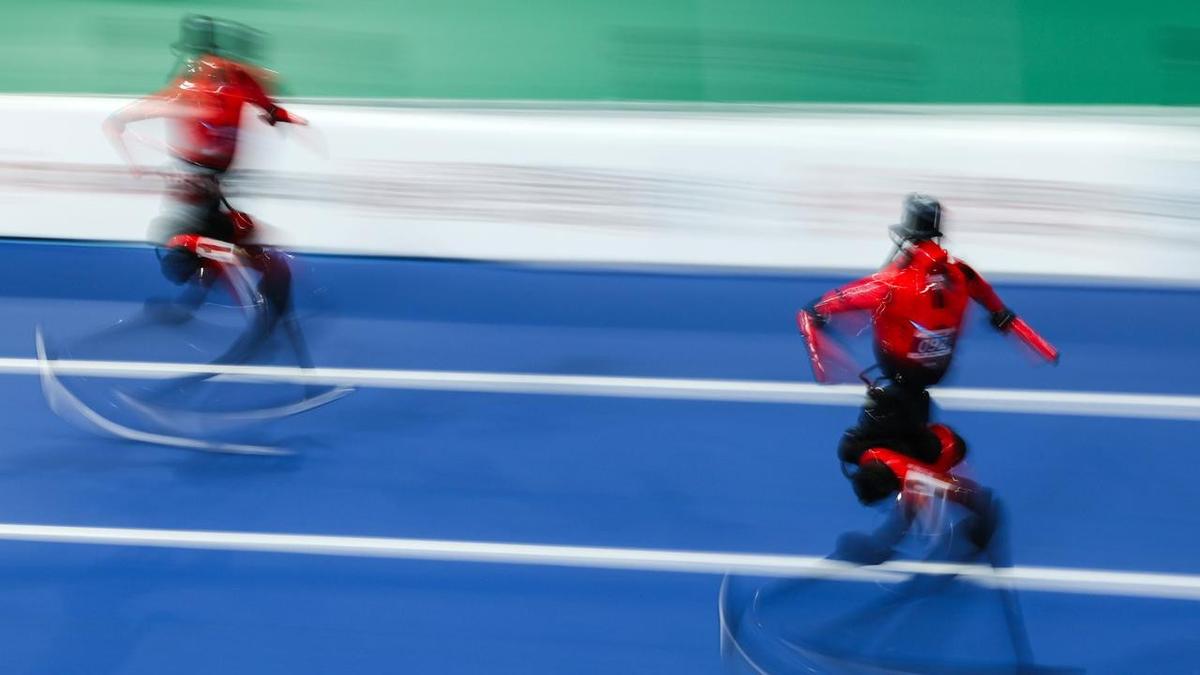
A canonical sprinting robot named ‘Bolt’ stands out as an autonomous sprinter: at about 175 cm tall and 75 kg, it is capable of top speeds around 11 meters per second, reflecting research into human-proportioned locomotion and energy-efficient ground contact.
Beijing's second World Humanoid Robot Games set a record with 2,056 robots competing across five days at the National Speed Skating Oval. Perth Now reports that Chinese humanoid robots have broken world records set by humans, including beating Usain Bolt's 100-meter sprint time. About 1,975 of the robots—nearly 96% of all entrants—come from 157 Chinese companies and 200 schools or research institutes across 666 teams from 16 countries.
Two-Track Competition Tests Robots in Sports and Real Jobs
The games split into 30 sports-style events and 20 work-scenario tasks. Ulladulla Times reports that competitions include running, table tennis, and football. Some events require full autonomy—robots must think and move on their own. Others allow human teleoperation, where a person controls the robot remotely. Work tasks that robots complete autonomously earn full points, but teleoperation cuts the score in half.
New Events Push Robot Balance and Strength Limits
Organizers added sports like long jump, weightlifting, tug of war, and table tennis this year. These new events stress a robot's balance, control systems, and physical design in ways flat-ground running cannot. Hepburn Advocate notes the games featured competitions in running, table tennis, and football where robots matched or beat human records. Events like hurdles, maximal-load weightlifting, and kickboxing allow human control—showing these remain tough challenges for fully autonomous machines.
Elite Robots Showcase Speed and Athletic Precision
Chinese teams brought headline-grabbing robots to the event. Unitree's 'Superman' robot jumped about two meters high last year, showing rapid athletic dynamics. A sprinting prototype called 'Bolt'—named after the human runner—stands 175 centimeters tall and weighs 75 kilograms. Irrigator reports the robot reached top speeds around 11 meters per second, demonstrating advances in human-proportioned locomotion. These high-speed sprinters reflect progress in embodied AI and robotics engineering.
Work Tasks Signal Push Toward Practical Robotics Deployment
The 20 work-scenario tasks mimic real jobs in retail, food service, and warehousing. Jimboomba Times reports Chinese robots defeated human world records across competitions. These tasks test whether robots can do actual work, not just sports. The 50% teleoperation penalty pushes teams to build robots that operate independently. This emphasis signals a shift from flashy athletic feats to deployable machines companies can actually use in daily operations.
Sentiment
Mostly PositivePublishers
11
Articles
33
Reach
44


