Housing Bill Stalled
Trump Cancels Bipartisan Housing Bill Signing, Demands Election Integrity Legislation First
Anonymous
Key Points
1
The housing bill is the 21st Century ROAD to Housing Act, and its provisions include streamlining environmental reviews to speed up projects and curb the influence of large corporate investors in the housing market.
2
Trump has framed the SAVE America Act as an election-integrity measure with stricter voter ID, proof of citizenship, and tighter limits on mail-in ballots, while acknowledging it currently lacks enough votes to pass in both chambers.
3
Trump criticized the housing bill for having support from Sen. Elizabeth Warren, describing that bipartisan support as problematic and portraying the measure as secondary to his priorities.
4
Poll data cited by outlets show mixed public support for the SAVE Act: 37% overall support, while 52% back documentary proof of citizenship to register and support varies by provision.
5
Economy context presented around the housing bill notes steep cost pressures: home prices up more than 50% since the pandemic, rents up over 30%, and a multi-million housing shortage alongside mortgage rates above 6%.
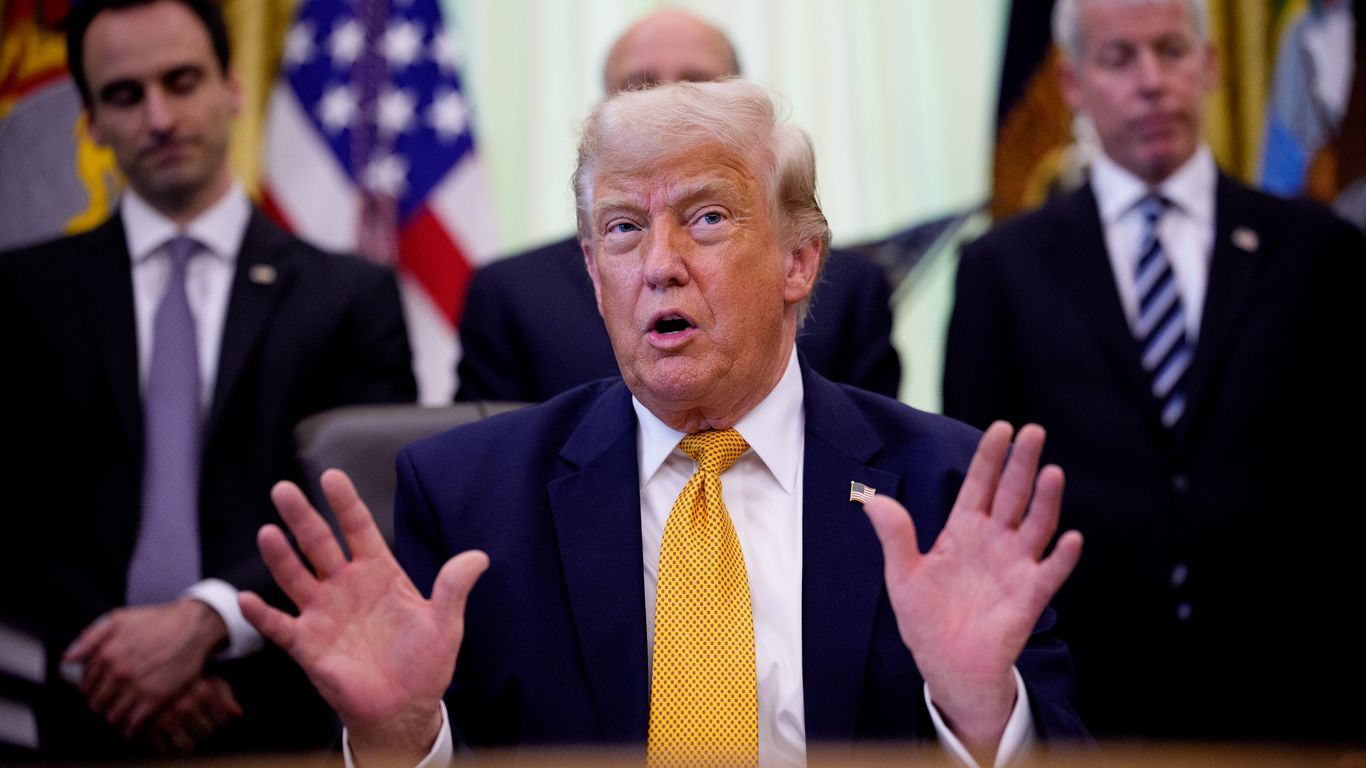
President Trump called off a signing ceremony for a landmark housing bill on June 24, less than two hours before it was set to begin. He posted on Truth Social that he would not sign anything until Congress first passes the SAVE America Act, his election-integrity legislation. Axios reported the cancellation came at 10:51 AM ET — just 69 minutes before the noon ceremony in Statuary Hall.
The housing bill, the 21st Century ROAD to Housing Act, had just cleared both chambers by landslide margins — 85-5 in the Senate and 358-32 in the House. Home prices are up more than 50% since the pandemic. Rents are up over 30%. The bill was the first major overhaul of federal housing policy since 1990, according to CBS News.
Trump Calls Housing Bill 'Minor' Compared to Election Push
Trump dismissed the housing measure as being of "minor importance" on Truth Social. He called the SAVE America Act a "National Emergency." He also attacked the bill for having Democratic support, calling it the "Elizabeth 'Pocahontas' Warren centric housing bill," according to Axios. Sen. Elizabeth Warren (D-MA) was the lead Democratic sponsor.
The SAVE Act would require documentary proof of citizenship — like a passport or birth certificate — to register to vote. It would also tighten voter ID rules and limit mail-in ballots. Trump has made it his top legislative priority. But NBC News reported that Speaker Mike Johnson and Senate Leader John Thune have told Trump the bill does not yet have the votes to pass the Senate.
Housing Bill Would Have Tackled a Decades-Long Shortage
The 21st Century ROAD to Housing Act targeted two big drivers of the housing crunch. First, it would streamline environmental reviews to speed up construction approvals. Second, it would curb the power of large corporate investors buying up homes. Mortgage rates are still above 6%, adding pressure on buyers, according to The Epoch Times.
Sen. Tim Scott (R-SC), the bill's lead Republican sponsor, called it "a pathway to the American Dream." The National Association of REALTORS® had pushed for the legislation for two years. Trump himself had called the bill "the most comprehensive and consequential housing legislation in the history of our country" just 12 days earlier, on June 12, according to CBS News.
SAVE Act Faces Long Odds and Deep Opposition
Support for the SAVE Act is mixed. A Marquette Law School poll found only 37% of Americans back the measure overall. Just 38% believe it would make elections fairer. The Brennan Center for Justice warns that roughly 21 million Americans — about 15% of adults — do not have ready access to a passport or birth certificate, the documents the bill would require.
Senate Minority Leader Chuck Schumer called the SAVE Act "dead on arrival" and labeled it a "power grab in legislative garb." Elon Musk countered on social media, writing "It must be done or democracy is dead." KTAR News noted that the White House framed the measure as urgently needed to stop non-citizen voting, a claim researchers say is statistically rare.
Clock Is Ticking — Bill Could Become Law Without a Signature
Trump now faces a constitutional deadline. Under the 10-day rule, if Congress stays in session and Trump takes no action, the housing bill becomes law without his signature. If Congress adjourns and he still hasn't signed, it dies — known as a pocket veto. The scheduled signing has passed with the bill sitting in limbo at the White House, according to Axios.
Homebuilders like Lennar and D.R. Horton had been expected to benefit from the bill's regulatory easing. With the 2026 midterms approaching and housing costs near record highs, The Daily Caller noted the delay could become a major grievance for voters. Observers say Trump's move puts Senate Republicans in a difficult spot — forced to choose between a wildly popular housing fix and the President's election priorities.
Sentiment
Mostly NegativeNEGATIVENEUTRALPOSITIVE
Publishers
187
Articles
1.1K
Reach
1.3K
A
AnonymousAuthor


