Ocado CEO Transition
Ocado Confirms Tim Steiner Will Remain CEO Through 2028, Plans Long-Term Leadership Transition
Anonymous
Key Points
1
Warby is understood to have led a push to replace Tim Steiner after Ocado’s shares hit new lows as major global customers pared back expansion plans.
2
Ahead of any potential replacement, one of Ocado’s largest shareholders wrote to the board asking for Warby to be removed over his attempts to oust Steiner.
3
Ocado disclosed a collaboration with Asda last month and, earlier this year, announced plans to cut about 1,000 jobs as part of broader changes.
4
The succession plan includes a newly created board position in which Steiner will provide strategic guidance and support through 2029 after transitioning from the CEO role.
5
Reuters-ported context notes that Kroger (US) and Sobeys (Canada) are closing robotic customer-fulfillment centers, underscoring weaker-than-expected demand and the risks to Ocado’s multi-year warehouse-automation projects.
Ocado has confirmed that co-founder Tim Steiner will remain as chief executive until December 2027, ending weeks of speculation about his future at the grocery technology company. According to Yahoo Finance, after a successor is appointed, Steiner will stay on as an adviser to the board through 2029 in a newly created founder role.
The announcement follows reports of a boardroom battle between Steiner and chairman Adam Warby. Express and Star reported that Warby pushed to remove Steiner after Ocado shares hit new lows. One of Ocado's largest shareholders then wrote to the board demanding Warby's own removal.
Boardroom Power Struggle Forced Ocado's Hand
The succession plan did not emerge quietly. Chairman Adam Warby is understood to have pushed to replace Steiner as Ocado's share price slumped to new lows. Major global customers had scaled back expansion plans, piling pressure on management. The conflict quickly escalated beyond the boardroom.
At least one major shareholder stepped in on Steiner's side. That investor wrote directly to Ocado's board, calling for Warby to be removed over his efforts to oust the CEO. The formal succession plan now appears to be a compromise that keeps Steiner in place while setting a clear end date.
Kroger and Sobeys Pull Back, Hurting Ocado's Growth Story
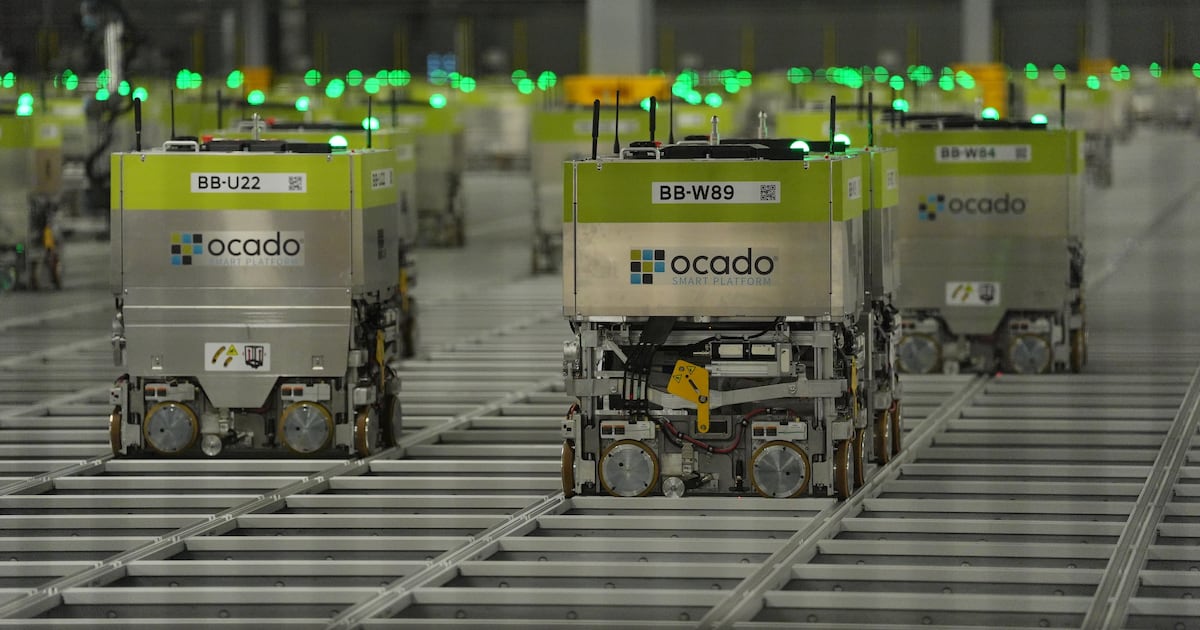
Ocado's core business is licensing robotic warehouse technology to grocery chains. But that model has run into trouble. US giant Kroger and Canadian retailer Sobeys are both closing robotic customer-fulfillment centers, signaling weaker-than-expected demand for the automated warehouses Ocado builds and operates.
These closures are a serious blow. Ocado's revenue depends on long-term warehouse contracts. When partners shrink their footprints, the financial impact stretches across years. The company has already responded by announcing plans to cut roughly 1,000 jobs earlier this year as part of broader restructuring efforts.
What Steiner's Transition Timeline Actually Looks Like
Ocado's plan has two stages. First, Steiner leads the company through all of the 2027 financial year. The board expects to have a new CEO in place by the start of FY2028, which begins in December 2027. That gives the company roughly two and a half years to find a replacement.
After stepping down as CEO, Steiner moves into a newly created board position. He will offer strategic guidance and support through 2029. Yahoo Finance noted the company called it a "thoughtful, collaborative transition" designed to maintain continuity for colleagues, clients, and shareholders.
Asda Deal Offers a Bright Spot Amid the Turbulence
Not all the recent news has been negative. Last month, Ocado announced a new technology collaboration with Asda, one of the UK's largest supermarket chains. The deal signals that Ocado can still win new partners, even as existing ones like Kroger reduce their commitments.
Steiner co-founded Ocado in 2000. He has led it from a small online grocer into a global warehouse-automation business. The board's decision to keep him through 2027 and beyond suggests it views his long relationships with partners as critical to stabilizing the company during a difficult stretch.
Sentiment
Mostly NegativeNEGATIVENEUTRALPOSITIVE
Publishers
11
Articles
91
Reach
102
Topics
A
AnonymousAuthor


