Officiating Controversy
France advances to quarterfinals over Paraguay amid widespread refereeing controversy and criticism.
Anonymous
Key Points
1
Deschamps revealed he protected Mbappé by instructing his two tallest players to stay close to him in the closing stages, a tactical move after multiple heavy challenges.
2
French outlets like L'Équipe criticised Tantashev, giving him a 1/10 and arguing the referee failed to control the match or protect players.
3
Disciplinary outcomes were disputed, with Paraguay accused of committing 12-13 fouls without any bookings while France collected three yellow cards, highlighting perceived imbalance.
4
Unpunished fouls by Paraguay drew particular scrutiny, including Matias Galarza swinging his arm at Mbappé and elbowing Jules Koundé, illustrating concerns about referee and VAR decisions.
5
The post-match discourse extended to social media and punditry, with calls for FIFA action to address officiating standards and player protection, including coverage by L'Équipe and other outlets.
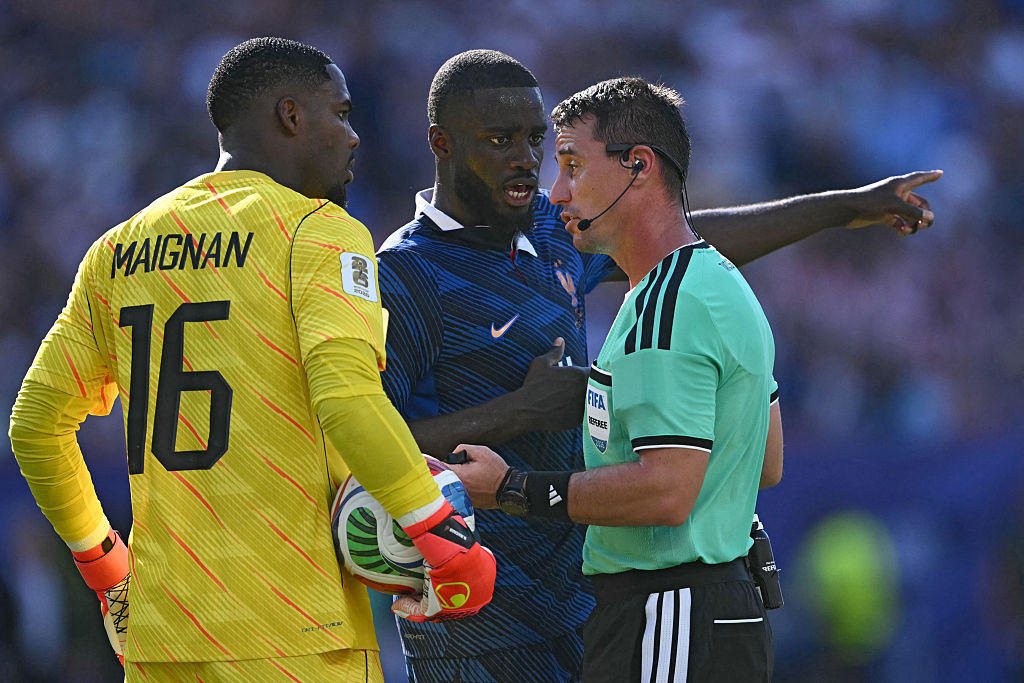
France beat Paraguay in the World Cup Round of 16, but the scoreline was quickly overshadowed by furious debate over referee Ilgiz Tantashev. A late VAR-awarded penalty, converted by Kylian Mbappé, sealed France's win — but it was what Tantashev failed to call that made headlines. Nogomania reported that French media erupted in anger, while Paraguayan supporters praised the official for letting the game flow.
The match was marked by heavy physical play throughout. Paraguay committed an estimated 12 to 13 fouls without receiving a single yellow card. France, by contrast, finished the game with three yellows. The gap in disciplinary outcomes sparked immediate accusations of a double standard.
L'Équipe Gives Referee a 1/10 as Anger Boils Over
French sports daily L'Équipe was blunt in its verdict. The paper gave Tantashev a rating of 1 out of 10, according to Yahoo Sports. The outlet argued the referee failed to control the match and did nothing to protect players. Other French media joined the criticism, with calls for FIFA to step in and address what they saw as a breakdown in officiating standards.
Nogomania reported that French outlets were particularly furious about the perceived imbalance in how each side was treated. Paraguay walked away without a booking. France collected three yellow cards. Critics said the numbers alone told the story of a match that was poorly managed from start to finish.
Mbappé Targeted Repeatedly With No Punishment
Kylian Mbappé was the focal point of Paraguay's physical approach. Among the most controversial moments was Matias Galarza swinging his arm at Mbappé and delivering an elbow to Jules Koundé, according to Yahoo Sports. Neither incident drew a card. VAR reviewed some plays but did not intervene to protect either player.
France coach Didier Deschamps took action of his own. He revealed after the match that he instructed his two tallest outfield players to stay close to Mbappé in the closing stages. The tactical move was a direct response to the repeated heavy challenges the striker had absorbed throughout the game. Deschamps essentially had to shield his star player himself.
Paraguay Sees a Different Match Entirely
Not everyone shared the French view. Paraguayan players and supporters defended Tantashev, saying he allowed both sides to play physical football without over-refereeing. Nogomania reported that the Paraguayan camp praised the referee for letting the match develop naturally, a style they felt suited their game plan.
The split reaction highlighted how the same performance looked completely different depending on which side of the result you were on. Paraguay lost the match but left feeling the referee had been fair. France won but left feeling their players were left exposed and unprotected for 90 minutes.
Fans Demand FIFA Suspend Tantashev After 'Disgrace'
The backlash spread fast on social media after the final whistle. Daily Star reported that furious fans demanded FIFA issue a ban to Tantashev. Many called the match a "disgrace" and argued that allowing Paraguay to foul repeatedly without a single booking set a dangerous precedent for the rest of the tournament.
Pundits added their voices to the debate. The controversy placed broader officiating standards at the 2026 World Cup under the spotlight. With the quarterfinals approaching, the pressure on FIFA to respond — and on referees to perform — has never been higher.
Sentiment
Mostly NegativeNEGATIVENEUTRALPOSITIVE
Publishers
16
Articles
5
Reach
21
A
AnonymousAuthor


