Understanding Egg Freezing Realities
As Egg Freezing Gains Popularity, Experts Weigh Costs Against Real-World Success Rates
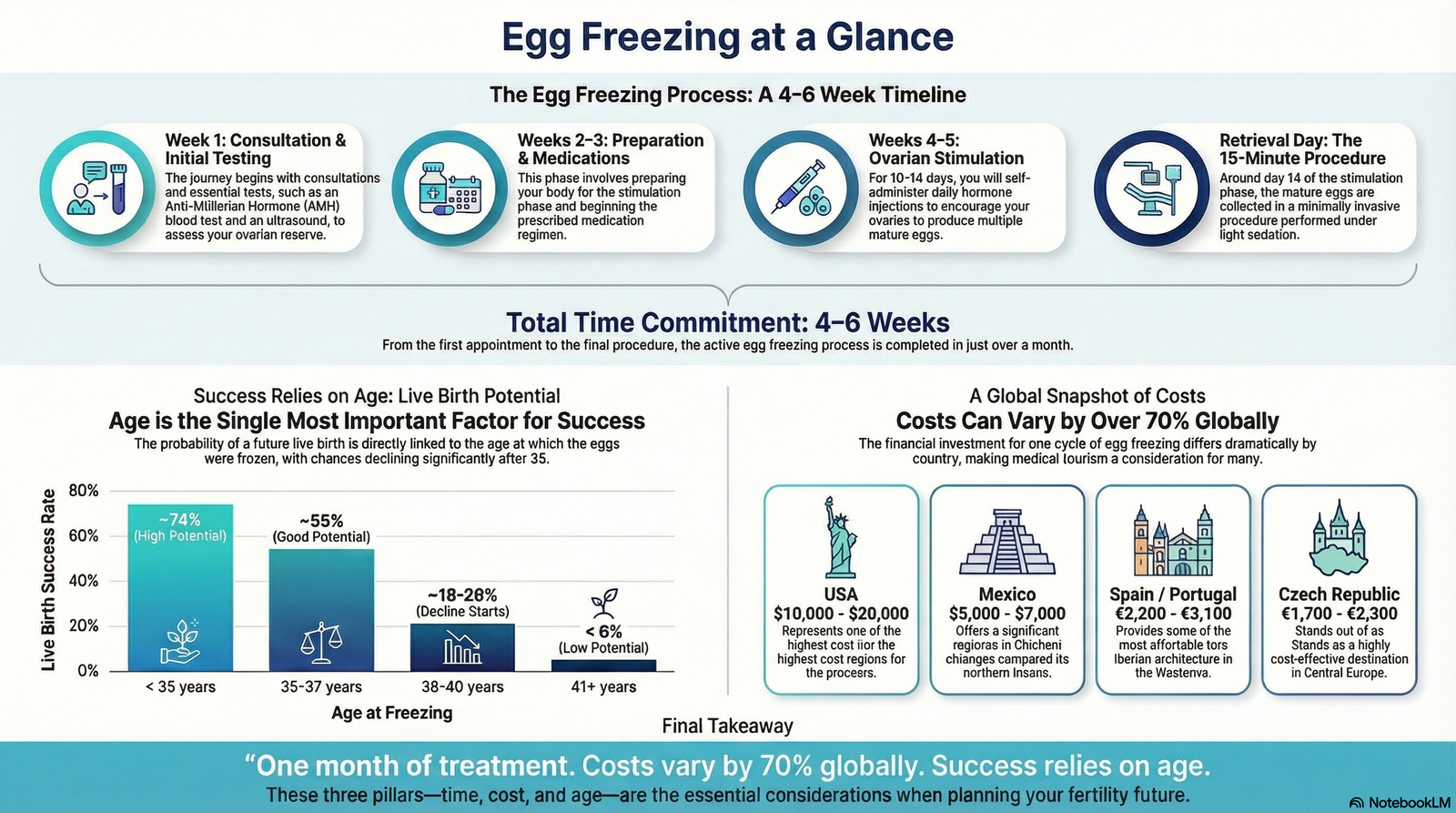
Egg freezing has exploded in popularity among U.S. women, with the number of procedures quadrupling between 2014 and 2021, according to WAPT. Yet as few as 5% of women who freeze their eggs actually use them later. The procedure, which began in the 1980s, offers women a way to delay parenthood while focusing on health, career, and relationships—but high costs and variable success rates remain significant barriers.
The Biological Race Against Time
Egg freezing success depends heavily on a woman's age when eggs are harvested. Younger women have more viable eggs and higher success rates. As women age, egg quality declines, making the procedure less effective. This age factor shapes whether frozen eggs will actually result in a pregnancy years later.
Steep Costs Add Up Fast
The price of egg freezing creates a real barrier for many women. Each retrieval cycle costs roughly $10,000, though prices vary by region, according to WVTM13. Beyond the initial procedure, storage fees run $500 to $1,000 yearly. For women who freeze multiple rounds of eggs or store them for years, the total bill can climb into tens of thousands of dollars.
Why So Few Women Actually Use Frozen Eggs
Despite the surge in egg freezing, utilization rates remain shockingly low. The gap between women who freeze eggs and those who use them suggests many reconsider their plans. Some women may meet a partner or decide against parenthood. Others struggle with the emotional weight of stored eggs or face financial constraints when ready to use them, according to WGAL.
How Egg Freezing Actually Works
The process starts with hormone injections that stimulate the ovaries to produce multiple eggs. After about two weeks, doctors retrieve the eggs using a needle guided by ultrasound. Eggs are then frozen using a flash-freezing technique called vitrification, per KCRA. When a woman is ready, doctors thaw the eggs, fertilize them, and implant the resulting embryo in the uterus—similar to standard fertility treatment.
Sentiment
NeutralPublishers
12
Articles
11
Reach
12


