5G Tower Market Boom
Radio Masts and Towers Market Predicted to Hit $8.20 Billion by 2033, Boosted by 5G
Anonymous
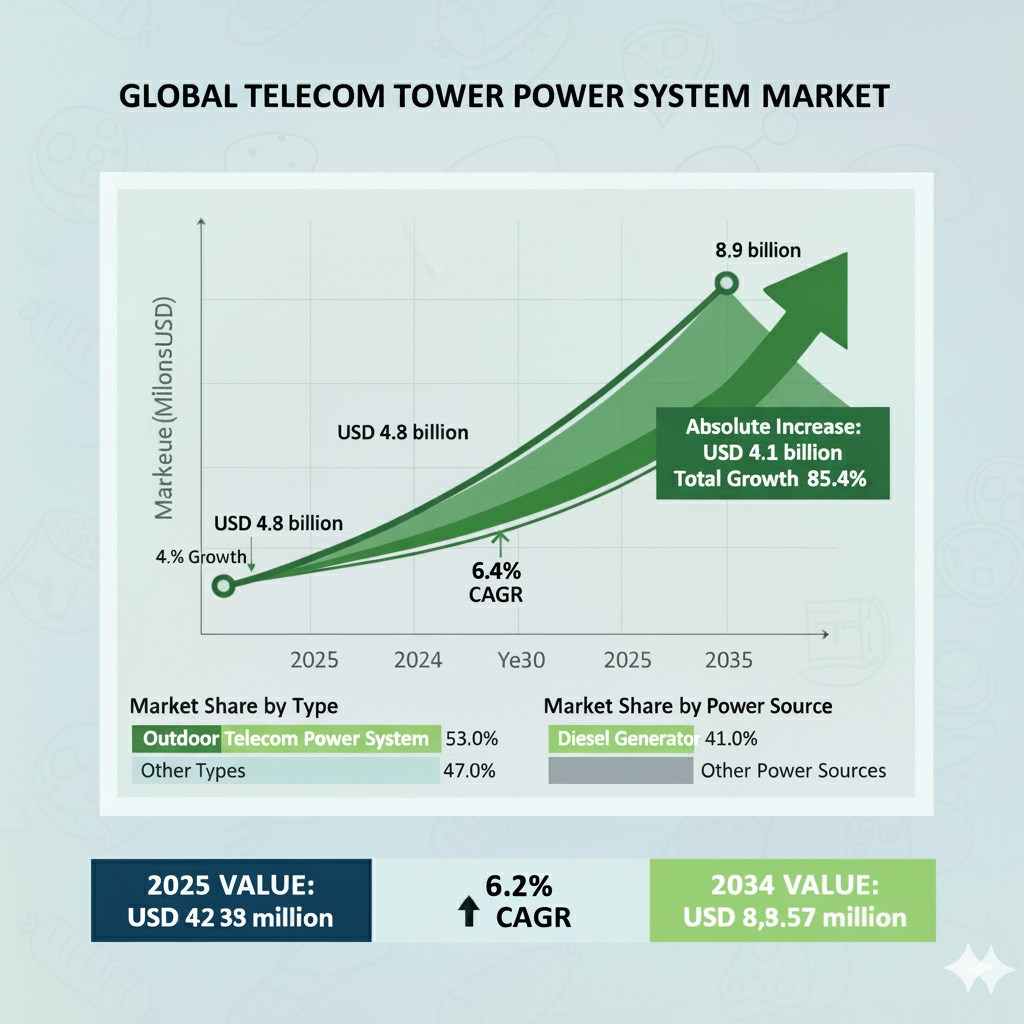
The global market for radio masts and towers is set to nearly double over the next decade, reaching USD 8.20 billion by 2033, up from USD 5.60 billion in 2025, according to Verified Market Research. That works out to a steady 4.4% annual growth rate, fueled by the worldwide push to build out 5G networks and upgrade aging broadcast infrastructure.
The report points to three main engines driving this growth: network densification, where carriers add more towers to handle heavier data loads; lifecycle replacement of older infrastructure; and the modernization of radio and television broadcast systems across all major regions, according to PR Newswire.
5G Rollouts Are the Market's Biggest Growth Engine
5G is the single biggest force pushing tower demand higher. To deliver fast 5G speeds, carriers need far more antennas placed much closer together. That means building thousands of new small cells and tower sites. This process, called network densification, requires a steady stream of new masts and supporting hardware across urban and suburban areas alike.
Spectrum upgrades are also adding pressure. As telecoms move to higher-frequency bands, signals travel shorter distances. More towers are needed to fill the coverage gaps. This creates a compounding effect — more spectrum bands require more physical infrastructure, which directly grows the tower market, ADVFN reported.
How the Market Breaks Down by Tower Type and Use
The market is split into four main tower types: lattice towers, monopole towers, guyed masts, and stealth towers. Stealth towers are designed to blend into surroundings — think towers disguised as trees or flagpoles. Installations are either ground-based or rooftop-mounted, depending on the site and local regulations.
On the application side, telecommunications is the largest segment, followed by radio broadcasting and television broadcasting. Telecom demand dominates because mobile network operators are spending heavily on new sites. Broadcast modernization adds a secondary but meaningful layer of demand, particularly in regions replacing analog systems with digital ones, according to Verified Market Research.
Broadcast Modernization Adds a Second Wave of Demand
Beyond telecom, broadcasters are driving their own wave of tower investment. Many countries are mid-transition from analog to digital radio and TV transmission. This shift requires new or upgraded transmission towers built to handle digital signal formats. The upgrade cycle is happening across all five major global regions covered in the report.
Infrastructure lifecycle replacement is another steady source of spending. Older masts reach end-of-life and must be replaced — a process that runs in parallel with new builds. This replacement cycle is not tied to 5G timelines, meaning demand holds up even in markets where next-gen network rollouts are slower, UK ADVFN noted.
A Market Growing Steadily Across All Major Regions
The 4.4% annual growth rate is considered steady, not explosive. It reflects a market driven by long-term infrastructure spending rather than short bursts of demand. Tower projects take years to plan, permit, and build. That timeline smooths out growth but also makes revenues predictable for companies in this space.
The report covers five key global regions without naming specific frontrunners, but analysts note that Asia-Pacific and North America typically lead tower spending due to large populations and aggressive 5G deployment timelines. The market's rise from USD 5.60 billion to USD 8.20 billion over roughly eight years reflects the scale of infrastructure investment underway worldwide, according to PR Newswire.
Sentiment
NeutralNEGATIVENEUTRALPOSITIVE
Publishers
4
Articles
3
Reach
4
Topics
A
AnonymousAuthor


