Meeting Rejected
Putin Rejects Zelenskyy's Offer for a Meeting, Stating He Sees 'No Point' in It
Anonymous

Russian President Vladimir Putin rejected Ukrainian President Volodymyr Zelenskyy's proposal for a face-to-face summit on June 5, 2026, calling it "boorish" and saying he sees "no point" in a meeting. Putin made the remarks during a plenary session at the St. Petersburg International Economic Forum, dismissing the overture as a deliberate attempt to make talks "impossible" rather than advance peace. AP confirmed the rejection at 12:31 p.m. EDT.
Zelenskyy had published an open letter to Putin on June 4, proposing a summit in a neutral country and calling the war Putin's "personal choice." The move came as Ukraine launched long-range drones that struck a St. Petersburg oil terminal and naval base just hours before the forum opened. Voice of Alexandria reported that Putin accused Western nations of eroding conditions for diplomacy.
Zelenskyy's Letter Frames War as Putin's Personal Failure
Zelenskyy's open letter was blunt and pointed. He wrote that the war was Putin's "personal choice" and warned that Russian domestic fatigue would grow. "If you do not personally come to the conclusion that it is time to end this war... you, too, will have to fight much harder for your own existence," he wrote, according to AP. The letter also noted that Ukraine cannot wait for the U.S. to finish its conflict with Iran.
Analysts at RBC-Ukraine described the letter's tone as a calculated move. The goal, they argued, was to speak over Putin directly to Russian elites. Those elites are reportedly growing frustrated with the collapse of their Western assets and tightening oil sanctions. Zelenskyy's framing of Putin as personally responsible was seen as a way to chip away at loyalty inside the Kremlin.
Putin Calls Letter 'Boorish,' Kremlin Cites Legitimacy Dispute
At the SPIEF forum, Putin characterized the letter as "elements of rudeness." He asked: "Is it a way to create conditions for personal meetings and talks, or create an environment which makes any personal meetings impossible? I think it's the second," according to AP. Earlier that morning, Kremlin Spokesman Dmitry Peskov had said Putin had not yet read the letter but that Zelenskyy was welcome in Moscow "any time."
Moscow also repeated its claim that Zelenskyy is "illegitimate" because Ukraine postponed its elections under martial law. Putin raised this point at SPIEF to undermine Zelenskyy's standing as a negotiating partner. The Kremlin has said it will only hold talks on Russian soil or with pre-signed agreements — terms Ukraine has already rejected.
Iran War and Diverted U.S. Resources Shaped Ukraine's Timing
The backdrop to this diplomatic clash is the 2026 U.S.-Israel war against Iran, launched in February under "Operation Epic Fury." That conflict has diverted American military resources — including Patriot interceptors — away from Ukraine and toward the Middle East. Zelenskyy explicitly referenced this in his letter, signaling that Ukraine cannot afford to wait for Washington to refocus on Europe.
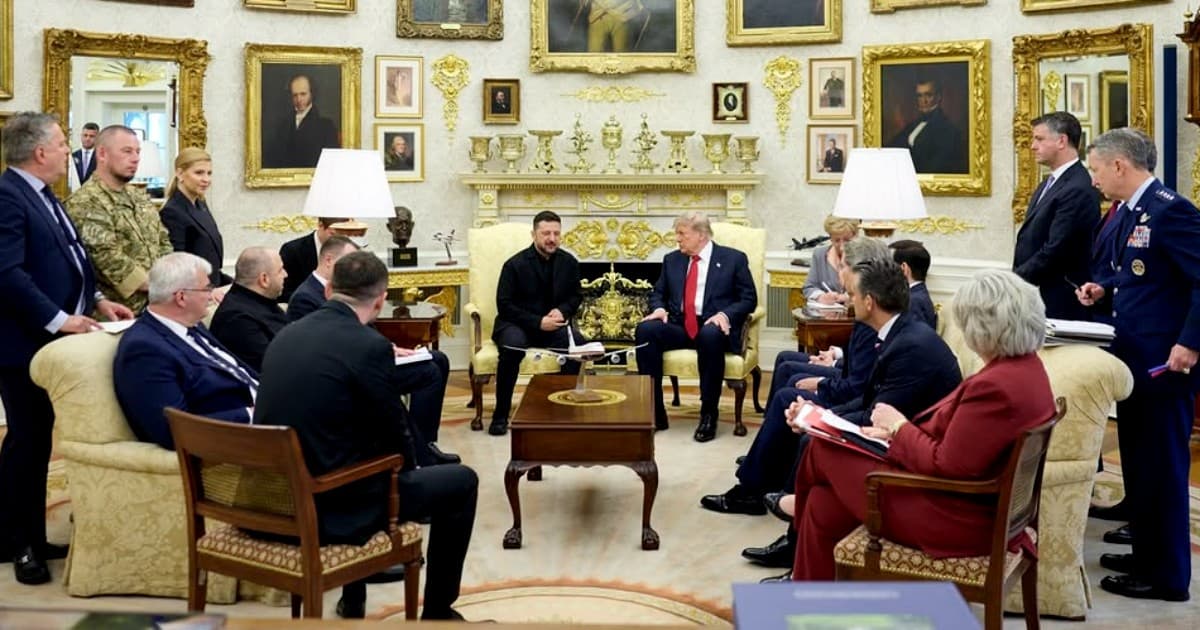
U.S. President Donald Trump said he supports a meeting between the two leaders. "I think it would be great if they met... both sides have to make compromises," Trump said, according to AP. However, only 1% of Ukrainians trust the U.S. as a primary mediator, reflecting deep frustration with America's shifted priorities. French President Emmanuel Macron called Zelenskyy's letter a "good initiative" and pushed for European involvement in any future talks.
War Grinds On With No Diplomatic Path in Sight
With talks now firmly off the table, both sides are signaling a hotter summer of fighting. Russia suffered an estimated 30,000 killed or seriously wounded in May 2026 alone, per Ukrainian battlefield reports. Total Russian troop casualties since February 2022 have reached roughly 1,370,890, according to the Ukrainian General Staff. Putin told his troops to "keep working" immediately after delivering his rejection of Zelenskyy's letter.
A May 2026 Levada Center poll found that 62% of Russians favor peace talks over continuing the war, according to The Washington Post. That figure points to growing domestic pressure on Putin. But with diplomacy frozen and Ukrainian drones now reaching 1,000+ kilometers to strike St. Petersburg, observers expect a significant escalation in long-range strikes before any new diplomatic window opens.
Sentiment
NeutralNEGATIVENEUTRALPOSITIVE
Publishers
5
Articles
5
Reach
5
A
AnonymousAuthor