GIS for Utility Grid Modernization
Info-Tech Research Group Advises Utilities on Business-Aligned GIS Strategies for Grid Modernization
Anonymous
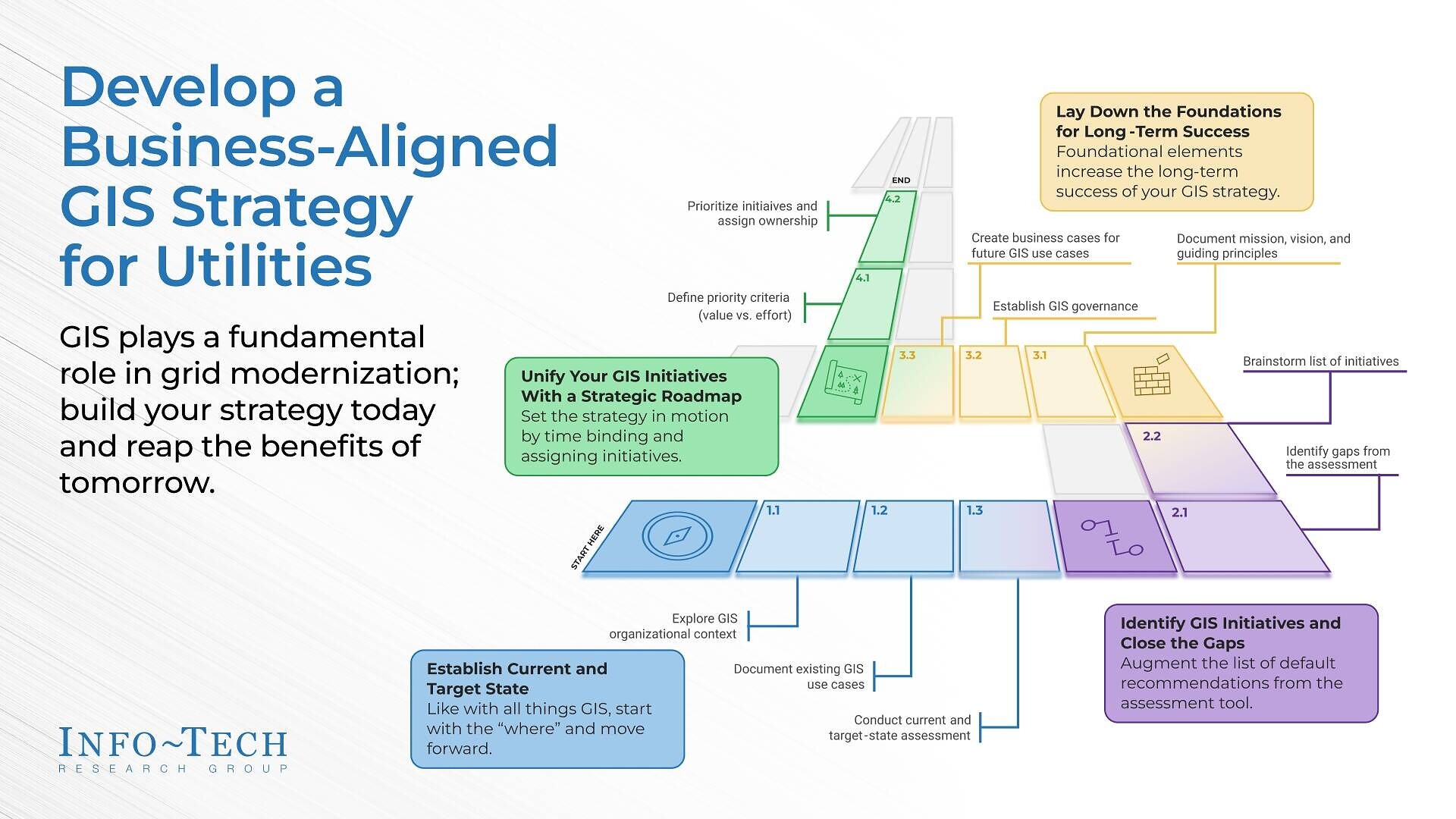
Info-Tech Research Group is calling on utility companies to treat geographic information systems — software that maps and manages physical infrastructure — as a core business tool, not just a technical add-on. The firm published a four-step framework called "Develop a Business-Aligned GIS Strategy for Utilities" to help utility leaders modernize their power grids and improve long-term resilience, according to Leader-Post.
The research warns that many utilities are falling behind because their location data is trapped in silos, ownership is unclear, and standards are inconsistent across teams. At the same time, new tools like AI, drones, smart meters, and IoT sensors are rapidly changing what GIS can do, according to Montreal Gazette.
Four Steps to Turn GIS Into a Grid Strategy
Info-Tech's framework gives utility leaders a clear path forward. Step one is assessing GIS maturity — figuring out where the organization stands today. Step two is identifying capability gaps. Step three is strengthening governance and setting data standards. Step four is building a practical roadmap tied to real business goals, according to Cold Lake Sun.
The goal is to move GIS from a background mapping tool to a strategic platform. That means connecting location data to decisions about asset management, field operations, and infrastructure investment. Without that alignment, technology upgrades often fail to deliver lasting results, according to Clinton News Record.
Siloed Data and Unclear Ownership Hold Utilities Back
Info-Tech found three common blockers slowing utility progress. First, geospatial data — information tied to physical locations — is often locked inside individual departments and not shared across the organization. Second, no one person or team clearly owns that data. Third, standards for collecting and storing it vary widely, according to Chatham Daily News.
These problems make it hard to get a complete picture of the grid. When data lives in separate systems, field crews, planners, and engineers can't easily work from the same information. That slows response times and increases the risk of costly mistakes, according to The Observer.
AI, Drones, and Smart Meters Are Expanding What GIS Can Do
GIS capabilities are growing fast. Utilities are now combining traditional mapping with AI, IoT sensors, drones, smart meters, and mobile field tools. These technologies let workers see real-time grid conditions, spot problems faster, and plan maintenance more precisely, according to Fort McMurray Today.
But new tools only help if the underlying data strategy is sound. Info-Tech argues that without clear governance — rules about who manages data and how — utilities risk adding more technology on top of broken foundations. The result is more complexity, not more capability, according to Owen Sound Sun Times.
Why Grid Modernization Depends on Getting GIS Right
Grid modernization is one of the biggest infrastructure challenges facing utilities today. Aging equipment, rising energy demand, and extreme weather are all putting pressure on power networks. GIS helps utilities map vulnerabilities, plan upgrades, and respond to outages faster, according to Pincher Creek Echo.
Info-Tech's research makes the case that GIS is no longer optional for utilities that want to stay ahead. A business-aligned strategy — one tied directly to organizational priorities, not just IT goals — is what separates utilities that modernize successfully from those that stall, according to Goderich Signal-Star.
Sentiment
NeutralNEGATIVENEUTRALPOSITIVE
Publishers
12
Articles
12
Reach
12
A
AnonymousAuthor


