Canada's Gambling Regulatory Gap Exposed
CasinoCanada Research Reveals Self-Excluded Canadians Can Still Gamble Across Provincial Borders
Anonymous
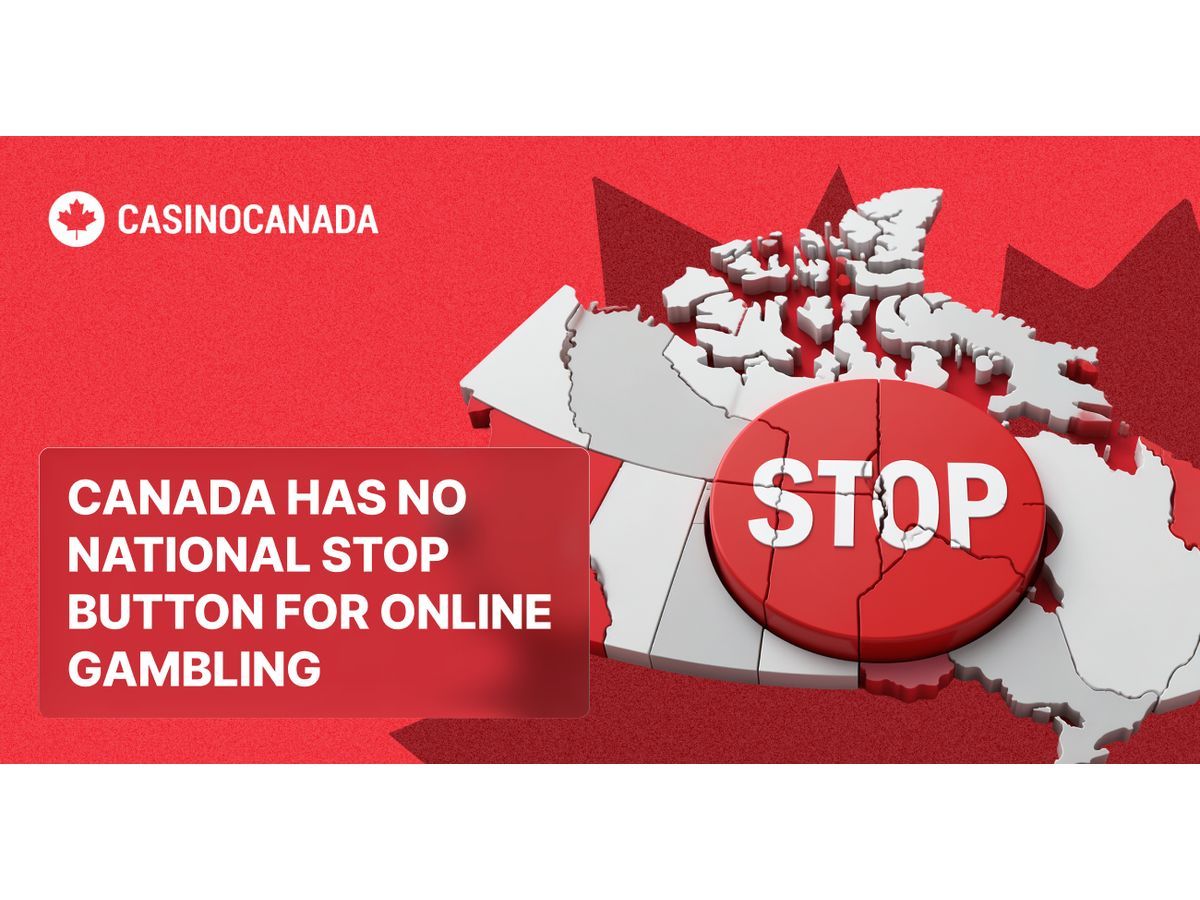
Canadians who sign up to block themselves from gambling can still place bets freely — just by crossing a provincial border or clicking onto an overseas site. New research from CasinoCanada warns that Canada has no national self-exclusion system, leaving a critical gap in player protection despite the country becoming the world's third-largest online gambling market.
The findings come as gambling harm is rising sharply. A study in the Canadian Medical Association Journal found that gambling-related calls to Ontario's ConnexOntario helpline jumped an estimated 198% after the province opened its regulated online market in 2022. The spike hit hardest among boys and men aged 15 to 44.
Province-by-Province Rules Leave Gaping Loopholes
Gambling in Canada is regulated province by province. There is no single national body overseeing the system. That means a self-exclusion request made in Ontario carries no weight in British Columbia, Alberta, or any other province. A player blocked in one place can simply log on from the next, according to National Post.
The patchwork system also pushes players toward offshore sites that operate entirely outside Canadian rules. Chatham Daily News reports that 93% of online gambling in Saskatchewan happens on unregulated foreign platforms. In British Columbia, that figure sits at 49%. Alberta and Manitoba face similar patterns, with most betting activity flowing to sites beyond provincial reach.
Self-Exclusion Tools Only Work Where They're Enforced
Self-exclusion is a tool that lets a problem gambler ask to be permanently banned from betting platforms. It is one of the most widely used harm-reduction measures in gambling. But its power depends entirely on coverage. If the system does not talk across borders, the ban has holes a player can walk right through, Hanna Herald noted.
Offshore sites add another layer to the problem. These platforms are not bound by any Canadian provincial rules, so they are under no obligation to honor a self-exclusion list registered in Canada. A player who has asked to be blocked domestically faces zero barriers on those sites, the Daily Herald Tribune reported.
Gambling Harm Surged After Ontario Market Opened in 2022
Ontario launched Canada's open regulated online gambling market in April 2022. It was a major shift — allowing dozens of private operators to offer legal betting for the first time. But the health data that followed was alarming. Helpline contacts tied to gambling problems nearly tripled, rising 198%, according to research cited by Whitecourt Star.
Young men bore the brunt of the increase. The Canadian Medical Association Journal study found that boys and men aged 15 to 44 accounted for the largest share of the surge. Researchers say easy access to mobile betting platforms played a key role in driving those numbers up.
Experts Point to a National Registry as the Fix
The CasinoCanada research points to a clear solution: a single, nationwide self-exclusion registry that all operators — provincial and offshore — would be required to check. Countries like the UK operate a national system called GamStop, which blocks registered players across all licensed sites with one sign-up. Canada has no equivalent, Montreal Gazette noted.
Until a national framework exists, advocates warn that self-exclusion in Canada remains more symbol than safeguard. A player in crisis who asks for help can still find a dozen open doors. The research from CasinoCanada calls on federal and provincial governments to coordinate before the market grows further and the harm gap widens.
Sentiment
NeutralNEGATIVENEUTRALPOSITIVE
Publishers
6
Articles
5
Reach
6
A
AnonymousAuthor