Shifting Real Estate Values
Commercial Real Estate Report Reveals Divergent Performance Across Multiple Property Sectors
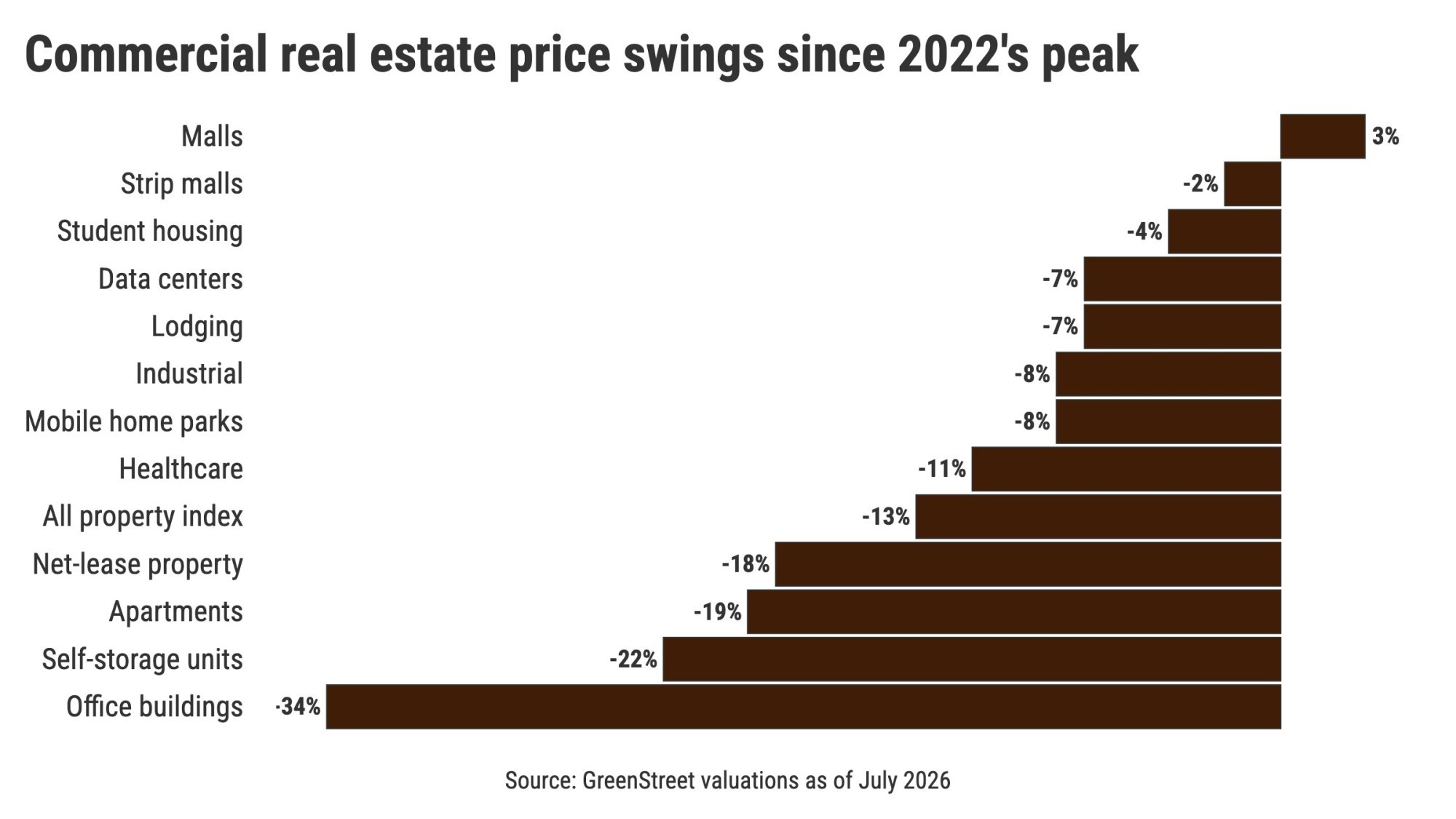
Commercial real estate is bouncing back after four years of decline, Green Street found. Malls are leading the recovery with a 12% value jump in the past year, while neighborhood shopping centers climbed 9%. But apartments tell a different story — they're the only major property type that gained no value in 12 months, down 19% from their 2022 peak.
The analysis tracked 12 types of large institutional properties — the kind owned by major investors. It shows a sharp divide: some real estate is hot again. But others, like net-lease properties, remain cold, with values down 18% and ranking as the fourth-worst investment over four years.
Malls Make a Surprising Comeback
Malls were left for dead a few years ago. Now they're the hottest commercial real estate play. Green Street's data shows mall values jumped 12% over the past year. That's the biggest gain among all 12 property types tracked. The shift signals that investors believe brick-and-mortar retail has a future after all.
Neighborhood shopping centers are following the same upward trend. These local strips anchored by groceries and pharmacies saw values rise 9% in the past 12 months. Both sectors suggest investors are betting on physical retail locations again, despite years of e-commerce concerns.
Apartments Flat Out Stall With No Value Gains
Apartments are the only major property type stuck in neutral. According to Green Street's report, apartment values gained nothing over the past 12 months. That's a sharp contrast to malls and shopping centers. The apartment market is still struggling from a 19% crash since its 2022 peak — the third-worst decline among all tracked properties.
The stalled apartment market reflects broader headwinds. Renters face higher interest rates and tighter credit. Landlords can't easily refinance debt. New construction continues to come online, adding supply pressure. These factors combined have kept apartment values depressed for months.
Net-Lease Properties Remain Real Estate's Biggest Loser
Net-lease properties — where tenants pay rent plus property costs — are the investment market's biggest problem. Green Street found their values fell 18% and ranked as the fourth-worst asset class over four years. These single-tenant retail buildings have suffered as retail traffic declined and store closures accelerated.
The damage reflects a fundamental shift in how people shop. Fewer stores mean fewer net-lease opportunities. Investors burned by these losses are now looking elsewhere. The stark contrast — malls up 12%, net-lease down 18% — shows how unevenly recovery is hitting commercial real estate.
Sentiment
NeutralPublishers
4
Articles
3
Reach
4


