Global Security Cooperation
14th World Peace Forum Calls for International Security Cooperation Amid Rising Global Tensions
Anonymous
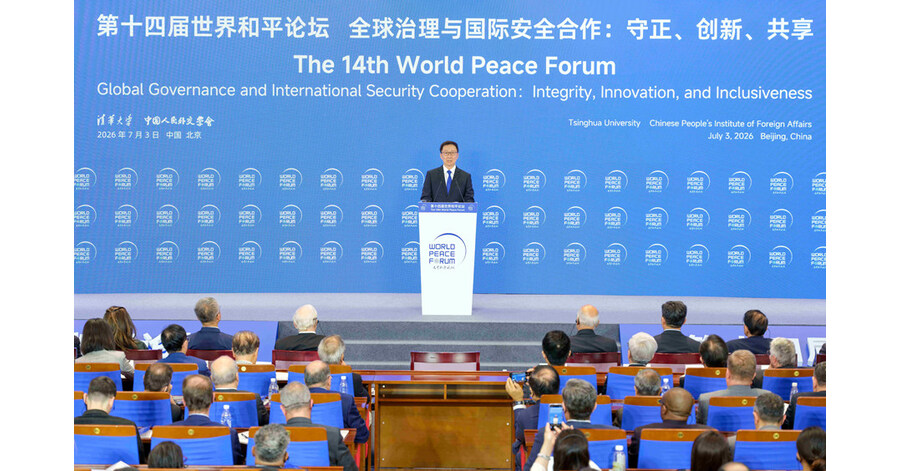
The 14th World Peace Forum brought together representatives from over 80 countries in Beijing, calling for stronger international cooperation to tackle rising geopolitical tensions and new security threats, according to PR Newswire. The forum drew more than 400 participants and over 200 journalists from 70-plus domestic and international outlets.
Organised by Tsinghua University and the Chinese People's Institute of Foreign Affairs, the event tackled some of the world's most pressing issues — from conflicts in the Middle East to the role of artificial intelligence in modern warfare, Newswire reported.
High-Profile Speakers Push for Global Security Reform
Key speakers at the forum included Mushahid Hussain Sayed, former Chairman of Pakistan's Senate Foreign Relations Committee, and Kim Sung-Hwan, former South Korean foreign minister. Hina Rabbani Khar and Abdel Elah Al Khatib, former Foreign Affairs Minister of Jordan, also addressed the gathering, according to Yahoo Finance.
The lineup reflected a broad, multinational push to reshape how countries think about global governance. Speakers urged world leaders to move beyond competition and build shared frameworks for peace and security.
Middle East Conflicts and Major-Power Tensions Take Center Stage
Participants spent significant time on ongoing conflicts in the Middle East, which remain a flashpoint for wider global instability. Delegates discussed how regional wars can quickly pull in major powers and disrupt international order, PR Newswire reported.
The forum also examined major-power relations — a polite term for the growing rivalry between the United States, China, and Russia. Speakers called for dialogue over confrontation, warning that unchecked competition between big nations puts smaller countries at risk.
AI in Warfare Raises Urgent New Security Questions
One of the forum's sharpest debates focused on artificial intelligence and its role in armed conflict. As AI tools become more common in military systems, delegates warned that existing international rules are not built to handle them, according to Yahoo Finance.
The concern is simple: AI can make decisions faster than any human. That speed creates risks when weapons systems act without direct human control. Participants called for new global agreements to govern how AI is used in war.
Forum Draws Record Media Attention Amid Global Uncertainty
More than 200 journalists from over 70 outlets attended the event, signalling strong global interest in multilateral peace efforts. The high turnout reflects growing public concern about international stability as conflicts multiply and trust between nations erodes, Newswire noted.
Held annually since its founding, the World Peace Forum has grown into one of Asia's most-watched diplomatic gatherings. This year's edition made clear that with tensions rising on multiple fronts, the appetite for international dialogue is stronger than ever.
Sentiment
NeutralNEGATIVENEUTRALPOSITIVE
Publishers
5
Articles
4
Reach
5
Topics
A
AnonymousAuthor