AI Sovereignty Urged for Middle Powers
Canadian AI Expert Richard St-Pierre Shapes Global AI Declaration, Warns Middle Powers of 'Digital Colonies'
Anonymous
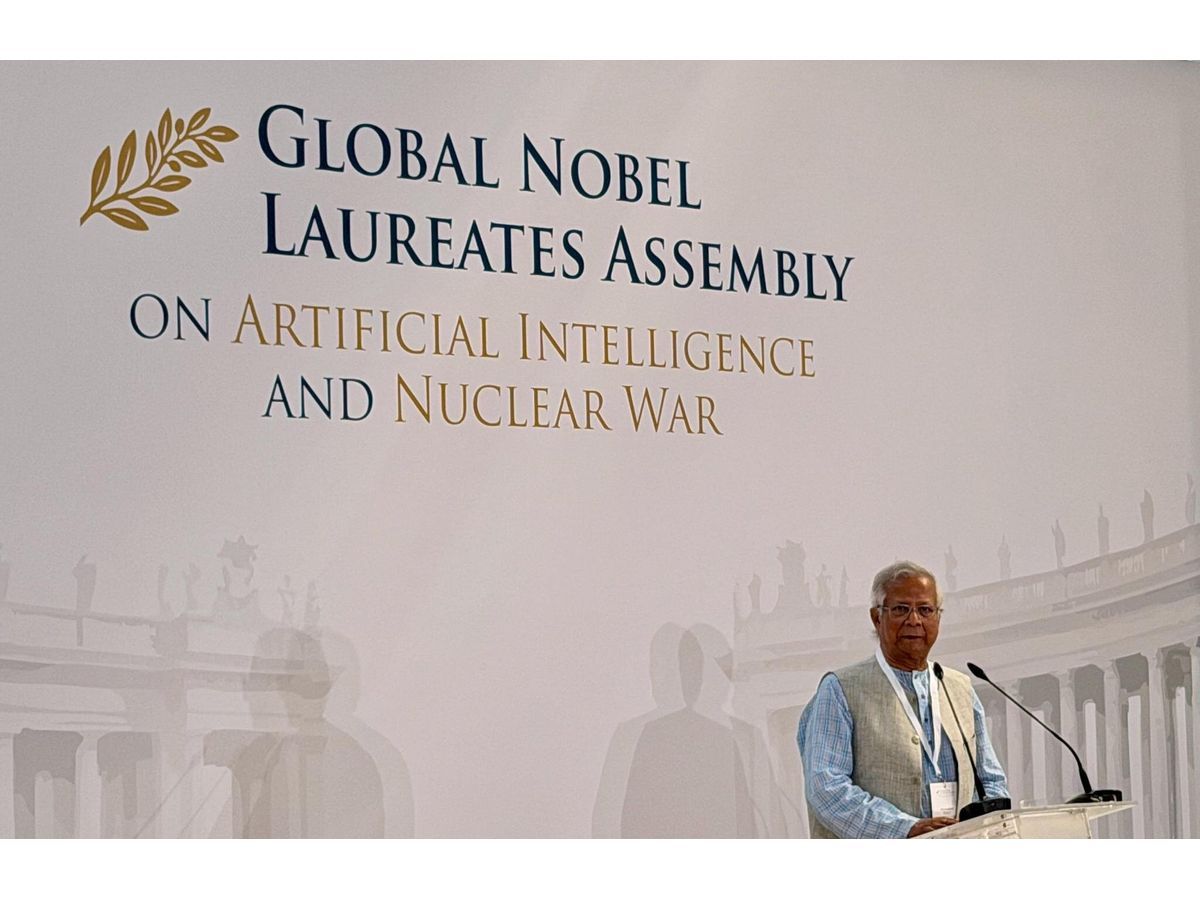
Canadian AI sovereignty expert Richard St-Pierre helped write the Nobel Laureates' Global AI Declaration, warning that middle powers must work together or risk becoming 'digital colonies' of AI superpowers. The declaration came out of the Assembly on Artificial Intelligence and Nuclear War, which brought together around 200 participants — including 30 Nobel laureates, policymakers, and researchers — to address the growing dangers of unchecked AI development, according to National Post.
St-Pierre chaired a working group at the assembly covering AI governance, digital sovereignty, and privacy. Participants also signed the Rome Declaration on an Unarmed and Disarming Peace in the Age of Artificial Intelligence, a framework meant to guide the responsible use of AI globally, Financial Post reported.
Middle Powers Must Collaborate or Fall Behind
St-Pierre's core message was direct: middle powers cannot compete by spending more money. The US and China dominate AI investment by a wide margin. Trying to match them dollar for dollar is not a realistic strategy for countries like Canada, according to Sault Star.
Instead, St-Pierre argued that middle powers — countries with significant influence but not superpower status — should pool resources and coordinate policy. Working together, they can set shared standards and protect their own data infrastructure. Going it alone, he warned, leaves them exposed to deep dependence on foreign AI systems.
The 'Digital Colony' Risk Is Already Taking Shape
The term 'digital colony' captures what happens when a country's key digital systems — cloud storage, AI tools, data pipelines — are owned and controlled abroad. That country loses the ability to make independent decisions about its own information, according to The Sudbury Star.
St-Pierre highlighted that this is not a distant threat. Many nations already rely heavily on a small number of foreign tech platforms for core services. If AI development continues at its current pace without shared governance, that dependence will deepen and become harder to reverse, Brantford Expositor reported.
Canada's Diplomatic History Gives It a Unique Role
St-Pierre pointed to Canada's long record of multilateral cooperation as an asset. Canada has experience building international coalitions and bridging disagreements between larger powers. That makes it a natural leader in organizing middle powers around a shared AI agenda, according to Stratford Beacon Herald.
Canada also has a strong base of AI research talent. Universities and research institutes in Toronto, Montreal, and Edmonton have produced globally recognized work. St-Pierre argued that expertise, combined with diplomatic tradition, gives Canada real tools to shape global AI governance rather than just react to it.
Rome Declaration Sets Out a Framework for Responsible AI
The Rome Declaration on an Unarmed and Disarming Peace in the Age of Artificial Intelligence was signed during the assembly. It lays out principles for developing and governing AI in ways that serve humanity, not just military or commercial interests, according to Financial Post.
With 30 Nobel laureates backing the declaration, its authors hope it carries enough moral weight to push governments to act. The assembly's organizers believe that scientist-led declarations have historically moved public debate. Whether this one leads to binding policy will depend on whether middle powers take the collaboration message seriously.
Sentiment
NeutralNEGATIVENEUTRALPOSITIVE
Publishers
8
Articles
8
Reach
8
Topics
A
AnonymousAuthor