East Texas Lithium Project
Smackover Lithium Announces Positive Economic Assessment For Its East Texas Project
Anonymous
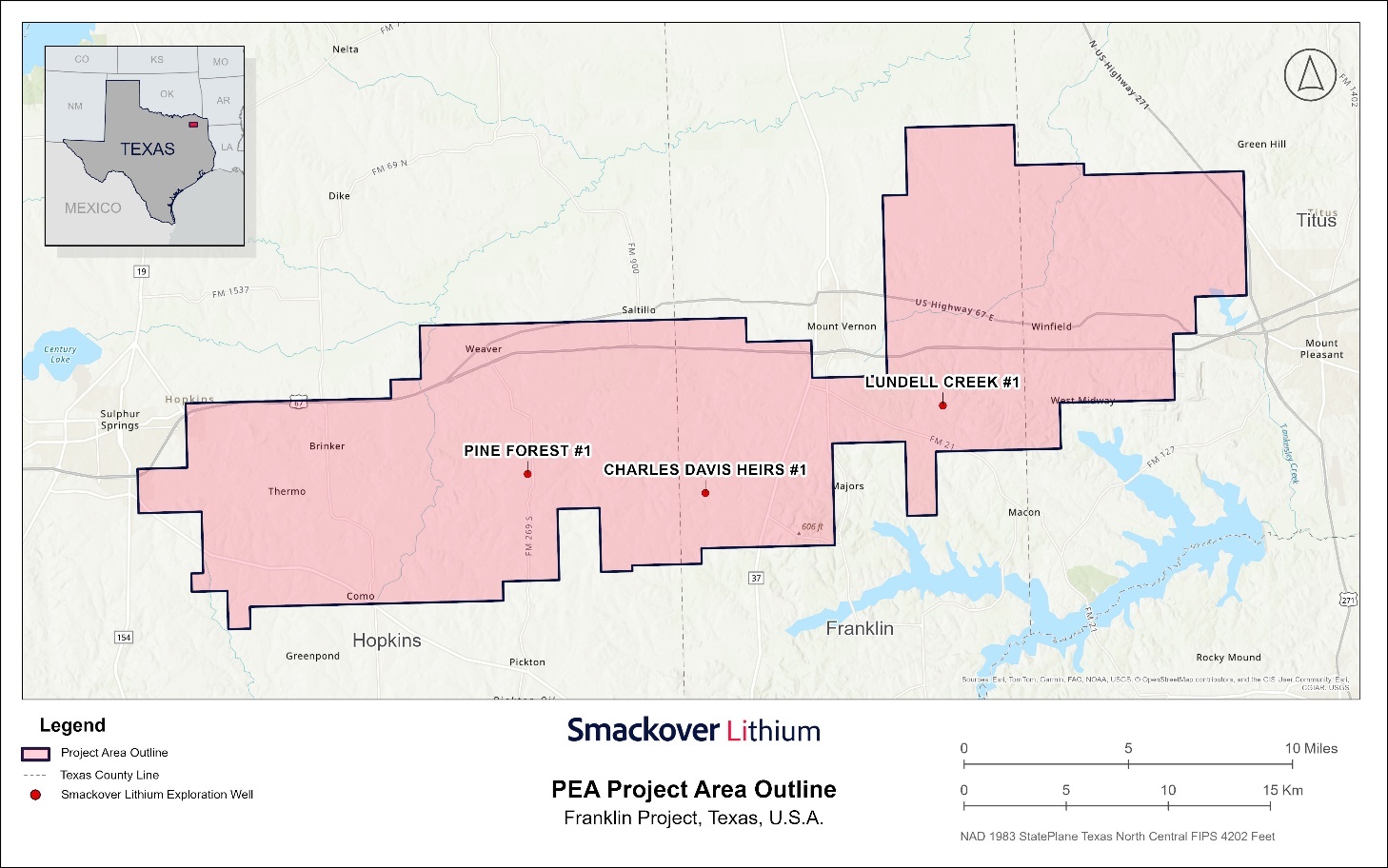
Smackover Lithium, a joint venture between Standard Lithium and Equinor, released a positive economic report for the Franklin Project in East Texas. The project could produce up to 70,000 tonnes of battery-quality lithium carbonate annually, Recorder. The after-tax profit potential hit $5.0 billion with a 24% return on investment.
The brine contains some of the highest lithium concentrations found anywhere in North America. Initial construction costs are estimated at $3.5 billion. The company plans to expand production to over 100,000 tonnes per year across multiple phases in Texas.
Strong Economics Unlock Texas Lithium Potential
The Franklin Project's economics look solid for extracting lithium from underground brine. The $5.0 billion after-tax net present value means the project should make money even after taxes and costs, The Sudbury Star reported. A 24% internal rate of return shows investors would get strong returns compared to other projects.
The capital intensity—the cost per tonne of annual production—came in at $49,945. This uses proven extraction methods and scaling factors from similar projects. At 70,000 tonnes yearly, the $3.5 billion upfront investment fits within industry benchmarks.
Premium Lithium Quality in Brine Deposits
The Franklin Project sits on brine with some of North America's richest lithium concentrations. High-quality brine means less processing and lower costs to make battery-grade lithium carbonate, Whitecourt Star stated. The upgraded mineral resource estimates confirm these deposits can sustain decades of production.
Battery-quality lithium carbonate is the pure form automakers need for EV batteries. East Texas brine chemistry reduces refining steps compared to other North American sources. This advantage cuts both time and capital needed to reach full production.
Expansion Plans Could Triple Regional Output
Smackover aims to push total Texas production beyond 100,000 tonnes annually through multiple phases and linked projects, Pembroke Observer confirmed. The Franklin Project alone kicks off with 70,000 tonnes per year. Additional phases and satellite operations would follow to reach the larger goal.
This multi-phase approach lets the joint venture de-risk development. Each phase proves the technology and supply chain before scaling up. It also spreads construction spending over years, easing financial pressure and allowing refinements based on early production data.
Standard Lithium and Equinor Partnership Accelerates
Standard Lithium and Norway's Equinor teamed up to develop Franklin as their first joint lithium venture in Texas. The partnership brings Standard's U.S. brine expertise and Equinor's global energy development track record. Ontario Farmer reported the combination strengthens the project's execution and financing prospects.
The positive PEA clears a major hurdle toward construction approval. Next steps likely include permitting, final engineering, and securing project financing. The companies must also finalize offtake agreements with battery makers and automakers seeking secured lithium supplies.
Sentiment
NeutralNEGATIVENEUTRALPOSITIVE
Publishers
16
Articles
16
Reach
16
Topics
A
AnonymousAuthor


