Top Load Balancer Rankings
HAProxy Validates Sovereign Security Model in G2 Fall 2026 Reports with Top Rankings
Anonymous
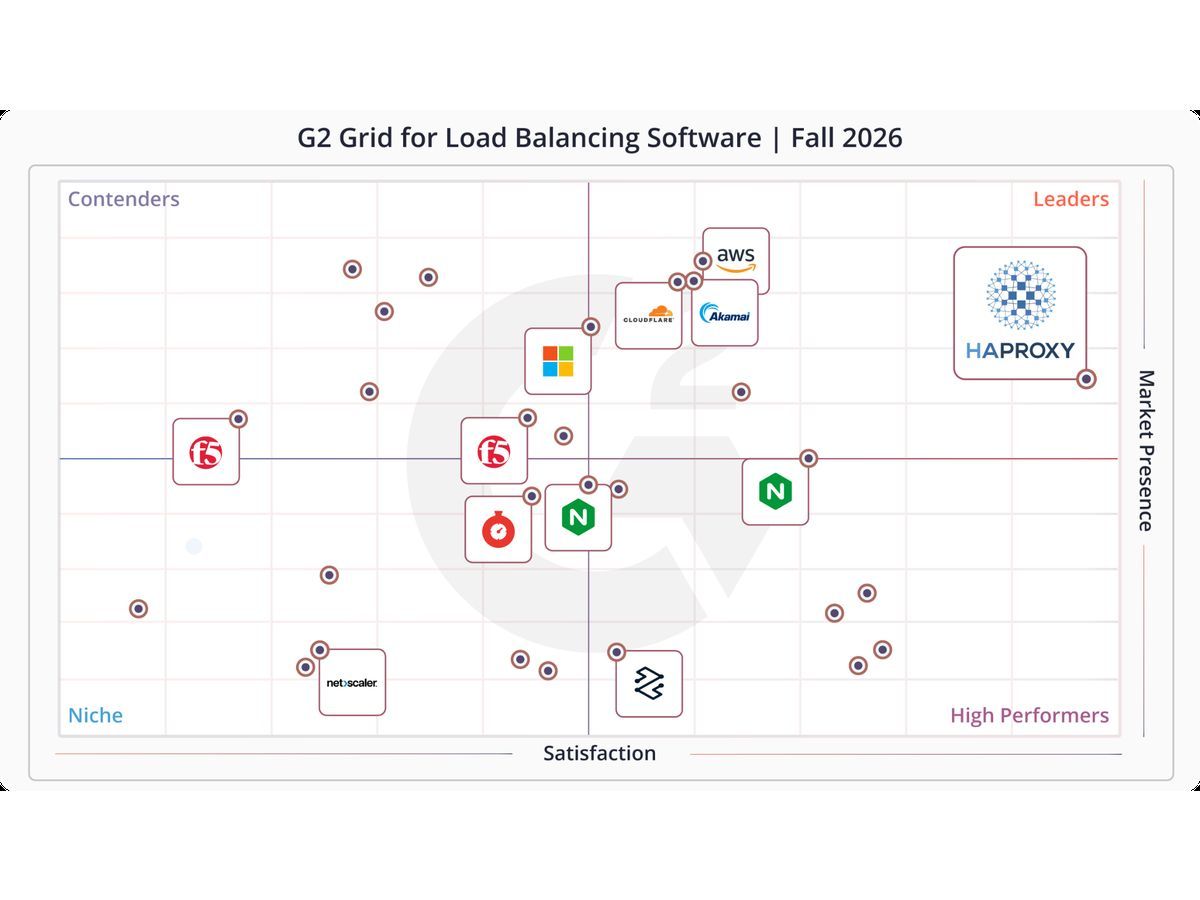
HAProxy Technologies has earned top marks in the G2 Fall 2026 Grid Reports, validating its Sovereign Security Model approach. The company claimed the #1 spot for load balancers for 14 straight quarters with a perfect 100 Satisfaction score, according to Owen Sound Sun Times. HAProxy's security deployments go live in about two months and are run entirely by customers' own teams—no outside vendor needed.
The company earned 86 badges across eight categories, including 27 Leader placements and Momentum Leader status in five categories at once, as reported by Edmonton Sun. HAProxy is the only product ranked in all eight categories where it competes, and it works across cloud servers, containers, and Kubernetes setups.
What the Sovereign Security Model Actually Does
HAProxy's approach lets customers run enterprise-grade threat detection on their own infrastructure instead of relying on a vendor's cloud servers. Northern News reports that customers can operate SaaS-level threat detection directly on premises. This means organizations keep full control over their security data and don't depend on external services.
14 Quarters Leading the Load Balancer Market
HAProxy has dominated the load balancer category for three and a half years straight, according to Owen Sound Sun Times. The company holds a perfect 100 Satisfaction score from G2 reviewers. A load balancer is software that spreads incoming traffic across multiple servers, keeping systems fast and reliable.
Recognition Across Multiple Security Categories
HAProxy competes in three distinct security categories: Web Application Firewall (WAF), DDoS Protection, and Bot Defense, Financial Post reports. The company earned 27 Leader badges and Momentum Leader awards in five categories simultaneously. Being ranked across all eight categories where it competes shows breadth and depth in application security features.
Fast Deployment With Customer Control
HAProxy's model lets organizations deploy security in roughly two months using their own IT teams, eliminating vendor lock-in. Seaforth Huron Expositor notes that customers maintain sovereignty over their threat detection infrastructure. This approach appeals to enterprises that want to avoid outsourcing critical security functions or deal with complex SaaS integrations.
Sentiment
NeutralNEGATIVENEUTRALPOSITIVE
Publishers
8
Articles
8
Reach
8
A
AnonymousAuthor


