Robots See Better
Robbyant Unveils Next-Gen LingBot-Depth 2.0 and LingBot-Vision for Enhanced Robotic Perception
Anonymous
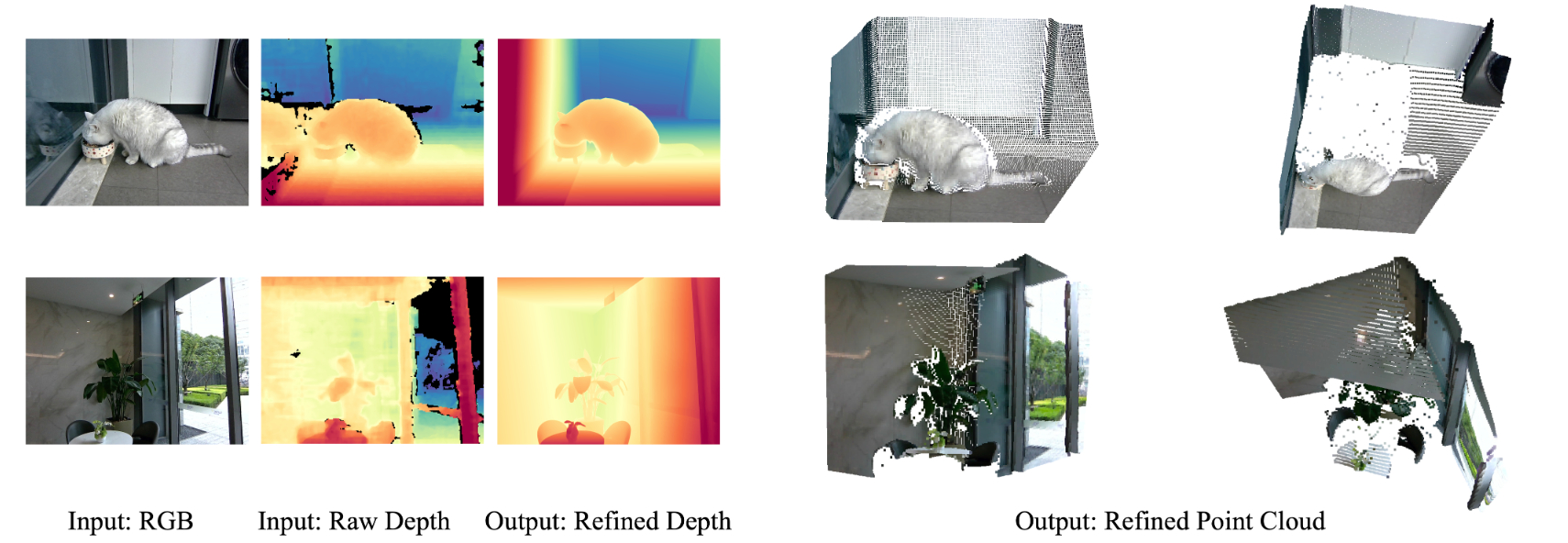
Robbyant, an embodied AI company inside Ant Group, has launched LingBot-Depth 2.0 and LingBot-Vision — two models built to give robots a sharper understanding of physical space. The new depth model topped 12 out of 16 industry benchmarks, according to Business Wire.
The release marks a major step in robotic spatial perception — the ability of machines to accurately "see" and map their surroundings in three dimensions. Robbyant says the models are designed to help robots navigate real-world environments with far greater accuracy than before.
LingBot-Depth 2.0 Trained on 150 Million Samples
LingBot-Depth 2.0 was trained on 150 million samples — a massive dataset meant to cover the wide variety of spaces robots operate in. The model ranked first in 12 of 16 depth completion benchmarks, Montreal Gazette reported. It performed especially well in tough indoor settings where large areas of depth data are missing.
Depth completion is the process of filling in gaps in a robot's 3D map of a space. Missing depth data is a common problem in real environments, caused by reflective surfaces, dim lighting, or sensor blind spots. LingBot-Depth 2.0 is built to fill those gaps more reliably than earlier models.
Orbbec Lab Certifies Model's Spatial Vision Performance
The new model has been independently certified by the Depth Vision Laboratory of Orbbec, a recognized leader in robotics and AI vision hardware. Third-party certification adds credibility to Robbyant's benchmark claims, according to Pembroke Observer.
Orbbec's lab tested the model against demanding real-world conditions. Its sign-off signals that LingBot-Depth 2.0 performs not just in controlled tests, but in the kinds of messy environments robots actually encounter — cluttered rooms, tricky lighting, and irregular surfaces.
RGB-D EGO Device to Carry Custom LingBot Model
Robbyant's RGB-D EGO device will come with a customized version of LingBot-Depth built in. The device collects visual and depth data at the same time. Over time, an advanced commercial version will be added to keep improving missing depth completion, object edges, and spatial structure mapping, Business Wire reported.
This hardware integration means the model won't just live in the cloud — it will run directly on data-collection devices in the field. That could speed up the feedback loop between raw sensor data and model improvement, helping robots get smarter faster.
LingBot-Vision Lays the Groundwork for Smarter Robots
Alongside the depth model, Robbyant also released LingBot-Vision — described as the foundational visual model underpinning its robotic AI system. While LingBot-Depth 2.0 handles 3D spatial mapping, LingBot-Vision provides the core visual understanding that robots need to recognize and interact with objects, according to Montreal Gazette.
Together, the two models form a layered perception system. Robbyant says the goal is to give robots the tools to accurately understand and move through the physical world — a key challenge in building machines that can work reliably outside controlled factory settings.
Sentiment
NeutralNEGATIVENEUTRALPOSITIVE
Publishers
6
Articles
6
Reach
6
A
AnonymousAuthor


