Uranium Drill Targets Identified
Stallion Uranium Identifies Multiple High-Priority Drill Targets at Coyote Using Integrated Geophysics
Anonymous
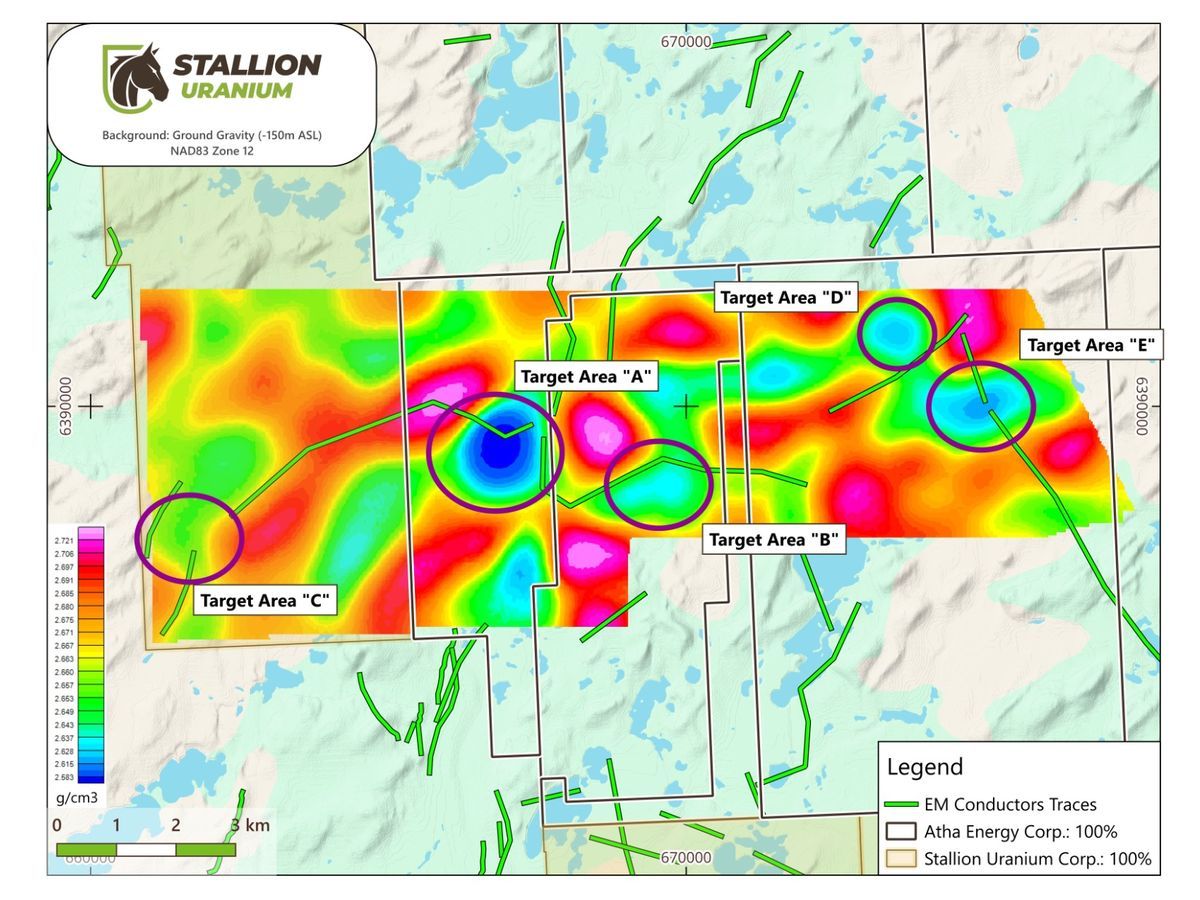
Stallion Uranium Corp. has completed an expanded ground gravity survey at its flagship Coyote project and identified five priority drill target areas, according to Leader Post. The survey extended coverage across the Coyote conductive corridor and revealed several new gravity low anomalies — zones where lower rock density can signal uranium-hosting structures below the surface.
The company combined the new gravity data with earlier surveys — including MobileMT, ground TDEM, magnetic, and structural readings — to build an updated three-dimensional exploration model, Montreal Gazette reported. That model will guide where Stallion drills next across the broader Coyote corridor.
Five Drill Targets Pinpointed by Gravity Survey Data
The expanded survey produced five priority areas where gravity lows line up with interpreted underground structures and conductive corridors, Edmonton Sun reported. Gravity lows matter in uranium exploration because they often point to altered rock — a key sign that uranium-rich fluids once moved through the area.
The new anomalies are spatially tied to conductive trends already mapped at Coyote. That overlap strengthens the case that these spots share the same structural controls that guide uranium mineralization elsewhere on the property, according to Calgary Sun.
How Integrated Geophysics Builds a 3D Underground Picture
Stallion pulled together several types of geophysical data to sharpen its view of what lies underground. MobileMT and ground TDEM surveys detect electrical conductivity — useful for spotting graphite-rich fault zones that often sit near uranium deposits. Magnetic surveys map rock types. Together, they reveal the structural plumbing of a potential ore system, Sudbury Star reported.
The integrated dataset let geologists build a 3D model of how faults, conductive corridors, and density contrasts relate to each other. That kind of model helps companies avoid expensive dry holes by drilling where multiple signals overlap, according to Northern News.
Coyote Corridor Grows as Exploration Target Expands
The gravity survey significantly increased spatial coverage across the Coyote conductive corridor, The Whig reported. That broader footprint means Stallion now has a larger area to work with and more data points to compare against existing drill results and surface geology.
The updated geological model will be used to refine exact drill collar locations and rank targets before the next field program, according to Owen Sound Sun Times. Stallion has not yet announced a drill start date or budget for the next phase of work at Coyote.
Uranium Exploration Heats Up Amid Rising Nuclear Demand
Stallion's push to advance Coyote comes as global uranium demand climbs. Governments in the US, Europe, and Asia are extending the life of existing nuclear plants and building new ones to meet clean energy targets. That demand has lifted uranium prices and drawn more investment into exploration projects, Goderich Signal Star reported.
For junior explorers like Stallion, identifying drill-ready targets through low-cost geophysics before committing to expensive drilling is a standard way to stretch budgets and attract investors. Five defined targets at a single corridor gives the company a clear pipeline of work, according to The Observer.
Sentiment
NeutralNEGATIVENEUTRALPOSITIVE
Publishers
11
Articles
10
Reach
11
A
AnonymousAuthor


