Missouri Voters Expected to Decide Congressional Map
Missouri Voters Expected to Decide Congressional Map
Anonymous
.jpg)
Key Points
1
Republicans already won 75% of Missouri’s congressional seats despite receiving about 58.5% of the statewide U.S. House vote in 2024; the 2025 map sought to raise their share of the state’s delegation to 87.5%.
2
The proposed changes to Emanuel Cleaver’s 5th District were extensive: only about two in five voters from the old district would remain, while heavily Black Kansas City neighborhoods would be split and combined with whiter, more rural communities.
3
The referendum dispute began when Secretary of State Denny Hoskins refused to certify more than 300,000 voter signatures supporting a referendum on the new map; the Missouri Supreme Court unanimously overturned that decision.
4
Former Missouri Supreme Court Judge Michael Wolff called the state court’s ruling that the 2025 map never took effect an “insuperable obstacle,” while saying the chances of the federal appeal changing November’s election were “between zero and zero.”
5
Republican officials have already suggested that St. Louis’ largely unchanged 1st District, represented by Democrat Wesley Bell, could become a future target; state Sen. Rick Brattin said he is “all for getting as many seats as we possibly can.”
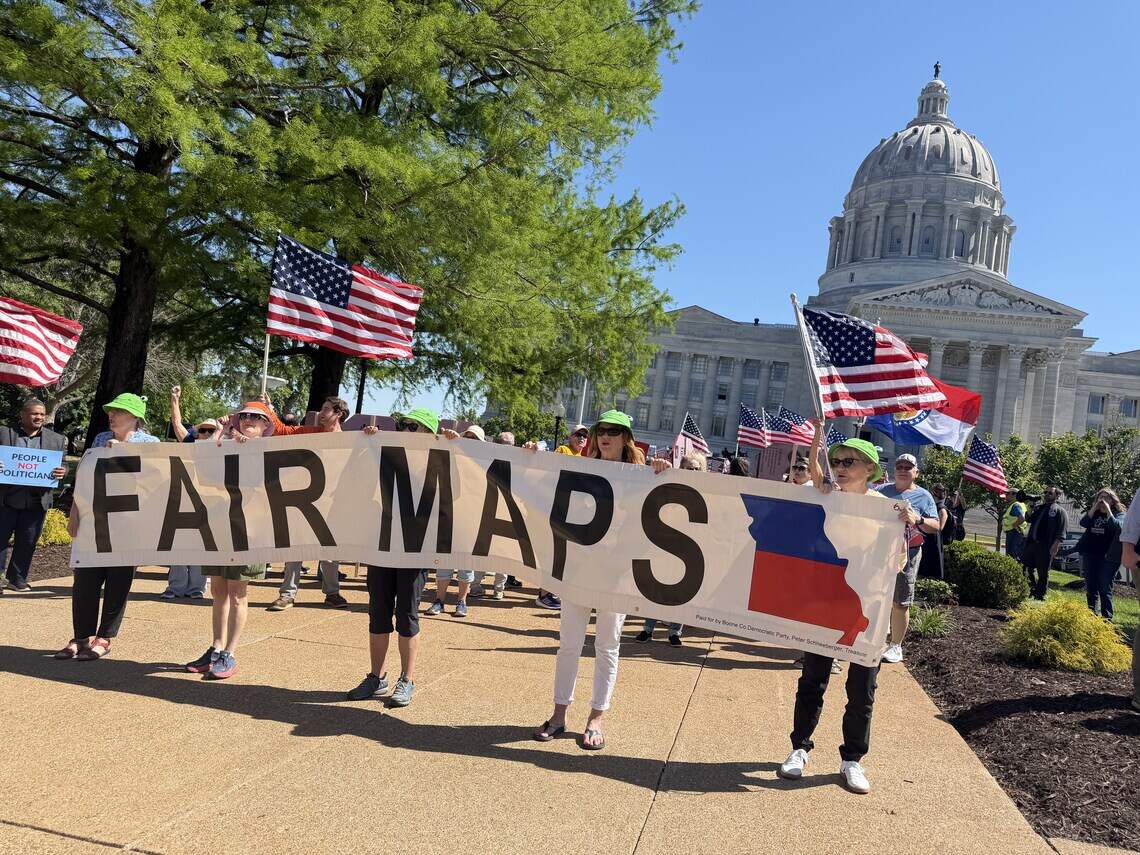
Missouri voters will decide in November whether to approve a new congressional map that two courts have already blocked. Republicans want to use Proposition A to cement their control of seven of the state's eight House seats, up from six today. But legal experts say the appeal is nearly certain to fail—the state's highest court ruled the map never took effect, and the U.S. Supreme Court's order blocking it remains in place St. Louis Post-Dispatch.
The 2025 map was designed to reshape Democratic Rep. Emanuel Cleaver's Kansas City district, removing about 60% of current voters and splitting heavily Black neighborhoods. Republicans won 75% of Missouri's House seats in 2024 despite getting only 58.5% of statewide votes. The proposed map would raise their share to 87.5% St. Louis Post-Dispatch.
A Map Rejected Twice by the Courts
Missouri's Republican leadership pushed the 2025 map through the legislature in 2024. But the state Supreme Court unanimously ruled it never legally took effect after Secretary of State Denny Hoskins refused to certify over 300,000 referendum signatures. The U.S. Supreme Court then blocked the map with its own order St. Louis Post-Dispatch. Former Missouri Supreme Court Judge Michael Wolff said the state court's ruling created an "insuperable obstacle" to any federal appeal.
Despite these losses, Republicans continue their federal appeal. Legal experts say the chances of changing this November's election are "between zero and zero," according to Wolff St. Louis Post-Dispatch. The Republican argument that the federal case could shape future redistricting rules offers little comfort to those troubled by the ongoing chaos.
Cleaver's District Bears the Brunt of Changes
Emanuel Cleaver's 5th District in Kansas City would look dramatically different under the proposed map. Only about 40% of current voters would remain in the redrawn district St. Louis Post-Discourse. Heavily Black Kansas City neighborhoods would be split and combined with whiter, more rural communities far from the city.
This reshaping is no accident. Republicans openly discussed targeting the district because Cleaver is one of only two Democrats in Missouri's delegation. State Sen. Rick Brattin said his party was "all for getting as many seats as we possibly can," suggesting Wesley Bell's 1st District in St. Louis could be next St. Louis Post-Dispatch.
Election Confusion From Months of Legal Fighting
The repeated court rulings and shifting instructions to election officials have created real confusion. Voters face conflicting signals about which map will actually govern this year's elections. Critics argue the state made itself look unreliable by refusing to certify the referendum signatures, then losing in court St. Louis Post-Dispatch. Missouri voters will use the 2022 districts in November, barring another surprise ruling.
Proposition A gives voters a final say. Rejecting it keeps the 2022 boundaries. Approving it signals support for the redrawn map—though courts would still need to approve any future use of it. The measure reflects how gerrymandering has become a statewide referendum question rather than a quiet legislative matter Protect Democracy.
Sentiment
Mostly NegativeNEGATIVENEUTRALPOSITIVE
Publishers
22
Articles
44
Reach
66
A
AnonymousAuthor


