Missouri Redistricting Legal Battle
Missouri map dispute returns to appeals court as 2026 election uncertainty grows.
Anonymous
Key Points
1
The legal challenges include NAACP v. Kehoe and Luther v. Hoskins, which questioned the governor’s authority to convene a special legislative session and argued that Missouri’s constitution prohibits mid-decade redistricting. The Missouri Supreme Court rejected those claims, ruling unanimously on the first issue and 4-3 on the second.
2
Separate cases—Wise v. Missouri and Healey v. Missouri—challenged the map’s timing, compactness, contiguity and apportionment. A trial court upheld the map, and the Missouri Supreme Court unanimously affirmed that decision in May 2026.
3
Washington University law professor Travis Crum said the appeals court cannot determine the November outcome on its own: “Whatever the 8th Circuit does, it cannot change what happens in November without the Supreme Court having a say.”
4
The 8th Circuit panel hearing the case consisted of Judges James B. Loken, David R. Stras and Justin D. Smith; two were appointed by President Donald Trump and one by President George H.W. Bush.
5
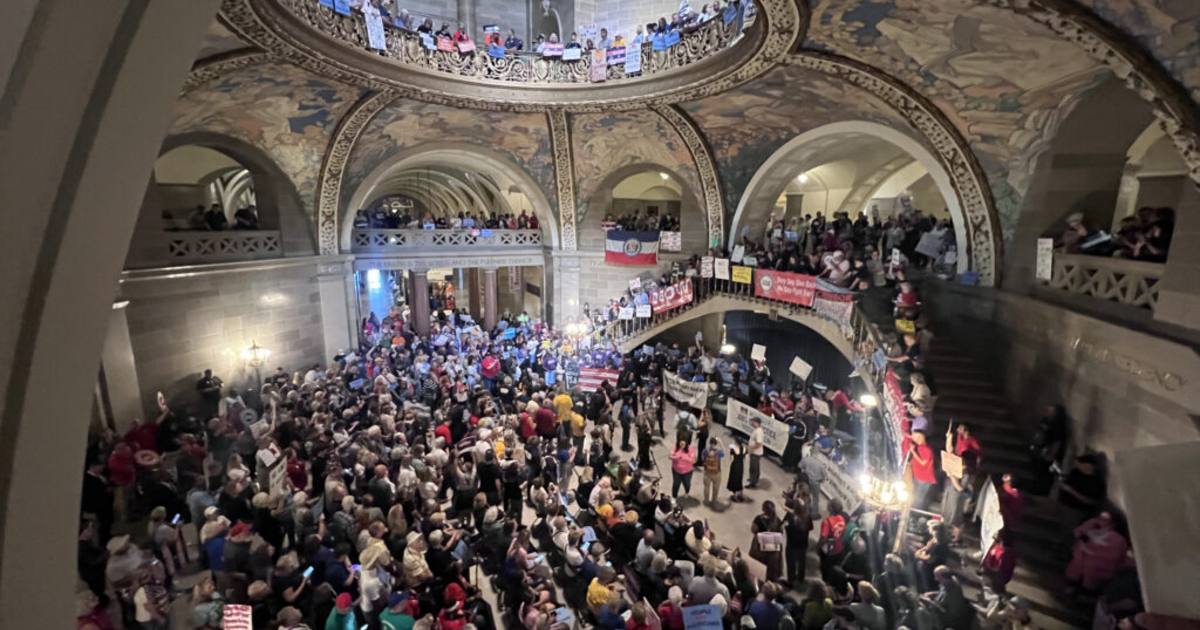
The 2025 map was passed under pressure from President Donald Trump, and the federal case also focuses on the People Not Politicians referendum campaign, which submitted more than 300,000 signatures seeking a statewide vote on the map.
Missouri's fight over congressional maps has returned to federal court, threatening to upend voting plans just months before the November 2026 election. Audacy reported that a federal appeals court ordered Missouri to use its 2025 congressional map, which would shift roughly 1.4 million voters into new districts. The dispute centers on whether the state can redraw districts mid-decade — a practice long banned by Missouri's constitution.
The timing creates chaos for election officials. Military and overseas ballots have already been sent using the 2022 districts, ST. Louis News reported. If the 2025 map is fully reinstated, those ballots could become invalid or voters could find themselves in different districts entirely. The U.S. Supreme Court has already blocked the 2025 map twice, but the legal battle continues.
Republicans Push for Map That Adds One Safe Seat
The 2025 map would increase Republicans' likely advantage from six of eight congressional seats to seven. Supporters argue the new districts are fairer and more competitive. But opponents say the redrawing violated Missouri's constitution, which explicitly blocks mid-decade redistricting. SCOTUS Blog noted that whatever the appeals court decides, it may not have power to change November without Supreme Court approval.
State Courts Already Rejected Republican Arguments
Missouri's highest court has already weighed in twice. The Missouri Supreme Court unanimously rejected claims that Governor Mike Kehoe lacked authority to call a special legislative session. On the core issue — whether mid-decade redistricting violates state law — the court split 4-3, with the majority allowing it. In May 2026, the same court unanimously upheld the 2025 map's compactness and fairness in a separate case.
Special Election May Lock in Redistricting Limits
Voters may soon decide whether to prevent future gerrymanders. Missouri Independent reported that Amendment 6 on the November ballot could ban mid-decade redistricting permanently. If approved, it would make another map redraw extremely difficult and reshape Missouri's redistricting battles for years. The amendment stems partly from the People Not Politicians campaign, which gathered over 300,000 signatures opposing the 2025 map.
Supreme Court's Silence Speaks Volumes
The U.S. Supreme Court has kept the 2022 districts in place twice by refusing to hear appeals. That inaction effectively blocks the 2025 map from being used — for now. But the 8th Circuit appeals panel includes judges appointed by both Trump and George H.W. Bush, and their next move remains uncertain. Legal experts say any November change requires a new Supreme Court decision, not just appeals court approval.
Sentiment
Mostly NegativeNEGATIVENEUTRALPOSITIVE
Publishers
52
Articles
472
Reach
524
A
AnonymousAuthor

.jpg&w=1920&q=75)


