Political Football Controversy
England FA Challenges Quansah Red Card Citing Balogun Precedent From Trump Intervention
Anonymous
Key Points
1
Balogun's one-match red-card ban was reportedly suspended for 12 months after intervention from U.S. President Donald Trump to FIFA president Gianni Infantino, a move that has intensified scrutiny of how political influence may affect disciplinary decisions.
2
There is no formal appeals process at this World Cup, yet the FA is weighing options to challenge Quansah's red card, with the potential to keep him available for the Norway quarter-final if overturned.
3
The French Football Federation reportedly submitted an appeal over Michael Olise's yellow card in France's last-16 win, illustrating ongoing cross-border debates about refereeing decisions and the use of appeals in the tournament.
4
England legends like Ian Wright argued that Balogun's reversal has opened what he described as a Pandora's box, a viewpoint used to justify contesting Quansah's sending-off.
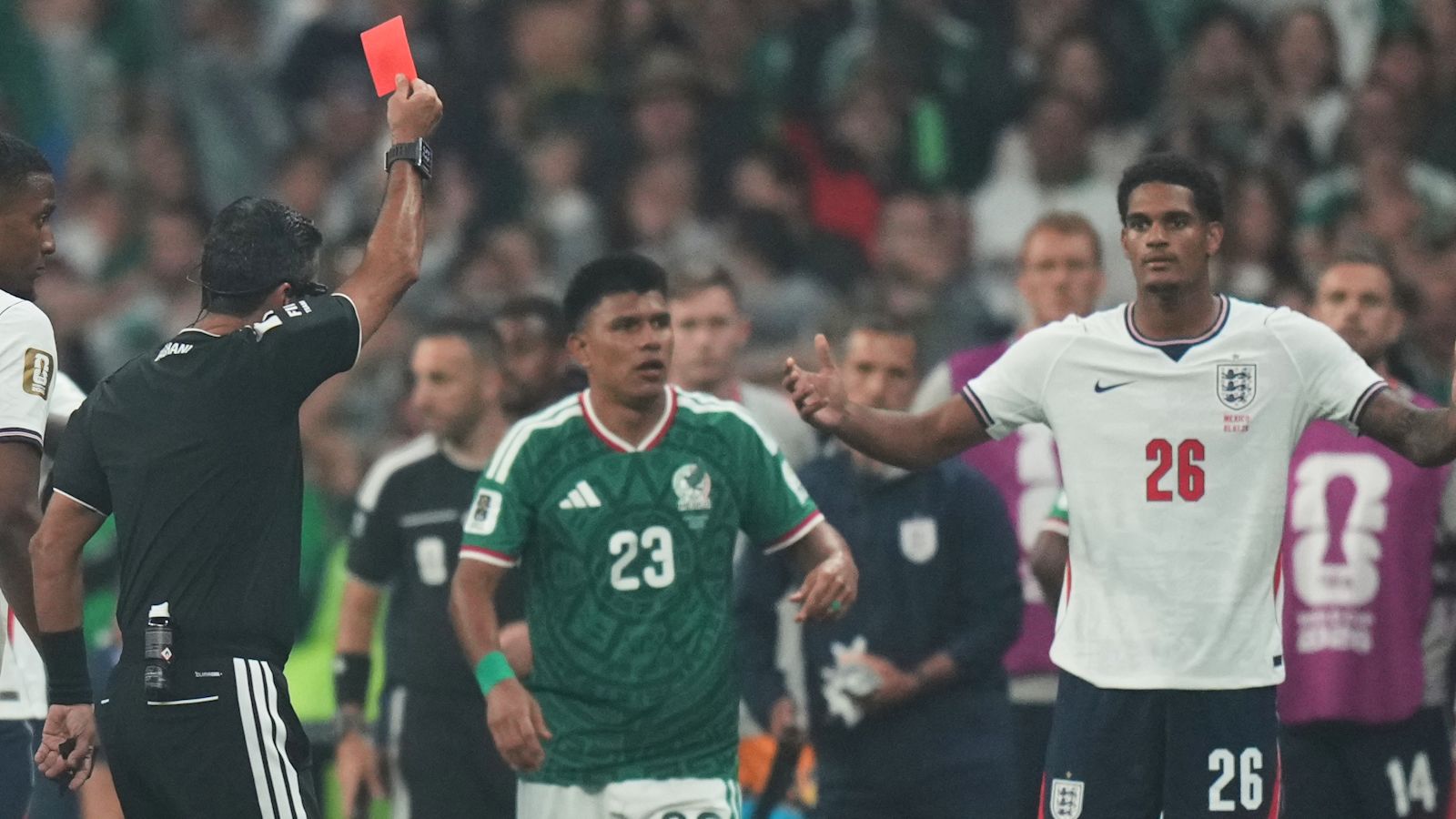
England's Football Association is weighing a formal challenge to Jarell Quansah's red card from the round-of-16 win over Mexico, according to Yahoo Sports. The move comes directly after FIFA suspended Folarin Balogun's one-match ban for 12 months following reported high-level intervention involving U.S. President Donald Trump and FIFA president Gianni Infantino.
Quansah was sent off after a VAR review of a high tackle during the Mexico match, according to ITV. If the ban stands, he will miss England's quarter-final against Norway — a game Tuchel's side cannot afford to enter short-handed at the back.
Trump's Call to Infantino Shook FIFA's Disciplinary Process
Balogun received a one-match red-card ban after the United States' last-16 match. That ban was then suspended for 12 months. Reports say President Trump personally contacted FIFA president Infantino to push for the reversal. The decision stunned football officials across the tournament.
England manager Thomas Tuchel publicly questioned where the line is drawn. The intervention created what former England striker Ian Wright called a "Pandora's box" — a phrase meaning once it is opened, it cannot be closed. Wright argued the Balogun reversal now gives every nation a reason to contest red cards.
FA Explores Appeal Despite No Formal Process in Place
There is no formal appeals process at this World Cup. FIFA's rules do not give teams a clear path to overturn red cards. Despite that, the FA is actively looking at its options, according to ITV. The Balogun case showed that bans can be reversed — even if the route to get there is unofficial.
The FA has not yet filed a challenge. Time is short before the Norway quarter-final. If the FA does nothing, Quansah sits out. If it pushes hard enough through back channels — as the U.S. appears to have done — the outcome could be different, according to UK Yahoo News.
France Joins the Queue as Appeal Debate Spreads
England is not alone in questioning refereeing calls at this World Cup. The French Football Federation reportedly submitted an appeal over Michael Olise's yellow card from France's last-16 win, according to Yahoo Sports. The move shows how the Balogun case has spread debate beyond just England and the United States.
Analysts warn this trend could damage the tournament's credibility. If political calls and informal appeals can change match suspensions, referees lose authority. Every close call becomes a negotiation. The consistency that makes knockout football fair starts to break down.
Norway Quarter-Final Looms as England Faces Key Decision
Quansah's absence would leave England with fewer defensive options against Norway. Tuchel must decide soon whether to push the appeal or plan without his defender. The FA is under real pressure — not just to win the match, but to decide how far it is willing to go to secure fairness, according to ITV.
The broader question now hangs over the whole tournament. The Balogun reversal set a precedent — red-card bans can move if the right pressure is applied. England, France, and others have noticed. FIFA has not yet said how it will handle the flood of challenges its own decision helped create, according to Malaysia Yahoo News.
Sentiment
Mostly NegativeNEGATIVENEUTRALPOSITIVE
Publishers
29
Articles
43
Reach
72
A
AnonymousAuthor


