Minnesota Wildfire Emergency
Governor Walz Declares Peacetime Emergency, Mobilizing National Guard for Minnesota Wildfires
Anonymous
Key Points
1
Executive Order 26-08 declared a peacetime emergency, mobilized the Minnesota National Guard, and authorized additional state assistance to bolster wildfire response; responding agencies include the Minnesota Department of Public Safety’s Division of Homeland Security and Emergency Management, Mn DOT, Minnesota Interagency Fire Center, U.S. Forest Service, and local emergency responders.
2
The U.S. Forest Service closed the Gunflint Ranger District to public access, including 15 lakes and associated campsites, due to multiple fires in the area.
3
A Red Flag Warning is in effect for five northeastern Minnesota counties, indicating extreme fire danger and the potential for rapid wildfire growth.
4
The Minnesota Department of Natural Resources is leading response on five other fires in the BWCAW region, with the National Guard providing support as part of a coordinated suppression effort.
5
The Forest Service reported that 225,000 acres of the Boundary Waters Canoe Area Wilderness were closed on July 11 due to multiple wildfires and ongoing dry conditions.
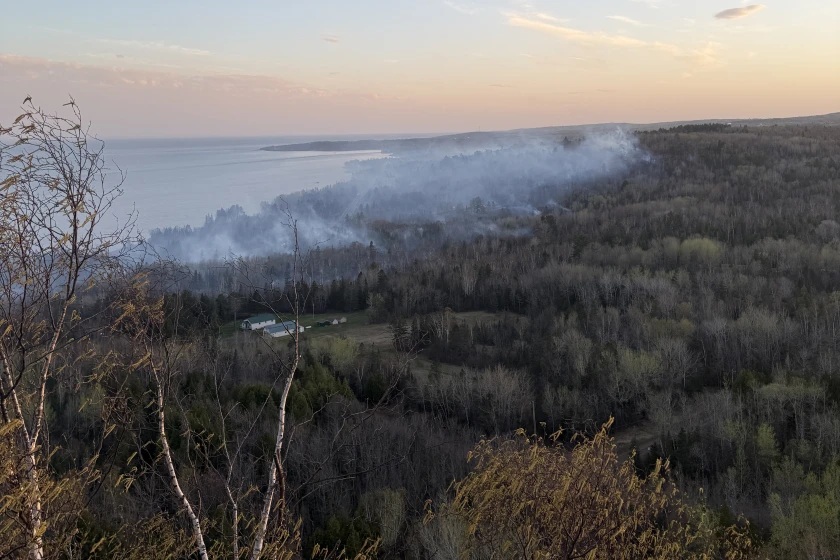
Minnesota Governor Tim Walz has declared a peacetime emergency and mobilized the state National Guard to fight roughly 17 wildfires burning across northeastern and northern Minnesota, according to Newsmax. The fires have scorched over 800 acres in just five days and remain uncontained near the state's border with Canada.
The blazes are concentrated between Ely and Crane Lake and along the Canadian border. The U.S. Forest Service has closed 225,000 acres of the Boundary Waters Canoe Area Wilderness as of July 11, citing multiple fires and dangerous dry conditions, Bellingham Herald reported.
Walz Signs Emergency Order, Guard Deploys Fast
Walz signed Executive Order 26-08, declaring a peacetime emergency. The order mobilized the Minnesota National Guard and authorized extra state assistance. It allows personnel and equipment to move faster to where they are needed most, according to Tri-City Herald.
Multiple agencies are now working together on the response. They include the Minnesota Department of Public Safety, the Division of Homeland Security and Emergency Management, MnDOT, the Minnesota Interagency Fire Center, the U.S. Forest Service, and local emergency responders. The Minnesota DNR is leading efforts on five fires in the BWCAW region, with the National Guard providing direct support.
Boundary Waters Closed as Fires Threaten Wilderness
The U.S. Forest Service shut down the entire Gunflint Ranger District to public access. The closure covers 15 lakes and all associated campsites. Trails and entry points into the Boundary Waters Canoe Area Wilderness are off-limits, according to Bellingham Herald.
The 225,000-acre closure reflects how quickly the situation has grown. Lightning strikes are one of the main triggers driving new fire starts. Evacuations are underway in some communities near the fire zones, as crews work to protect both homes and critical infrastructure in the region.
Red Flag Warnings Signal Extreme Fire Danger Ahead
A Red Flag Warning is in effect for five northeastern Minnesota counties. That warning means conditions are ripe for fires to start and spread very fast. Low humidity, dry vegetation, and gusty winds all combine to create extreme danger, Newsmax reported.
Dry conditions are expected to continue. Fire officials say the weather pattern leaves little room for error. Crews are watching for new lightning-triggered fire starts, which have already driven several of the 17 active blazes now burning across the region.
Walz Thanks Firefighters as Multi-Agency Battle Continues
Governor Walz has stressed gratitude toward firefighters and first responders working on the front lines. His administration says the emergency declaration is designed to cut red tape and speed up the flow of resources, according to Market Screener.
The situation is still developing. Multiple agencies across federal, state, and local levels remain engaged in active suppression and evacuation operations. Officials have not yet announced a timeline for when the fires could be brought under control, as dry conditions keep the risk high across the north.
Sentiment
Mostly NegativeNEGATIVENEUTRALPOSITIVE
Publishers
10
Articles
89
Reach
99
Topics
A
AnonymousAuthor


