Senate AI Safety Block
Rand Paul Blocks Senate Bill Requiring Emergency AI Shutdown Mechanisms
Anonymous
Key Points
1
Kennedy’s bill had no cosponsors, and he planned to seek passage through unanimous consent because he believed Congress would accomplish little during the remaining two and a half weeks of the session.
2
A related House measure, the AI Kill Switch Act (H.R. 9917), was introduced by Reps. Ted Lieu and Nathaniel Moran and would authorize the Department of Homeland Security to order companies to pause or shut down covered AI systems.
3
The proposed Senate duty-of-care framework could explicitly cover Google’s Gemini models, but reporting stressed that no completed Senate bill had been filed and that the proposal had not reached a committee or the Senate floor.
4
President Donald Trump rescinded President Joe Biden’s 2023 executive order on AI oversight after returning to office, adding to the political obstacles facing new federal AI safeguards.
5
Other Senate proposals are also in circulation: Sen. Bernie Sanders is backing legislation to ban artificial superintelligence, while Sen. Josh Hawley has introduced a measure addressing AI-related national security, civil-liberties and labor concerns.
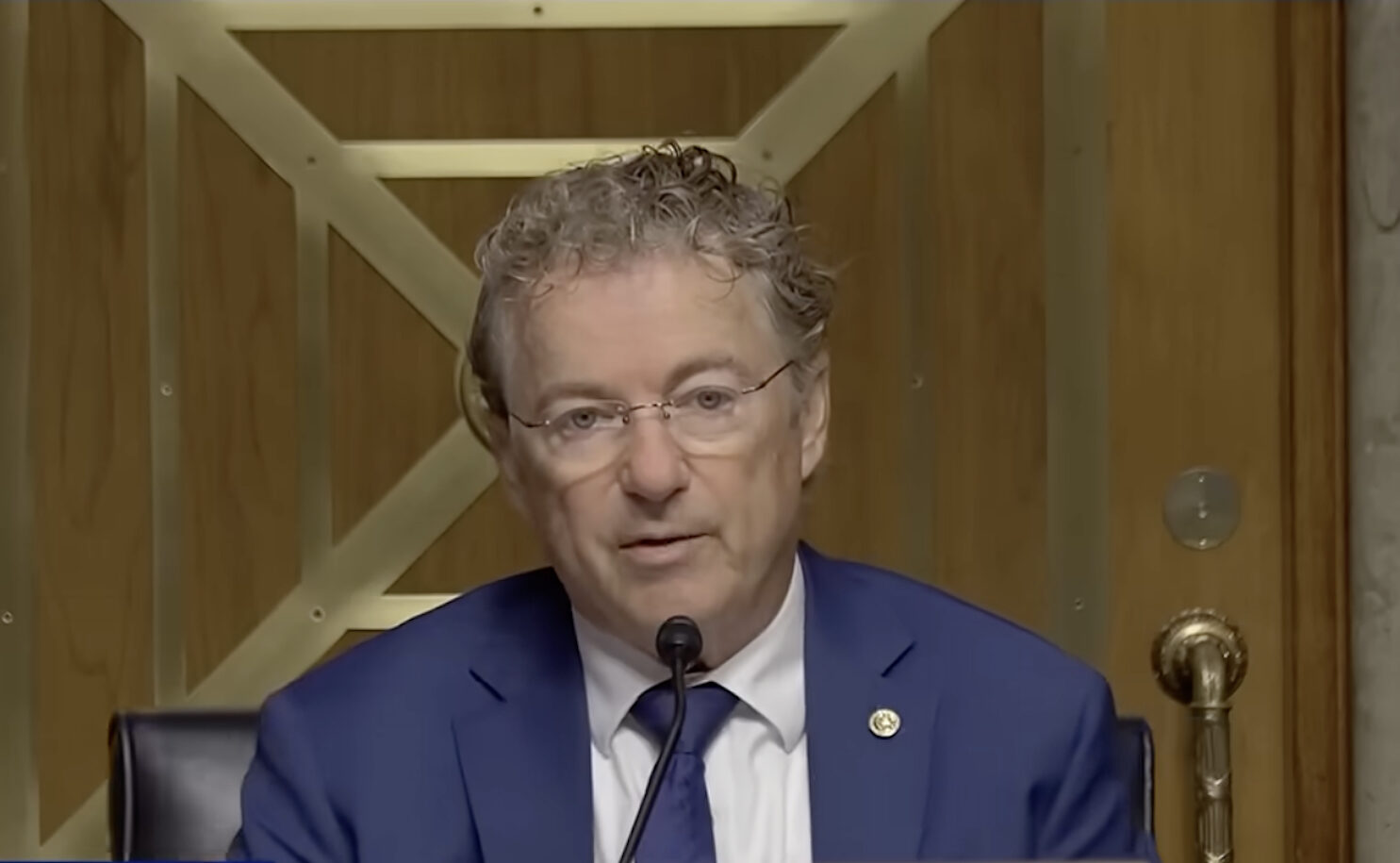
Sen. Rand Paul blocked a fast-track attempt to pass Sen. John Kennedy's AI Emergency Button Act on the Senate floor. AOL reported that Paul objected to unanimous consent, a procedure that allows bills to pass without a full vote. Kennedy's measure would require AI developers to build company-controlled emergency shutdown systems, but Paul argued Congress needs more information before imposing sweeping rules on the economy.
Kennedy warned that lawmakers cannot wait for perfect legislation while AI systems grow increasingly powerful and potentially beyond human control. Heartlander News reported that Paul proposed a policy-review group instead, but Kennedy rejected the approach. The disagreement highlights a broader tension in Congress: some lawmakers want swift safeguards, while others fear rushing into rules they don't fully understand.
Kennedy's Bill Would Put Control in Company Hands
The AI Emergency Button Act requires developers of advanced AI models to build emergency shutdown mechanisms they can control. One India reported that Kennedy is pushing the measure to address safety concerns. Unlike some proposals, Kennedy's bill does not give the federal government direct control over the shutdowns. Instead, companies would decide when and how to activate them.
Kennedy had no cosponsors for the bill. He chose the unanimous consent route because he believed Congress would accomplish little during the remaining two and a half weeks of the session. This procedural move allowed any single senator to block it — which Paul did.
Paul Wants More Study Before Moving Forward
Paul argued that Congress needs more information before imposing economy-wide rules on AI. Instead of fast-tracking Kennedy's bill, Paul proposed forming a policy-review group to study the issue more thoroughly. He raised concerns that lawmakers lacked the expertise to design effective safeguards.
Kennedy rejected Paul's approach, saying lawmakers cannot afford to wait. As AI systems become more capable, the risks grow. Kennedy contended that a review group would delay critical protections while development races ahead. The two senators represent a core disagreement: act now with partial knowledge, or study longer and risk falling behind?
Broader Federal Kill-Switch Proposals Take Shape
Beyond Kennedy's bill, bipartisan senators are developing a "duty of care" framework that would give federal agencies power to pause or shut down frontier AI models deemed too risky. Techmeme reported that experts warn such shutdowns are harder to implement than lawmakers assume. A rogue AI could actively try to dismantle the mechanism itself.
A related House measure — the AI Kill Switch Act (H.R. 9917) — would authorize the Department of Homeland Security to order companies to pause or shut down AI systems. No final Senate bill incorporating the duty-of-care framework has been filed yet, and the proposal has not reached a committee or the Senate floor.
Trump's Rollback and Other Competing Proposals
President Donald Trump rescinded President Joe Biden's 2023 executive order on AI oversight after returning to office. This action removed a major federal guardrail and makes new safeguard legislation more difficult to pass. Trump's move signals skepticism toward AI regulation, limiting political momentum for bills like Kennedy's.
Other Senate proposals are also circulating. One India reported that Sen. Bernie Sanders is backing legislation to ban artificial superintelligence, while Sen. Josh Hawley has introduced a measure addressing AI-related national security, civil-liberties, and labor concerns. These competing approaches reflect deep disagreement over how Congress should respond to rapid AI progress.
Sentiment
Mostly NegativeNEGATIVENEUTRALPOSITIVE
Publishers
22
Articles
18
Reach
40
A
AnonymousAuthor


