Identity. Memory. Science.
Dalia Dubois' Fractured Lines Novel Blends Sci-Fi, Psychology to Explore Identity
Anonymous
Key Points
1
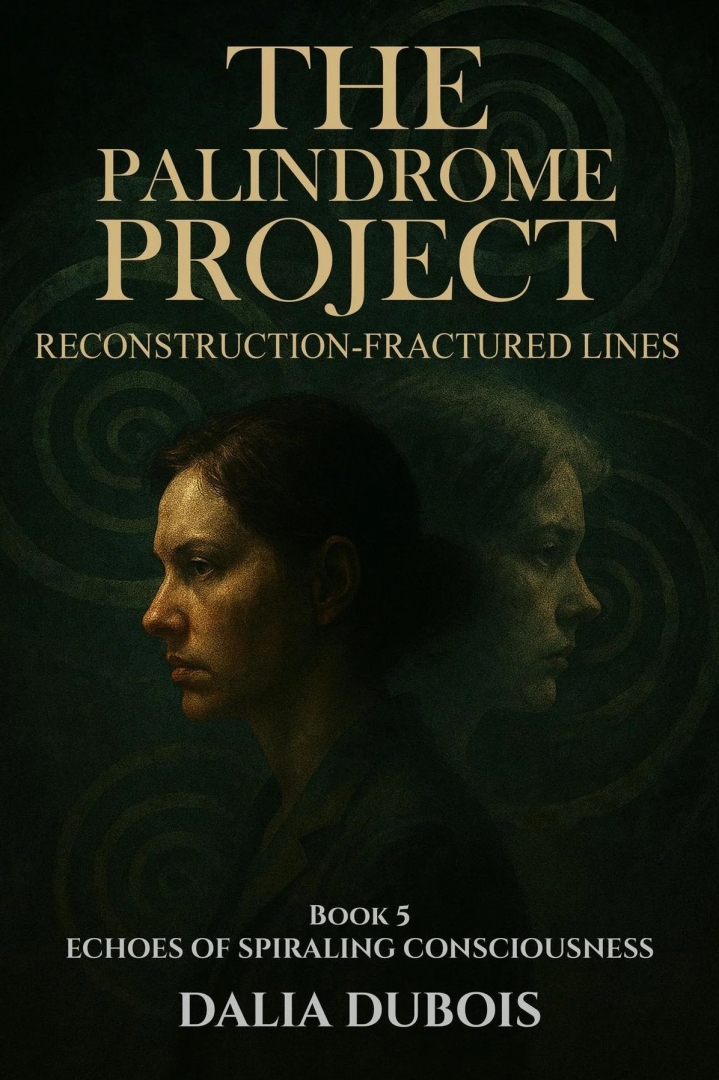
The Palindrome Project Reconstruction: Fractured Lines is authored by Dalia Dubois.
2
Critical reception highlights Dubois’s writing as masterfully blending psychological depth with speculative fiction, delivering an emotionally intimate and intellectually expansive narrative.
3
The story’s media coverage spans multiple independent outlets, indicating broad syndication of the book’s release across markets-focused and regional news sites (at least five outlets listed).
A new psychological sci-fi novel is drawing attention across multiple news outlets for its bold take on memory, trauma, and identity. Press Release CC reports that The Palindrome Project Reconstruction: Fractured Lines, written by Dalia Dubois, centers on Grace Kerrington — a woman rebuilt from psychological and physical ruin after a catastrophic explosion tied to a secret government program called the Palindrome Project.
The book's release has been picked up by at least five independent outlets, from regional news sites to markets-focused platforms. Financial Content notes that Dubois blends psychological depth with speculative fiction to craft a story that is both emotionally intimate and intellectually expansive.
Grace Kerrington's Fight to Reclaim Her Own Mind
At the heart of the novel is Grace Kerrington. She survives a devastating explosion. But survival is only the beginning. According to Press Release CC, Grace must then piece together her sense of self from the wreckage — both physical and psychological. Her journey shifts from a fight for freedom to a deeper search for identity.
The Palindrome Project is the source of her trauma. It is a secret government experiment built around advanced mind science. The story forces Grace — and the reader — to ask a hard question: Can a person truly be themselves after someone else has rewritten their mind?
Secret Government Experiments and the Ethics of Mind Science
The novel's backdrop involves mass consciousness manipulation. Financial Content describes the Palindrome Project as a program where scientific progress has pushed far beyond moral boundaries. The story exposes what happens when governments treat the human mind as a tool rather than a right.
These ethical questions sit at the core of the book. Dubois does not let the high-concept science fiction overwhelm the human story. Instead, guilt, accountability, and the danger of unchecked power all weave through Grace's personal experience. The result is a thriller that also functions as a moral reckoning.
Trauma, Healing, and the Fragile Process of Becoming Whole
Dubois keeps her emotional focus tight throughout the narrative. World News highlights that the book's central themes — resilience, healing, and redemption — are carried through Grace's slow and painful reconstruction. The story does not offer easy answers. Recovery here is fragile, nonlinear, and deeply human.
Memory plays a key role. Grace cannot fully trust what she remembers. That uncertainty shapes every decision she makes. The novel asks whether a person defined by a traumatic past can ever truly move forward — or whether the past will always fracture the lines of who they are.
Wide Syndication Points to Growing Reader Interest in the Genre
The book's media footprint is notable. Coverage spans at least five outlets across different markets, from Press Release CC to Financial Content and World News. That kind of broad syndication suggests strong publisher outreach and growing reader appetite for speculative fiction with psychological depth.
Dubois enters a crowded genre but brings a distinct emotional core. Critics, as reflected across these outlets, point to her ability to hold together big ideas — consciousness, autonomy, government overreach — without losing sight of one woman's very personal story. That balance may be what sets Fractured Lines apart.
Sentiment
Mostly NegativeNEGATIVENEUTRALPOSITIVE
Publishers
12
Articles
11
Reach
23
A
AnonymousAuthor


