Webb Reveals Counter-Rotating Gas in M64
Webb Reveals Counter-Rotating Gas in M64
Anonymous
Key Points
1
NASA says the Astronomy Picture of the Day website is moving from apod.nasa.gov to science.nasa.gov/apod.
2
The image is credited to NASA, CSA, ESA, F. Belfiore, J. Lee, A. Leroy and D. Thilker, with processing by G. Kober of NASA and the Catholic University.
3
The APOD entry identifies Keighley Rockcliffe, Robert Nemiroff, Jerry Bonnell and Cecilia Chirenti as its authors and editors, and describes the feature as a service of NASA’s Astrophysics Science Division, NASA Science Activation and Michigan Technological University.
4
The APOD listing says the next day’s featured image will be titled “treasure.”
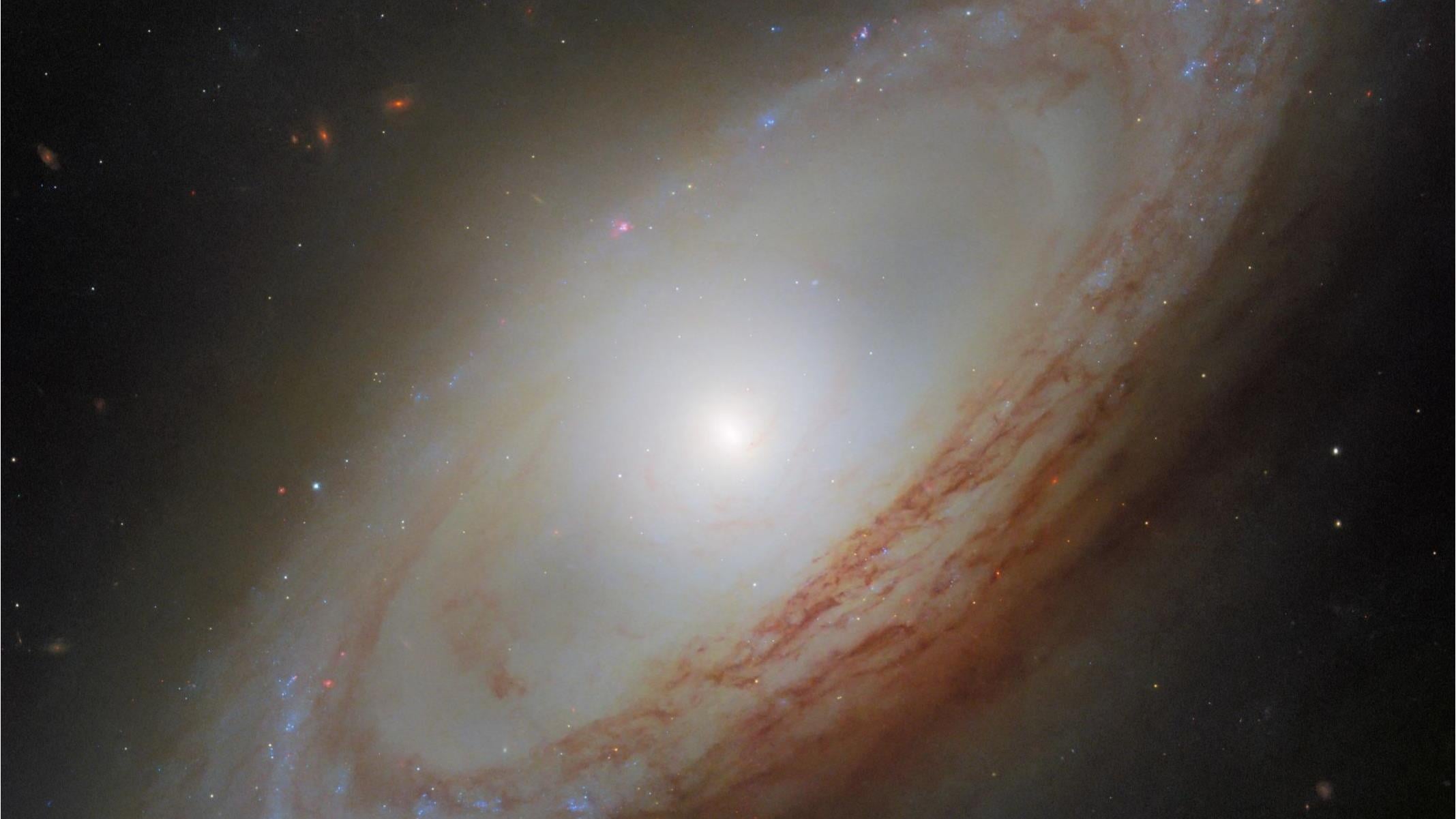
NASA's James Webb Space Telescope has revealed a striking cosmic collision frozen in time: the Black Eye Galaxy, formally known as Messier 64, where inner and outer gas clouds rotate in opposite directions. NASA featured the discovery in its Astronomy Picture of the Day on September 16, 2026, showing how the counter-rotation compresses gas where the two rotating regions meet, fueling intense bursts of star formation.
The counter-rotating gas pattern provides strong evidence that spiral galaxies like our Milky Way have turbulent merger histories. Astronomers believe a smaller galaxy collided with M64 long ago, leaving its mark on the galaxy's structure. Webb's infrared observations reveal dust absorbing and re-emitting light from newborn star regions, offering scientists unprecedented insight into how mergers reshape galaxies.
When Two Galaxies Collide and Keep Rotating
M64's distinctive structure emerged from a cosmic pileup. A smaller galaxy smashed into the larger spiral galaxy at some point in the past, but instead of merging cleanly, the newcomer's gas kept rotating in its original direction. Today, the galaxy's core spins one way while its outer disk spins the opposite way—a configuration NASA says is rare among known spiral galaxies.
Where these counter-rotating streams meet, friction and gravity compress the gas into dense clumps. These collisions trigger gravitational collapse, igniting the birth of new stars at the boundary zone. The result is a ring of intense star formation marking the collision point between the two rotating regions.
Webb's Infrared Eyes Expose Hidden Star Birth
Hubble's visible-light cameras captured M64's famous dark dust lane winding across its face. But Webb's Mid-Infrared Instrument pierces that veil, showing hot dust that glows when bathed in radiation from young, scorching stars. The infrared view reveals where newborn stellar furnaces heat surrounding clouds, painting a thermal map of active star-forming zones.
The composite image combines both telescopes' strengths: Hubble's sharp visible view and Webb's heat-sensing infrared sight. Together they tell the full story of a galaxy shaped by collision and now actively remaking itself through star birth triggered by rotating gas compression.
A Snapshot of Galaxy Evolution in Action
M64 serves as a natural laboratory for understanding how galaxies evolve through merger events. Most spiral galaxies, including the Milky Way, likely experienced similar collisions in their past. By studying M64's dust, motion, and star-forming activity, astronomers decode the hidden histories written into galaxy structures.
NASA noted that its Astronomy Picture of the Day website is relocating from apod.nasa.gov to science.nasa.gov/apod, reflecting the agency's reorganization of online astronomy resources. The image credits include contributions from the European Space Agency, Canadian Space Agency, and researchers F. Belfiore, J. Lee, A. Leroy, and D. Thilker.
Sentiment
Mostly PositiveNEGATIVENEUTRALPOSITIVE
Publishers
14
Articles
9
Reach
23
A
AnonymousAuthor


