Exploring the Hidden Universe
NASA Launches $4.3 Billion Roman Space Telescope to Unlock Universe Secrets
Anonymous
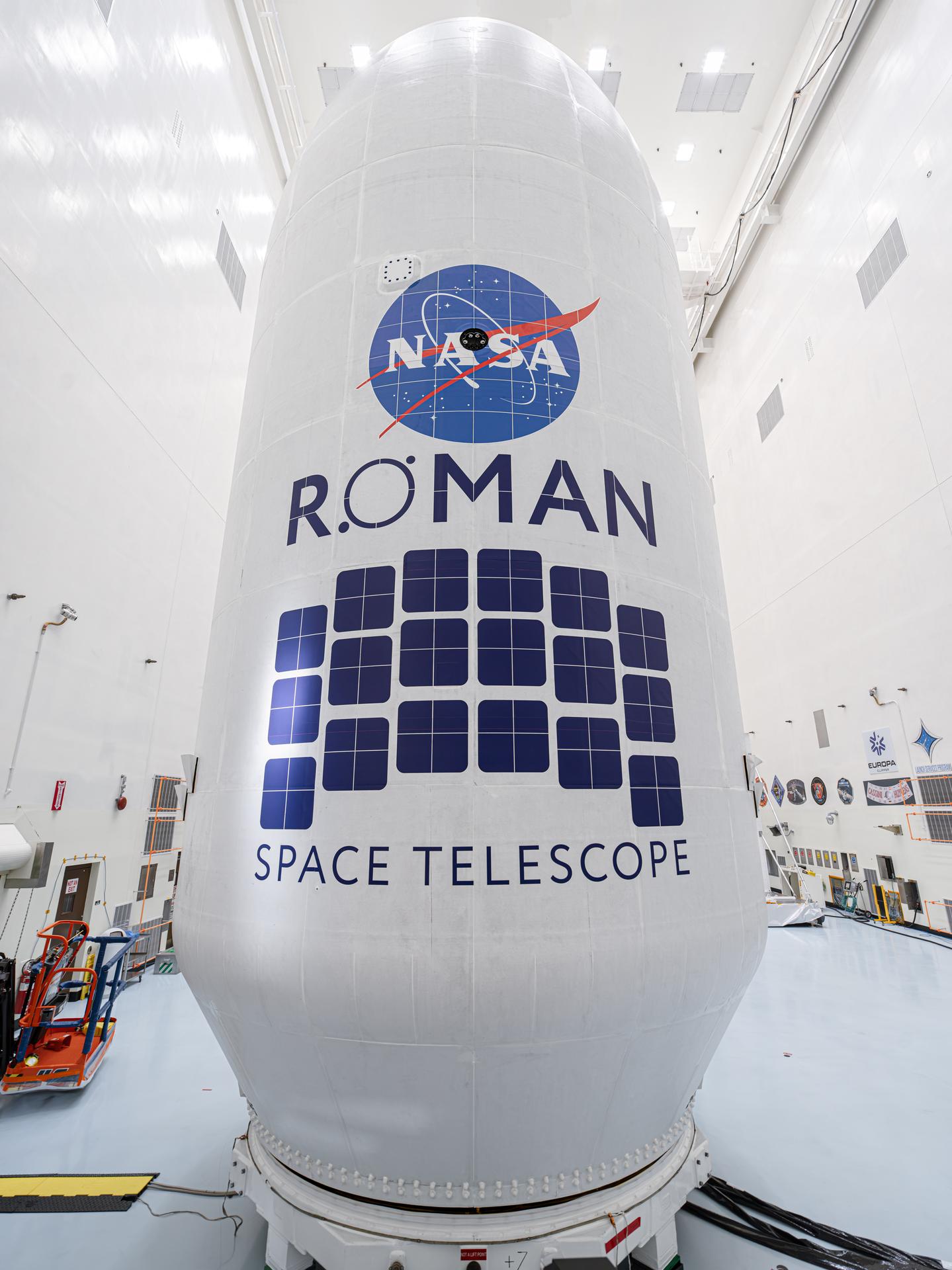
SpaceX has launched NASA's $4.3 billion Roman Space Telescope from Kennedy Space Center in Florida, sending the most powerful observatory ever built on a quest to unlock the universe's deepest secrets AP News. Named after pioneering astronomer Nancy Grace Roman, the telescope will spend three months traveling to a point 1 million miles from Earth, where it will scan for distant planets, map dark energy, and reveal cosmic mysteries NASA.
The Roman telescope carries a revolutionary advantage: its field of view is more than 100 times wider than the Hubble Space Telescope News4Jax. It will join forces with the European Space Agency's Euclid spacecraft and the Vera C. Rubin Observatory in Chile to create an unprecedented cosmic survey UK MarketScreener.
A Giant Leap for Space Exploration
The Falcon Heavy rocket lifted off from Launch Complex 39A at Kennedy Space Center, carrying humanity's newest tool for understanding the cosmos NASA. The Roman telescope is the first space observatory ever named after a woman, honoring Nancy Grace Roman's decades of pioneering work in astronomy AP News. At $4.3 billion, it represents NASA's largest investment in a space telescope since the Hubble.
Three Months to the Perfect Vantage Point
Once in space, the Roman telescope will take over 90 days to reach its destination: a location 1 million miles from Earth WHIO. This distant post, far from Earth's heat and radiation, will provide the perfect viewing platform for observing exoplanets and dark energy News4Jax. The journey puts Roman beyond the orbit of the current Webb Space Telescope, in a region of stable gravitational balance called a Lagrange point.
Hunting Planets and Dark Matter Across the Universe
The Roman telescope's main mission is to search for planets orbiting other stars and measure the expansion of the universe itself AP News. Its wide field of view lets it scan vast stretches of sky at once, spotting faint signals that smaller telescopes would miss NASA. Scientists believe it will find thousands of new exoplanets and reveal how dark energy shapes cosmic growth.
Working alongside Euclid and the Vera Rubin Observatory, Roman will create an unprecedented 3D map of the universe UK MarketScreener. Together, these three instruments will decode some of astrophysics' biggest puzzles: the nature of dark matter, the accelerating expansion of space, and the prevalence of life-supporting worlds NASA.
Built to Last With Potential for Refueling
Unlike previous telescopes, the Roman Space Telescope was designed with refueling capability in mind AP News. If a robotic tanker becomes available in the coming decade, NASA could extend Roman's operational life far beyond initial plans WHIO. This feature gives the mission flexibility and potential decades of scientific discovery.
Sentiment
NeutralNEGATIVENEUTRALPOSITIVE
Publishers
5
Articles
5
Reach
5
A
AnonymousAuthor


