Hanwha's K9 Howitzer Deal
US Army Selects Hanwha K9 Howitzer Prototypes for Mobile Tactical Cannon Program
Key Points
The Army’s Mobile Tactical Cannon prototype effort will deliver up to 18 K9MH-based self-propelled howitzers for performance trials over about four years, with a prototype development contract valued at $262.9 million and a potential follow-on production deal of up to 10 trillion won if trials succeed.
Initial schedule calls for accelerated delivery of six prototype MTC systems, with an option to procure an additional 12.
Hanwha Defense USA is localizing production in Opelika, Alabama by leasing an idle factory for three years and investing roughly $2 million to establish a K9MH integration and testing facility.
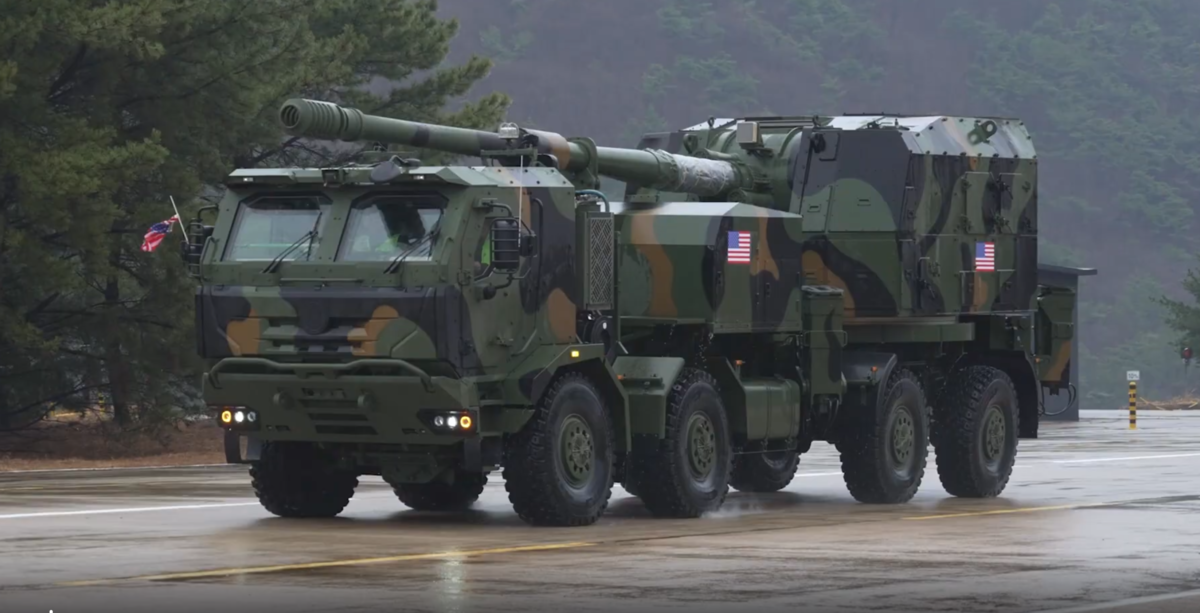
The K9MH concept combines a fully automated turret with a wheeled platform built on the K9 chassis, delivering improved road mobility and rapid displacement after firing.
The K9 family already has an export footprint in 10 countries and holds a leading market share in the global self-propelled howitzer segment.
The U.S. Army has chosen Hanwha Defense USA to build prototypes for its new Mobile Tactical Cannon program, marking the first time a finished South Korean weapons system has been sold to the United States. The contract is worth $262.9 million, according to SE Daily and Yahoo Finance.
Under the deal, Hanwha must deliver six K9MH self-propelled howitzer prototypes first, with an option to supply 12 more — 18 total. The Army will test the systems over roughly four years. If trials succeed, analysts say a follow-on production contract could be worth up to 10 trillion Korean won, BigGo Finance reported.
What the K9MH Howitzer Actually Does
The K9MH is a wheeled self-propelled howitzer built on South Korea's proven K9 chassis. It pairs a fully automated turret with a wheeled platform instead of traditional tracks. That means faster movement on roads and quicker repositioning after firing — a key advantage on a modern battlefield.
The program aims to replace older U.S. artillery systems, including the towed M777 and the tracked M109A7. Wheeled systems are easier to transport by air and can move faster between firing positions. The Army calls the program SPH-M, short for Self-Propelled Howitzer Modernization, according to BigGo Finance.
Hanwha Opens Alabama Factory to Build Prototypes
To meet U.S. requirements, Hanwha Defense USA is setting up a production site in Opelika, Alabama. The company leased an idle factory there for three years and is investing about $2 million to turn it into a K9MH integration and testing facility, according to SE Daily.
Building locally is important. The U.S. military generally prefers weapons made on American soil. By assembling and testing the howitzers in Alabama, Hanwha shows it can act as a domestic supplier — not just a foreign vendor shipping finished goods overseas.
A Historic First for South Korea's Defense Industry
Industry observers are calling this a landmark moment. South Korea has sold weapons to dozens of countries, but never a complete finished weapons system to the United States — the world's largest defense market. SE Daily described the deal as the first of its kind for a Korean-made arms system.
Hanwha's stock surged 10% after the announcement, BigGo Finance reported. The K9 platform already serves in 10 countries and holds a leading share of the global self-propelled howitzer market. Winning a U.S. prototype contract adds enormous credibility and could open doors to further American procurement.
What Comes Next If the Prototypes Pass
The four-year test phase will push the K9MH through realistic battlefield conditions. The Army wants to confirm the system performs as promised before committing to a full buy. Six prototypes will be delivered first, with the remaining 12 coming only if the Army exercises its option, according to Yahoo Finance.
If the Army greenlights mass production, the financial payoff for Hanwha could be enormous. A follow-on deal worth up to 10 trillion won — roughly $7.5 billion — is possible. That would be one of the largest defense export wins in South Korean history and a major validation of Hanwha's global expansion strategy, Freedom 96.9 noted.
Sentiment
Mostly PositivePublishers
15
Articles
94
Reach
109


