Idaho Reproductive Rights Ballot
Idaho Reproductive Freedom Initiative Qualifies for 2026 Ballot, Protecting Health Decisions
Anonymous
Key Points
1
The ballot qualification hinges on 6% of registered voters statewide and 6% of voters in at least 18 of Idaho's 35 legislative districts; supporters submitted more than 110,000 signatures across all 44 counties.
2
The initiative would appear on the November 3, 2026 ballot if approved.
3
Fetal viability is defined as a significant likelihood of survival outside the uterus without extraordinary measures; after viability, the state could regulate abortion, except in medical emergencies.
4
Under Idaho law prior to the measure, abortion was largely illegal since 2022 with narrow exceptions, including pregnancies resulting from rape or incest (requiring a police report and first-trimester timing) and risk to the mother's life.
5
Campaign organizers note a broad, cross-partisan coalition with substantial volunteer effort—more than 1,250 volunteers across all 44 Idaho counties—driving the signature-gathering effort.
Idaho voters will decide in November 2026 whether to restore abortion access after years of near-total bans. Idahoans United for Women and Families confirmed their Reproductive Freedom and Privacy Act has qualified for the ballot — submitting what the campaign calls the largest signature total in state history, KIVI-TV reported.
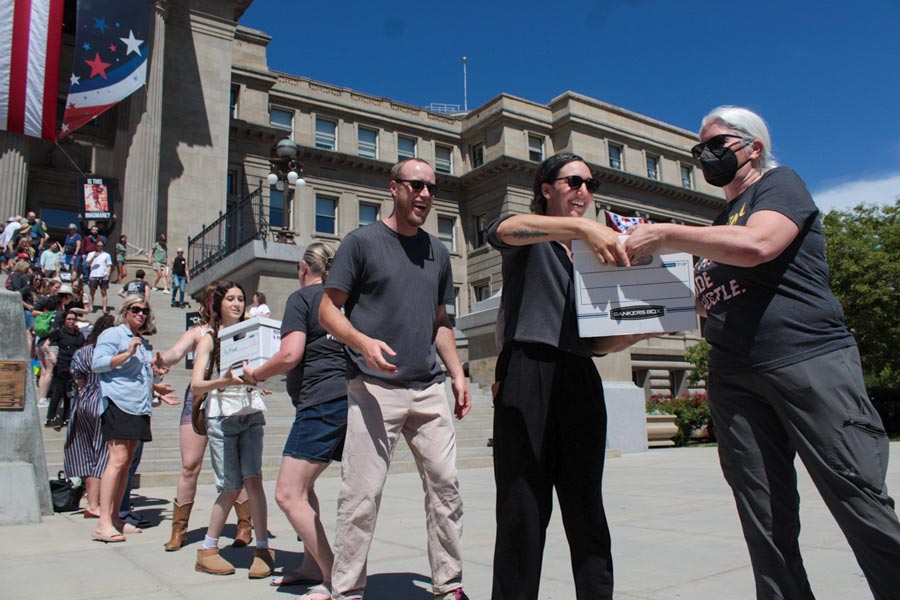
The campaign collected more than 110,000 signatures across all 44 Idaho counties, far surpassing the 75,478 valid signatures required by state law. More than 1,250 volunteers drove the effort, according to East Idaho News.
How the Initiative Cleared Idaho's Signature Threshold
To qualify, a measure must gather signatures from at least 6% of registered voters statewide — that's 75,478 valid signatures. It also needs 6% of voters in at least 18 of Idaho's 35 legislative districts. Supporters cleared both bars, KIVI-TV reported.
The campaign spread across all 44 counties, relying heavily on volunteers rather than paid signature gatherers. Organizers described the coalition as cross-partisan — meaning it drew support from across the political spectrum, not just one side.
What the Measure Would Actually Change in Idaho
If passed, the initiative would make abortion legal up to fetal viability — defined as a significant likelihood of survival outside the uterus without extraordinary medical measures. After viability, the state could still regulate abortion, but could not ban it in medical emergencies.
The measure would also protect contraception and fertility care as private reproductive health decisions. Under current Idaho law, abortion has been largely illegal since 2022. Narrow exceptions exist for rape or incest, but require a police report and are limited to the first trimester, Union Bulletin noted.
Opponents Push Back as Both Sides Mobilize
Critics of the measure have begun organizing in response. LifeNews characterized the initiative as allowing "abortions for the full nine months of pregnancy," a framing the campaign disputes. Supporters say the viability threshold and medical emergency provisions set clear limits.
Idaho has enforced its "Defense of Life Act" since 2022, making it one of the strictest abortion-ban states in the country. The November 2026 ballot vote will be the first direct test of public opinion on the issue since that law took effect.
November 2026 Vote Sets Up Defining Moment for Idaho
The measure will appear on the November 3, 2026 general election ballot. If approved by a majority of voters, it would amend the state constitution to enshrine reproductive privacy rights. That would make it much harder for the legislature to reverse, East Idaho News reported.
Idaho would join a growing list of states where voters have weighed in on abortion rights directly since the U.S. Supreme Court overturned Roe v. Wade in 2022. In most of those states, abortion-rights measures have passed, according to Union Bulletin.
Sentiment
Mostly NegativeNEGATIVENEUTRALPOSITIVE
Publishers
11
Articles
18
Reach
29
A
AnonymousAuthor


