Boosting Grid Reliability
India Accelerates Solar Growth and Grid Storage to Meet Rising Energy Demand
Anonymous
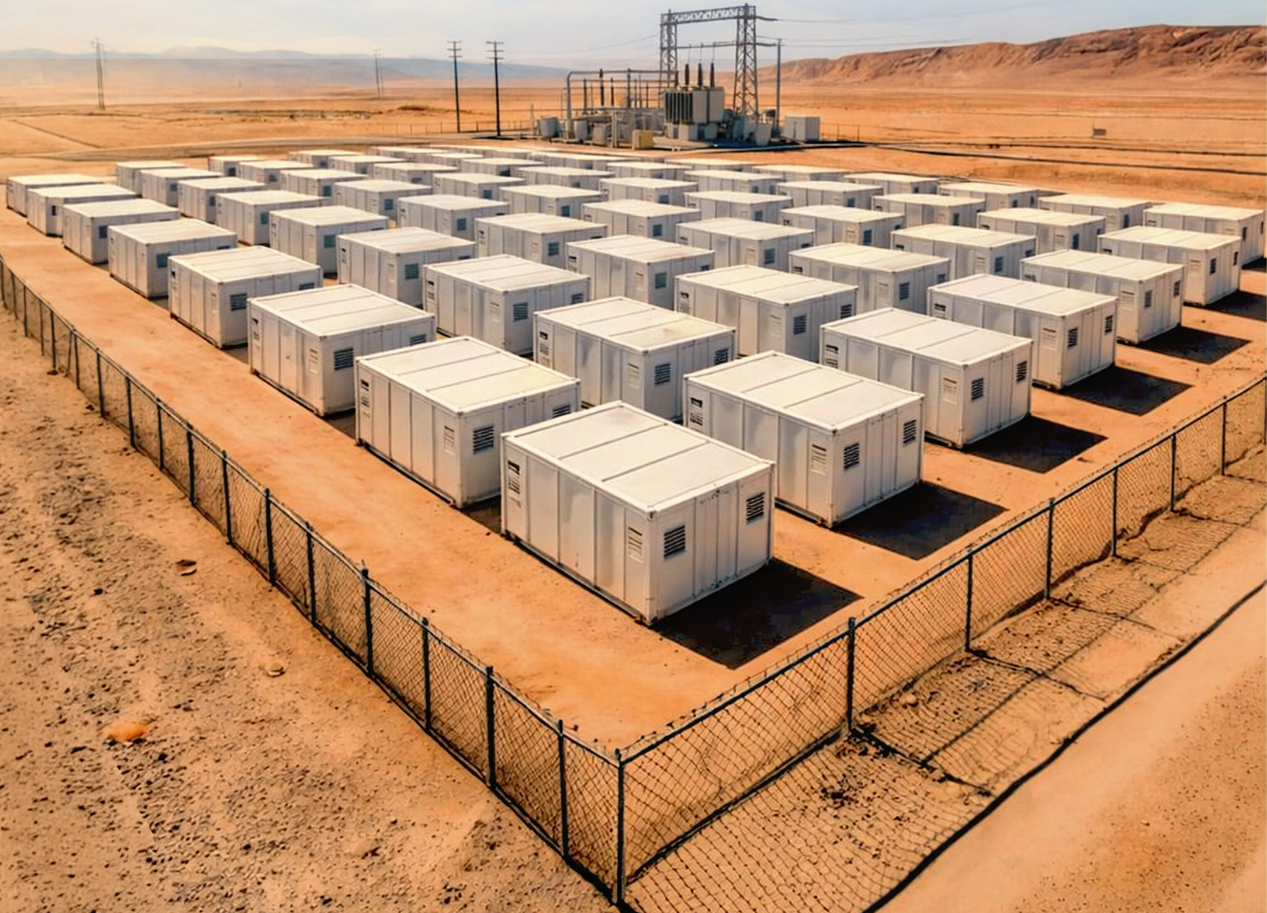
India’s clean-energy shift is moving beyond adding renewable generation toward making power more reliable, flexible and useful to businesses and the grid. With non-fossil capacity above 300 GW, the country is seeing growing interest in battery storage, including projections of as much as 47 GW/236 GWh of storage needs by 2032, as well as commercial and industrial solar opportunities supported by policy and grid investment in Uttar Pradesh. Distributed resources such as rooftop solar, home batteries and flexible appliances could also be digitally coordinated as virtual power plants, helping meet peak demand without relying as heavily on new fossil-fuel generation. Alongside solar and storage, cities and institutions are turning organic waste into biogas, electricity and fertilizer, illustrating how varied technologies can contribute to India’s energy transition. Globally, the shift toward renewables is increasingly tied not only to climate goals but also to energy security, industrial competitiveness and control of technology and supply chains.
Key Points
1
NETRA planned a Hyderabad conference on September 30 bringing together more than 100 companies from 50 cities to discuss solar and battery storage for the grid and commercial and industrial consumers.
2
The virtual-power-plant model described in the article uses an AI- and IoT-enabled software platform to coordinate distributed energy resources in real time; it can also include smart air conditioners and other flexible appliances that shift when they consume electricity.
3
The waste-to-energy examples include a Hyderabad vegetable market using power generated from rotten vegetables for its streetlights, and a Prayagraj plant that converts multiple kinds of organic waste into bio-CNG and compost.
4
The article reports that the European Union added nearly 70 GW of solar PV capacity in 2025, framing renewable expansion as a way to reduce exposure to imported-fuel price shocks as well as an environmental measure.
5
Uttar Pradesh is also pursuing regulatory simplification to attract commercial and industrial renewable-energy projects, with utility-scale solar and open-access segments identified as opportunities amid rising industrial demand.
Sentiment
Mostly PositiveNEGATIVENEUTRALPOSITIVE
Publishers
19
Articles
14
Reach
33
A
AnonymousAuthor