Monuments and Military Protection
Israeli Lawmaker Destroys Palestinian Monument Under Military Protection in West Bank
Anonymous
Trending on XIsrael-Gaza/West Bank Clashes and US Political Fallout
Key Points
1
The Madama monument reportedly memorializes a terrorist involved in the 2003 attack in which four people were killed and more than 20 were injured.
2
IDF had approved an escorted visit to Madama for Sukkot but was reportedly unaware that he planned to destroy the monument during the visit.
3
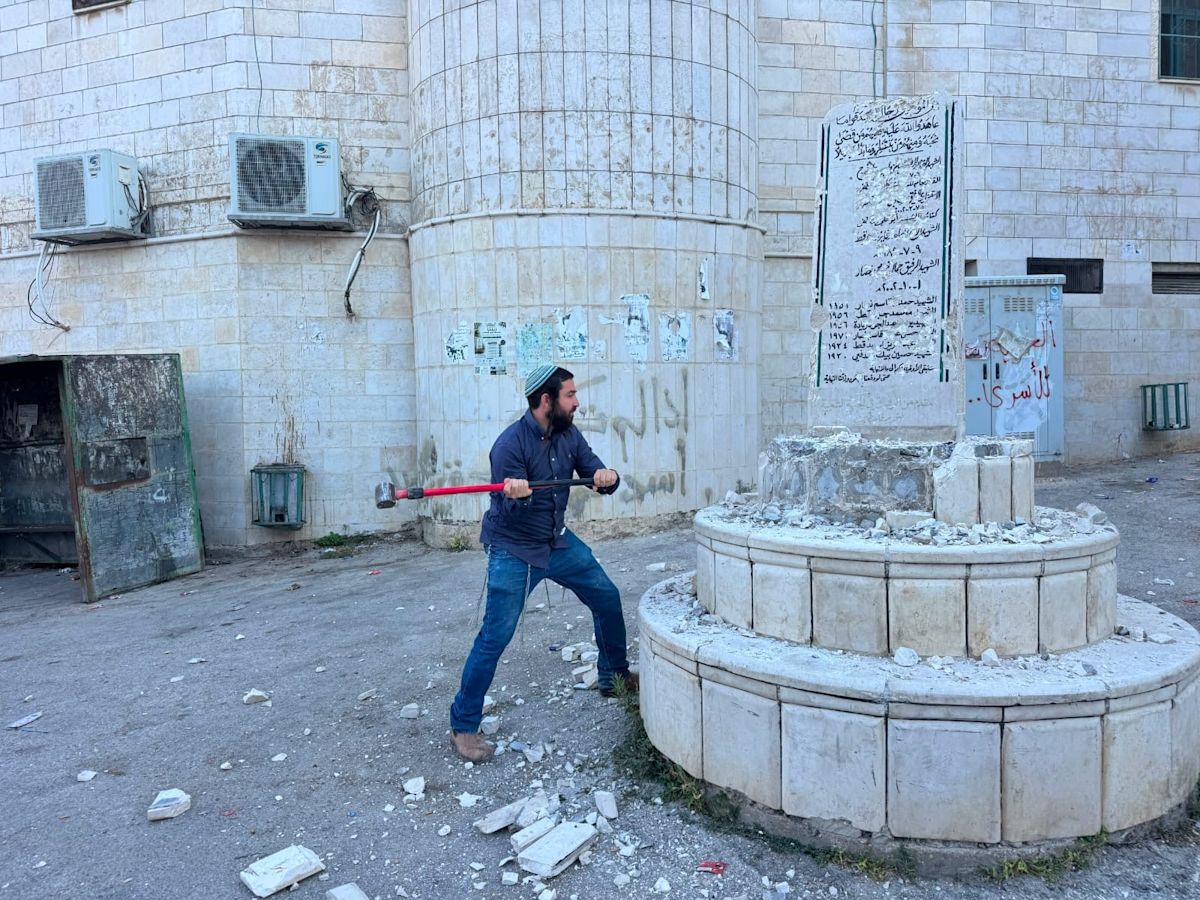
The operation occurred under protection from both the IDF and Border Police, with footage showing a soldier standing directly beside Sukkot as the monument was torn down.
4
Sukkot framed the act as part of a broader stance against glorifying attackers, stating: "We will not accept a situation in which those who harmed Jews and IDF soldiers are commemorated as heroes and presented to the next generation as figures to be admired."
5
Sukkot had previously said he urged the army to remove memorials in Madama and Burin, arguing they incite violence and that he took action after they remained in place.
Israeli Knesset member Zvi Sukkot of the Religious Zionism party destroyed a Palestinian monument in the West Bank village of Madama while guarded by Israeli military forces, according to Times of Israel. The monument reportedly memorialized a person involved in a 2003 attack that killed four people and wounded more than 20. Footage shows an IDF soldier standing directly beside Sukkot as the structure was torn down.
The Israeli military said it approved an escorted visit for Sukkot but was unaware he planned to destroy the monument, Yahoo News reported. Sukkot argued that memorials honoring attackers should not stand, saying: "We will not accept a situation in which those who harmed Jews and IDF soldiers are commemorated as heroes." The incident highlights the dispute over Palestinian memorials in occupied territories.
Sukkot's Long Campaign Against Terror Memorials
Sukkot had repeatedly urged the military to remove memorials in Madama and another village called Burin. He claimed these monuments incite violence against Israelis. After the army did not act, Sukkot decided to destroy the structure himself during what was supposed to be a routine military escort visit.
IDF Caught Off Guard During Monument Destruction
The Israeli military condemned the demolition as unauthorized. Head Topics reported that the IDF said soldiers provided security for Sukkot's visit but did not know he would tear down the monument. Both the IDF and Border Police guarded the scene during the actual destruction, creating images that drew immediate attention.
The incident was filmed and posted on social media by Palestinian media outlets. TDP El Media documented the moment when Sukkot and several others smashed the monument. The footage spread quickly, raising questions about whether military oversight failed or whether the operation was tacitly approved.
The 2003 Attack and Years of Tension
The monument memorialized someone connected to a 2003 terror attack in the region. That attack resulted in four deaths and injured more than 20 people. Palestinians view the person as a resistance fighter, while Israelis classify such individuals as terrorists. This fundamental disagreement over how to remember violent acts sits at the core of the West Bank conflict.
Sukkot's actions reflect broader Israeli efforts to prevent what officials see as glorification of attackers. Palestinian communities argue they have a right to memorialize those killed or harmed during the occupation. These competing claims over monuments and memory have created repeated flashpoints between settlers, Palestinians, and Israeli authorities.
Military Authority and Political Pressure Collide
The incident raises questions about command and control in the Israeli military. Was Sukkot authorized to destroy the monument? Did soldiers anticipate his actions but allow them anyway? The army's statement denying prior knowledge suggests either poor communication or a breakdown in oversight protocols during the escort operation.
Sukkot's status as a sitting lawmaker adds a political dimension. His party, Religious Zionism, occupies far-right positions in Israeli government. The scene of uniformed soldiers protecting him while he smashed the structure creates a stark visual that critics say blurs the line between security operations and political acts.
Sentiment
Mostly NegativeNEGATIVENEUTRALPOSITIVE
Publishers
19
Articles
14
Reach
33
Topics
A
AnonymousAuthor


