Kia PV7 Electric Van
Kia unveils the versatile PV7 electric van with a 2027 launch plan.
Anonymous
Key Points
1
The PV7 Passenger can be configured for up to 11 occupants in South Korea, while versions with three rows will offer sliding and removable second- and third-row seats for greater flexibility.
2
Kia plans to introduce 23 PV7 variants and conversion models in phases worldwide, expanding beyond the initial Passenger and Cargo versions to serve a wider range of commercial and mobility applications.
3
The PV7 will offer two charging-port locations: a standard front AC/DC connection and an optional additional AC port near the rear, allowing easier access at depots, loading bays and public chargers. Its vehicle-to-load system can also power tools and other equipment.
4
Kia Chairman Song Ho-sung described the PV7 as a business solution rather than simply a vehicle, saying, “We are not just building vehicles; we are providing practical business solutions” through customized spaces and the company’s flexible body system.
5
Cargo buyers will be able to choose between twin rear barn doors and a conventional lifting tailgate, with powered sliding side doors and a load-through bulkhead available for carrying long items.
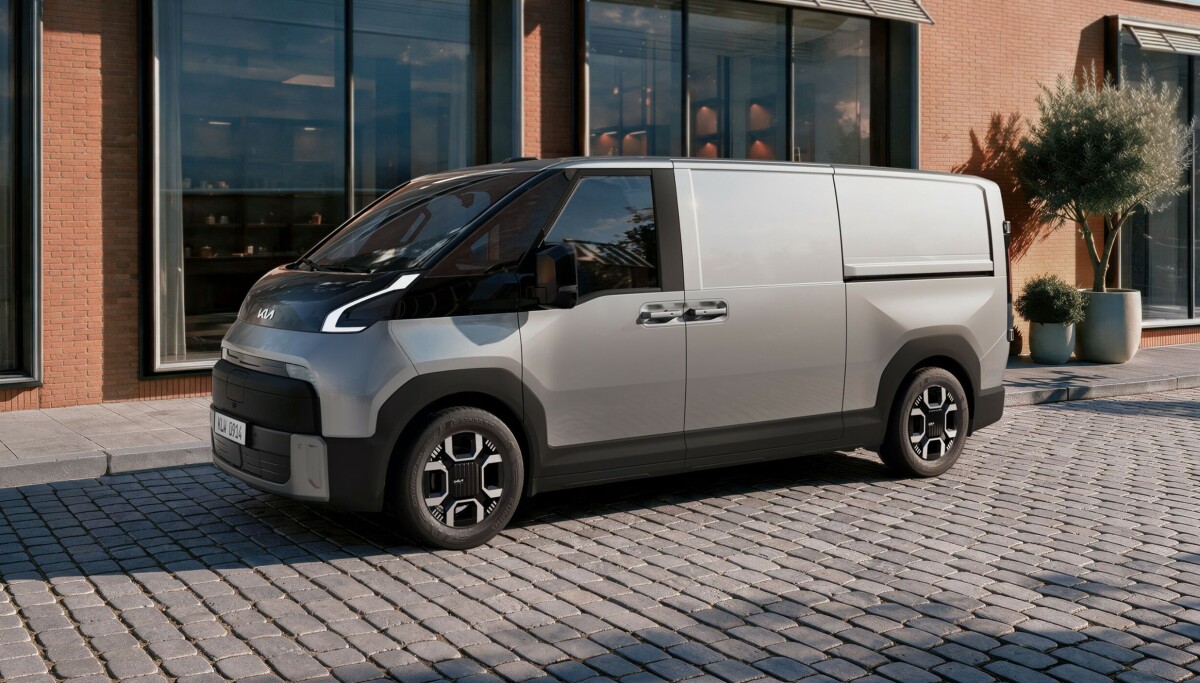
Kia unveiled the PV7, its second electric van built from the ground up, at IAA Transportation 2026 in Hanover, Germany. Van Fleet World reports the 5.35-meter van will launch in South Korea and Europe in the second half of 2027, offering seating for up to nine passengers or cargo space exceeding 6 square meters. Two battery options—71.5 kWh and 96.2 kWh—will deliver more than 460 kilometers of range, with fast charging from 10% to 80% in roughly 25 minutes.
Kia Chairman Song Ho-sung framed the PV7 as a "business solution" rather than just a vehicle, emphasizing the brand's focus on customizable layouts and flexible design. Korea JoongAng Daily notes the van represents Kia's push into the commercial electric vehicle market with 23 planned variants and conversion models rolling out in phases.
Two Battery Sizes and Rapid Charging Power
The PV7 launches with two battery options: a 71.5 kWh unit and a larger 96.2 kWh pack. Fleet World states the long-range Cargo model achieves more than 460 kilometers under WLTP testing. Output reaches up to 200 kW with front-wheel drive at launch, while an all-wheel-drive version is planned for later. The van's 800-volt architecture supports 350-kW charging, cutting the charge from 10% to 80% in approximately 25 minutes at compatible stations.
Flexible Seating and Cargo Configurations
The Passenger version seats up to nine people in standard form, though configurations in South Korea will support up to 11 occupants. Removable and sliding second- and third-row seats provide operators flexibility to swap between passenger and cargo duties quickly. The Cargo model offers more than 6 square meters of load space, expanding to about 8 cubic meters in larger variants, with payload capacity approaching 1,200 kilograms.
Buyers can choose between twin rear barn doors or a conventional lifting tailgate. Express and Star highlights powered sliding side doors and a load-through bulkhead available for carrying long items. The van's two charging-port locations—a standard front connection and optional rear AC port—simplify charging at depots and public stations.
23 Variants and Vehicle-to-Load Power
Kia plans to introduce 23 PV7 variants and conversion models worldwide, expanding beyond the initial Passenger and Cargo offerings to serve diverse commercial and mobility needs. The rollout will occur in phases, targeting different markets and use cases. The flexible E-GMP.S platform underpins all configurations, enabling easy customization for fleet buyers and specialized operators.
A built-in vehicle-to-load system lets operators power tools and equipment directly from the van's battery, turning it into a mobile power source at job sites. This feature addresses practical business needs beyond simple transportation, reinforcing Kia's pitch that the PV7 is a complete business solution rather than just a vehicle.
Sentiment
Mostly PositiveNEGATIVENEUTRALPOSITIVE
Publishers
60
Articles
70
Reach
130
A
AnonymousAuthor


