Pacific Missile Test
China Prepares Nuclear-Capable Missile Test in South Pacific Amid Regional Security Concerns and Australia-Fiji Pact
Key Points
The test would be the second full-range intercontinental ballistic missile launch over international waters in 44 years, using a Dong Feng-31AG with a dummy warhead to demonstrate delivery accuracy and systems validation rather than immediate military escalation.
China reportedly briefed multiple governments in advance about the missile test, with officials told during briefings on Monday about the impending launch.
New Zealand has been warned by China about the test and is weighing its potential involvement in the Australia–Fiji defence pact, referred to as the Ocean of Peace Alliance.
The Ocean of Peace Alliance, a mutual defence treaty between Australia and Fiji, was signed in Suva on the day of the reports, framing the regional security context for the test.
China is preparing to fire a nuclear-capable intercontinental ballistic missile into the South Pacific within 24 hours, according to diplomats in the region Sydney Morning Herald. The missile, a Dong Feng-31AG variant carrying a dummy warhead, is part of routine People's Liberation Army Rocket Force training — but the timing has set off alarms across the Pacific.
The launch would be only the second full-range ICBM test over international waters in 44 years WA Today. It comes just hours after Australia and Fiji signed a landmark mutual defence treaty — and lands squarely inside the South Pacific Nuclear-Free Zone.
China Fires Warning Shots Hours After Australia-Fiji Pact
Australia and Fiji signed a mutual defence treaty in Suva on the same day reports of the missile test broke Sydney Morning Herald. The pact, called the Ocean of Peace Alliance, is a formal defence agreement between the two nations. New Zealand is now weighing whether to join it. Beijing's missile announcement — made to multiple governments during briefings on Monday — landed like a direct response.
Australia has framed the missile test as a deliberate piece of geopolitical signaling, timed to follow the new pact WA Today. Analysts say the test is a carefully calibrated show of China's capabilities rather than an act of aggression. Still, the optics are hard to ignore — Beijing flexed its nuclear reach the same day Canberra deepened its Pacific security ties.
Dummy Warhead, Real Message: What the Dong Feng-31AG Does
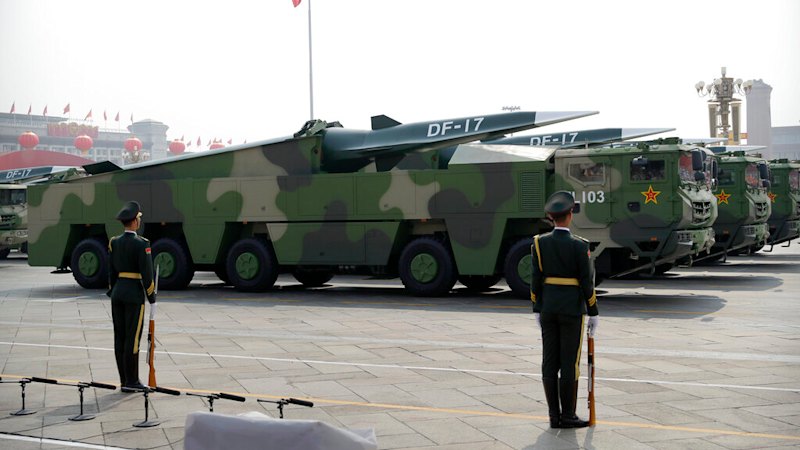
The missile China plans to use is a Dong Feng-31AG, a road-mobile ICBM able to carry nuclear warheads Crypto Briefing. This test uses a dummy warhead — meaning no nuclear material is involved. The goal is to check delivery accuracy and confirm that key systems work as designed. It is a validation test, not a live strike.
Beijing says the test complies with international law and is not aimed at any country Head Topics. China also gave advance notice to several governments, including New Zealand, before the planned launch. But critics say firing a nuclear-capable missile into a designated nuclear-free zone — regardless of the warhead type — raises serious questions about transparency and regional norms.
South Pacific Nuclear-Free Zone Puts Diplomacy Under Pressure
The South Pacific Nuclear-Free Zone was created to keep the region free from nuclear weapons and testing. China firing a nuclear-capable missile into this area — even with a dummy warhead — cuts against the spirit of that agreement Sydney Morning Herald. Australia, New Zealand, and Pacific Island nations have all raised concerns about what the test means for regional security.
New Zealand says it was warned by Beijing ahead of the launch WA Today. Wellington is now under pressure to decide how to respond — both diplomatically and through its potential role in the Ocean of Peace Alliance. The test puts New Zealand in a tight spot: push back on China, or risk being sidelined from a growing Pacific security framework.
Analysts See Taiwan Shadow Looming Over Pacific Test
Experts warn the test could shift the security balance across the wider Indo-Pacific Crypto Briefing. If China can demonstrate long-range missile accuracy at this scale, it sends a message to the United States and its allies about what a conflict near Taiwan could look like. The test is not just about the South Pacific — it is about showing reach.
Officials across the region stress this is not an immediate escalation Head Topics. But the combination of a new Australia-Fiji defence pact, a nuclear-capable missile test in a nuclear-free zone, and New Zealand reconsidering its security posture suggests the Pacific is entering a new and more tense chapter. The test is a signal — and everyone in the region is reading it.
Sentiment
Mostly NegativePublishers
142
Articles
558
Reach
700


