Politics and Historical Narratives Clash
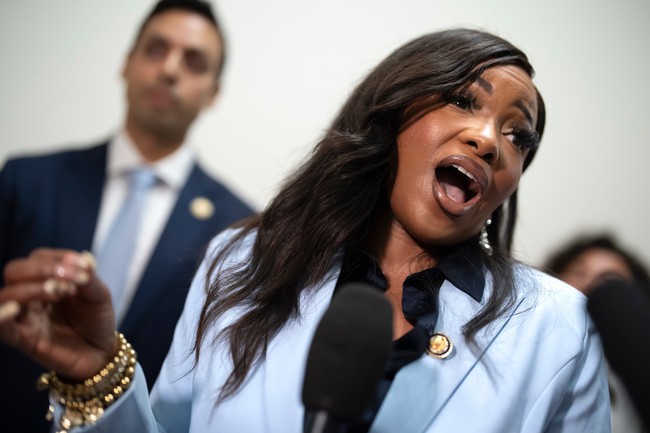
Rep. Crockett Alleges Racism in World Cup Final During House Hearing on Smithsonian Report
Anonymous
Key Points
1
The White House issued a 162-page report accusing the Smithsonian's National Museum of American History of 'ideological capture' and 'extreme political activism,' tied to President Trump's 'Restoring Truth and Sanity to American History' executive order.
2
Crockett described the hearing as a 'Republicans' white-pride rally disguised as a congressional hearing,' a framing she reiterated in remarks at the start of the session.
3
Crockett offered a detailed catalog of historical injustices she linked to current debates, including Indigenous displacement, lynching, suppression of Black voting rights, sexism and racism, and disability exclusion, citing figures like Ruby Bridges and the 16th Street Baptist Church bombing as historical benchmarks.
4
Some coverage framed Crockett’s remarks through a critical lens of white-pride rhetoric, including a conservative video post titled 'jasmine-crockett-celebrates-white-pride' that portrays her in that light.
During a House hearing on the Smithsonian Institution, Rep. Jasmine Crockett (D-TX) suggested that racism drives fans to root against Argentina in the World Cup final — a moment that quickly became a flashpoint in the broader culture-war battle over American history. Head Topics reported that Crockett questioned whether support for Argentina or Spain was racially motivated, prompting a professor to respond that team quality may simply explain fan preferences.
The hearing was triggered by a White House-commissioned 162-page report accusing the Smithsonian's National Museum of American History of 'ideological capture' and 'extreme political activism.' The report is tied to President Trump's executive order titled 'Restoring Truth and Sanity to American History.'
Crockett Labels Hearing a 'White Pride Rally'
Before diving into World Cup questions, Crockett set a combative tone. She called the session 'the Republicans' White Pride rally disguised as a congressional hearing,' according to Raw Story. The remark drew immediate outrage from conservatives, with some calling for her to be censured.
Twitchy covered the moment sharply, framing Crockett's words as an 'implosion.' Conservative outlets portrayed her opening remarks as an attack on the GOP rather than a good-faith critique of the Smithsonian report. The divide in coverage showed just how differently each side read the same hearing.
World Cup Question Stuns Yale Historian on the Stand
Crockett turned to a Yale historian during questioning and asked whether fans rooting against Argentina in the World Cup could be explained by racism. The historian suggested team quality was the more likely reason, per Head Topics. The exchange lasted only minutes but dominated post-hearing coverage.
The Post Millennial reported that Crockett claimed racism was behind fans rooting against Argentina. Critics called the line of questioning bizarre and disconnected from the hearing's stated purpose. Supporters argued she was drawing a straight line between historical white supremacy and modern cultural biases.
Crockett's Broader Catalog of Historical Injustices
The World Cup moment was one part of a longer argument. Crockett cited Indigenous displacement, lynching, the suppression of Black voting rights, sexism, and disability exclusion. She named Ruby Bridges and the 1963 bombing of the 16th Street Baptist Church as key historical benchmarks, framing them as context for current debates over how history is taught.
Her point was that erasing or softening these stories — as the White House report allegedly urges — repeats the same patterns of denial. Twitchy and other conservative outlets pushed back hard, arguing she was using the hearing as a platform for partisan grievance rather than policy debate.
White House Report Targets Smithsonian Over 'Woke' Exhibits
The hearing's core subject was a 162-page White House report claiming the Smithsonian had been taken over by ideological activists. The report was produced under Trump's 'Restoring Truth and Sanity to American History' executive order. It accused the National Museum of American History of pushing extreme political content in its exhibits.
The clash over the Smithsonian fits a larger pattern. The Trump administration has moved aggressively to reshape how federal institutions present American history. The Crockett hearing exchange — however unusual — reflects a real and deepening fight over whose version of the past gets told in publicly funded spaces.
Sentiment
Mostly NegativeNEGATIVENEUTRALPOSITIVE
Publishers
12
Articles
3
Reach
15
A
AnonymousAuthor


