Orbital Weapons Deployment
China Warns U.S. Following First Public Deployment of Orbital Weapons
Anonymous
Key Points
1
The announcement marked the first time the U.S. government had publicly acknowledged deploying weapons in space, although officials did not specify the systems or their capabilities.
2
The U.S. Space Force characterized China’s space and counterspace programs as part of a broader military modernization strategy and said Russia views space supremacy as potentially decisive in future conflicts.
3
The 1967 Outer Space Treaty bans weapons of mass destruction in orbit, but the United States, China, Russia and India have continued developing capabilities to target satellites, which are vital for military communications, surveillance and navigation.
4
The strategic competition has roots in the Cold War: after the Soviet Union launched Sputnik in 1957, Washington and Moscow began investigating both the use of weapons against spacecraft and the destruction of satellites.
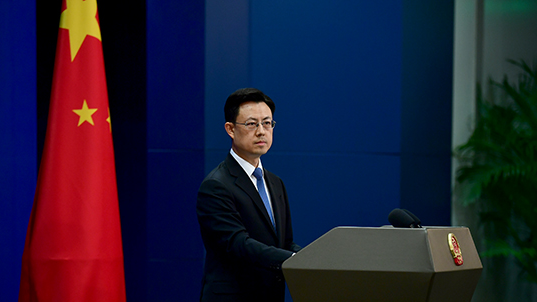
The United States confirmed for the first time that it has deployed weapons in Earth's orbit, prompting China to urge Washington to halt military expansion in space. Novinite reported that the U.S. Space Force acknowledged the weapons' existence but did not reveal specific details or capabilities. Chinese Foreign Ministry spokesperson Guo Jiakun said Beijing opposes weaponization of space and called on the U.S. to stop TRT World "preparing for war in outer space."
The announcement marks a rare public acknowledgment of space weapons and intensifies the strategic competition between superpowers over satellites and orbital capabilities. Both the U.S. and China have continued developing counterspace weapons despite a 1967 international treaty that bans weapons of mass destruction in orbit.
First Public Admission of Orbital Weapons
Novinite reported that the U.S. Space Force became the first American government agency to publicly confirm deploying weapons in space. Officials identified China and Russia as major threats to U.S. space capabilities but did not specify what weapons were deployed or how they work.
The U.S. characterized both nations' programs as part of broader military modernization. According to officials, Russia views space superiority as potentially decisive in future conflicts, elevating space weapons from experimental systems to operational tools.
China Demands End to Military Buildup
China Daily Asia stated that China's Foreign Ministry reiterated its commitment to peaceful use of outer space. TRT World reported that Guo Jiakun warned against the transformation of space into a battlefield and any arms race in orbit.
Beijing called the U.S. deployment a dangerous escalation. Free Malaysia Today noted that the warning comes amid decades of tension between Washington and Beijing over space capabilities and military modernization.
Treaty Limits Not Stopping Space Arms Race
The 1967 Outer Space Treaty prohibits weapons of mass destruction in orbit. However, the United States, China, Russia, and India have all developed counterspace weapons designed to disable or destroy satellites without violating this legal restriction.
Satellites are essential for military communications, surveillance, and navigation systems. Competition over these assets has roots in the Cold War era, when the Soviet Union's 1957 Sputnik launch sparked Washington and Moscow to investigate both anti-satellite weapons and spacecraft destruction capabilities.
Sentiment
Mostly NegativeNEGATIVENEUTRALPOSITIVE
Publishers
37
Articles
134
Reach
171
A
AnonymousAuthor


