Turkey's S-400 Sale Impact
Turkey Reportedly Transfers Russian S-400s to Gulf State, Eyeing US Sanctions Relief
Anonymous
Key Points
1
During the NATO summit in Ankara on July 7–8, President Recep Tayyip Erdoğan held talks with U.S. President Donald Trump, after which Erdoğan voiced confidence that Turkey would return to the F-35 program, while Trump said a decision had not yet been made.
2
There is notable ambiguity over the current status of Turkey's S-400s—reports say it is unclear whether the systems are operational, in storage, or have been transferred to a third country, with last‑minute details reportedly being worked out as of the previous day.
3
Several outlets identify the buyer as a Gulf country, with United Arab Emirates or Qatar named; some sources specifically point to the UAE as the potential buyer.
4
Analyses frame the sale within Gulf states' broader interest in alternative air‑defense options following regional security tensions linked to the Iran–Israel confrontation, suggesting strategic timing beyond Turkey’s own sanctions relief.
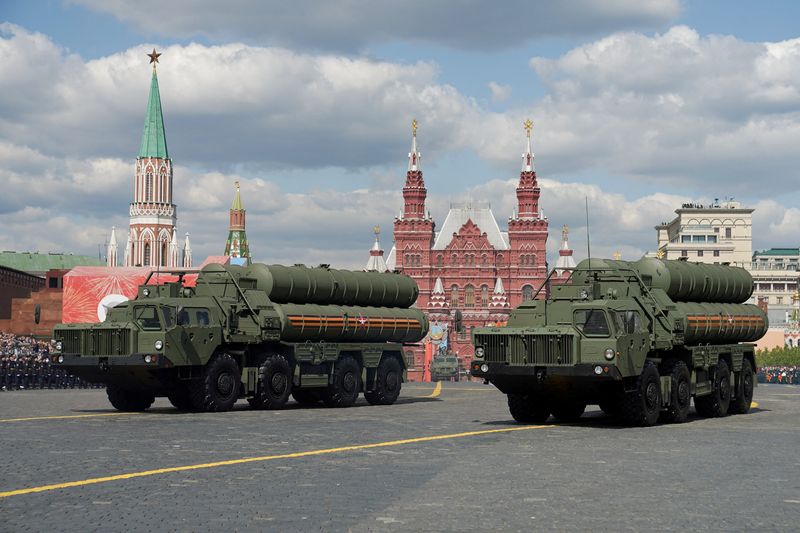
Turkey has sold its Russian-made S-400 air defense systems to a Gulf country, according to Hurriyet, with an official announcement expected imminently. The buyer is believed to be either the United Arab Emirates or Qatar, with some reports pointing specifically to the UAE.
The deal could remove a major obstacle in Turkey's relationship with the United States. Washington imposed sanctions on Ankara under CAATSA — a law punishing countries that buy Russian weapons — after Turkey purchased the S-400s. Selling the systems could open the door to lifting those sanctions and restoring full defense cooperation.
Erdogan Eyes F-35 Return After NATO Summit Talks
President Recep Tayyip Erdogan met with U.S. President Donald Trump at the NATO summit in Ankara on July 7–8. After those talks, Erdogan said he was confident Turkey would rejoin the F-35 fighter jet program. Trump was more cautious, saying a decision had not yet been made.
Turkey was kicked out of the F-35 program in 2019 after buying the S-400s. Getting back in would be a major win for Ankara. But it depends on Turkey first proving it no longer holds the Russian systems. United24 Media reported that selling the S-400s to a Gulf country is Ankara's clearest path to getting there.
CAATSA Sanctions Relief Hinges on Three Conditions
Lifting the U.S. sanctions is not automatic. Washington requires a formal notification to Congress meeting three conditions: that the S-400s are no longer operational, that Turkey no longer possesses them, and that Ankara will not pursue similar deals with Russia. The sale, if confirmed, would help Turkey satisfy all three.
There is still ambiguity about the systems' current status. Reports say it is unclear whether the S-400s are operational, in storage, or already transferred. United24 Media noted that last-minute details were reportedly still being worked out as recently as the day before reports broke. Ankara has not publicly commented on the matter.
Russia Confirms Contact With Turkey Over S-400 Fate
Moscow is watching closely. Kremlin spokesman Dmitry Peskov confirmed that Russia is in contact with Turkey about the fate of the S-400 systems. He did not say whether Russia supports or opposes a resale, but the public acknowledgment signals that the issue is being discussed at a high level.
Russia sold Turkey the S-400s in a deal worth roughly $2.5 billion, completed in 2019. Any transfer to a third country would likely require Moscow's consent under the original arms agreement. TASS reported that Peskov also addressed separate talks between Russia and Turkey on a buffer zone along Ukraine's border.
Gulf States Seek Air Defenses Amid Iran-Israel Tensions
The timing of the reported sale is not random. Analysts say Gulf countries have been actively looking for alternative air defense systems after regional tensions spiked during the Iran-Israel confrontation. Turkey's S-400s, if available, would fill a gap that Gulf states are eager to close.
The UAE and Qatar are both named as potential buyers. Both countries have strong ties with the West but have also sought to diversify their defense options. United24 Media noted that strategic timing — not just Turkey's sanctions relief — appears to be driving the transaction. Official confirmation from any side remains pending.
Sentiment
Mostly NegativeNEGATIVENEUTRALPOSITIVE
Publishers
20
Articles
59
Reach
79
A
AnonymousAuthor


