F-35 for Turkey debated
Trump signals F-35 fighter jet sale to Turkey amid S-400 sanctions and opposition
Anonymous
Key Points
1
Israeli Prime Minister Benjamin Netanyahu publicly warned against arming Turkey with F-35s, saying it would upset the regional power balance and risk Israel's air superiority.
2
A bipartisan group of U.S. lawmakers – six Republicans and four Democrats – sent a letter to President Trump opposing the sale of F-35 fighter jets to Turkey amid concerns about Erdogan's policies and the S-400 matter.
3
Trump signaled sanctions relief could come soon, telling reporters that 'it's time to do that' and that a plan to lift sanctions is being developed by senior officials as part of resetting U.S.-Turkish relations.
4
The S-400 issue remains the central hurdle; under CAATSA, Turkey would need to no longer possess the Russian air-defense system before it could participate in F-35 reentry, underpinning the legal and Congressional obstacles to any sale.
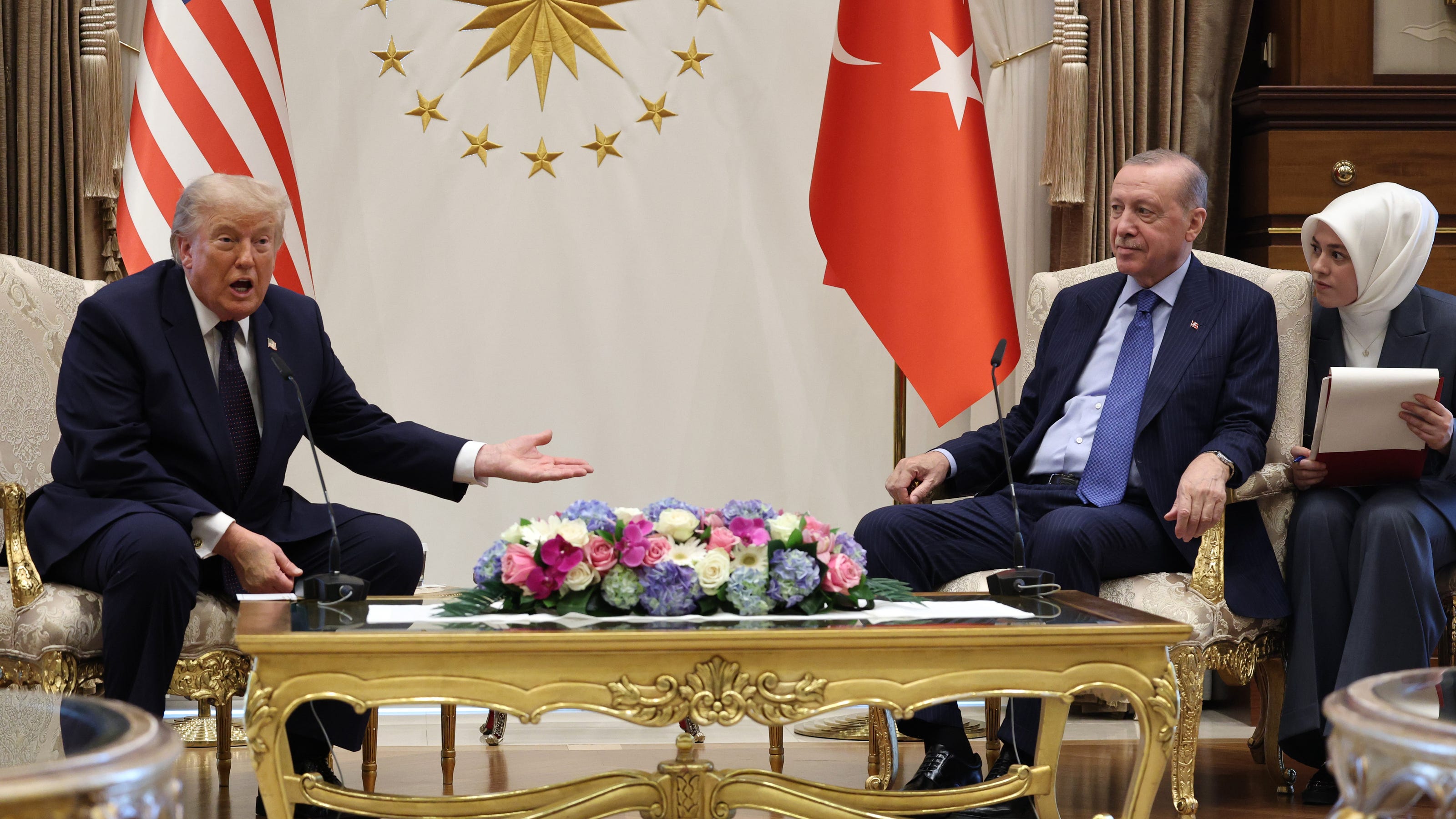
At the NATO summit in Ankara, President Donald Trump announced that the U.S. is considering selling F-35 fighter jets to Turkey and plans to lift CAATSA sanctions imposed in 2020. "We're going to be taking the sanctions off," Trump told reporters. "We don't want to sanction friends. It's very simple." The move would reverse a ban in place since 2019, when Turkey was expelled from the F-35 program after buying a Russian S-400 missile defense system. CBS News reported that Trump called the F-35 "an exceptional aircraft" and said Turkey's long-standing NATO alliance justifies revisiting the deal.
Turkish President Erdogan met Trump on the tarmac in Ankara — an unusual diplomatic gesture — and claimed Trump had already promised Turkey five jets. Turkey has already paid $1.7 billion into the F-35 program, and six Turkish-owned jets sit in storage in the United States. Lokmat Times reported that a U.S. decision could come soon, though a congressional ban and legal hurdles remain firmly in the way.
The S-400 Problem Blocking Any F-35 Deal
The core legal barrier is simple: U.S. law bars F-35 transfers to Turkey as long as Ankara possesses the Russian S-400 system. This ban was written into the 2020 National Defense Authorization Act. CAATSA sanctions — the Countering America's Adversaries Through Sanctions Act — also targeted Turkey's main defense agency, the SSB. Trump cannot simply wave these away. Vice President JD Vance acknowledged: "There are certain things that we have to certify... in order to comply with American law. This is really a congressional thing."
Trump said Secretary of State Marco Rubio, Treasury Secretary Scott Bessent, and Defense Secretary Pete Hegseth would draft a plan to lift sanctions. European Interest reported that analysts believe Turkey would have to "shed the S-400 system entirely" before full legal compliance is possible. Turkey originally planned to buy 100 F-35s and has lost an estimated $9 billion in defense contracts since its 2019 expulsion.
Bipartisan Congress Mobilizes to Block the Sale
Ten lawmakers — six Republicans and four Democrats — sent Trump a letter on July 2 opposing any F-35 transfer. Rep. Mike Lawler (R-NY) said: "Selling one of America's most advanced fighter jets to Turkey is not in the best interest of the United States. It risks compromising critical technology." Rep. Brad Sherman (D-CA) went further, warning that reopening the program would be "tantamount to handing Putin the blueprints to our technology."
Rep. Dina Titus (D-NV) introduced House Joint Resolution 200 to block a separate $700 million sale of GE F110 jet engines to Turkey's aerospace industry. That engine deal was structured to bypass the sanctioned SSB agency. Eighteen House Democrats also signed a letter urging leadership to prepare a formal resolution of disapproval. Lokmat Times noted that Congress views the executive action as being in "direct conflict" with U.S. statutory obligations.
Netanyahu Warns F-35s Would Shatter Middle East Balance
Israeli Prime Minister Benjamin Netanyahu called Trump on July 3 to urge him to drop the plan. Then he went public on Fox News on July 6, warning against arming what he called "a regime infected by the Muslim Brotherhood." His core argument: giving Turkey the F-35 would "upset the balance of power in the Middle East" and undermine Israel's air superiority — a military edge the U.S. has long guaranteed. European Interest reported that Israel sees Turkish F-35 access as a direct strategic threat.
Greece has raised similar alarms. Athens warned that Turkey joining the F-35 program would "radically disrupt the military balance in the Aegean Sea." Greece is not scheduled to receive its own F-35s until 2028–2030, meaning Turkey could gain a years-long air superiority advantage. Americas Voice noted the deal has stirred deep anxiety among U.S. allies across the region.
Trump Frames Turkey as a Key Partner Worth Rewarding
Trump argued Turkey has earned better treatment. "I have no concerns about anything having to do with Turkey," he said. "The relationship is better, probably than it's ever been." He pointed to Turkey's role mediating Middle East ceasefire talks and its support for the fall of Syrian President Bashar al-Assad in 2024. Trump sees Ankara as a vital Sunni counterweight to Iran and a NATO ally that deserves a reset after years of tension.
Erdogan welcomed the remarks warmly. "Mr. Trump always stands by his word," he said. The Pentagon spent $500–$600 million relocating F-35 manufacturing out of Turkey after the 2019 expulsion. Bringing Turkey back would revive billions in contracts for Turkish defense firms. European Interest reported the deal remains caught between Trump's strategic ambitions and hard legal limits that even a willing Congress would take months to change.
Sentiment
Mostly NegativeNEGATIVENEUTRALPOSITIVE
Publishers
50
Articles
152
Reach
202
A
AnonymousAuthor


